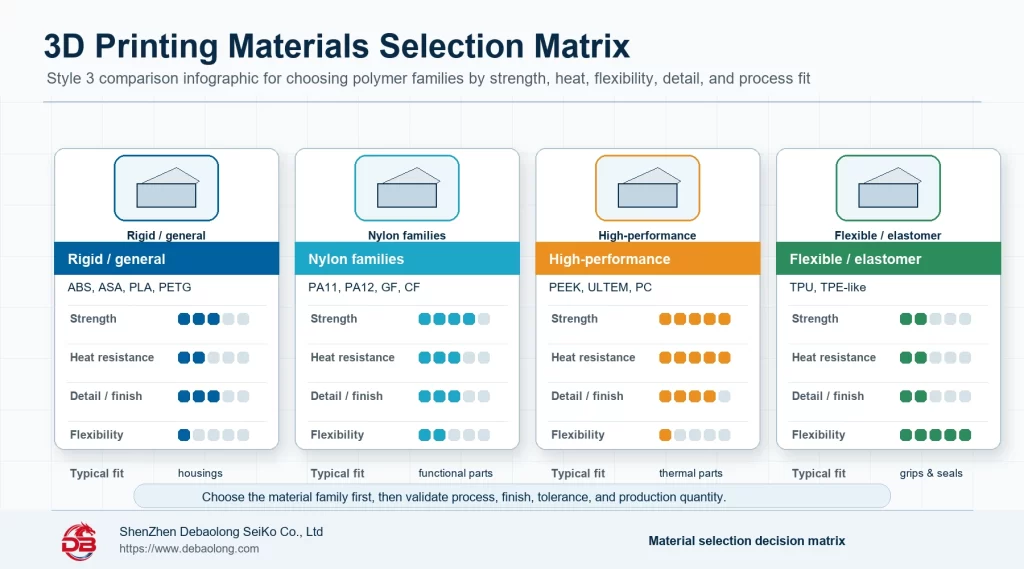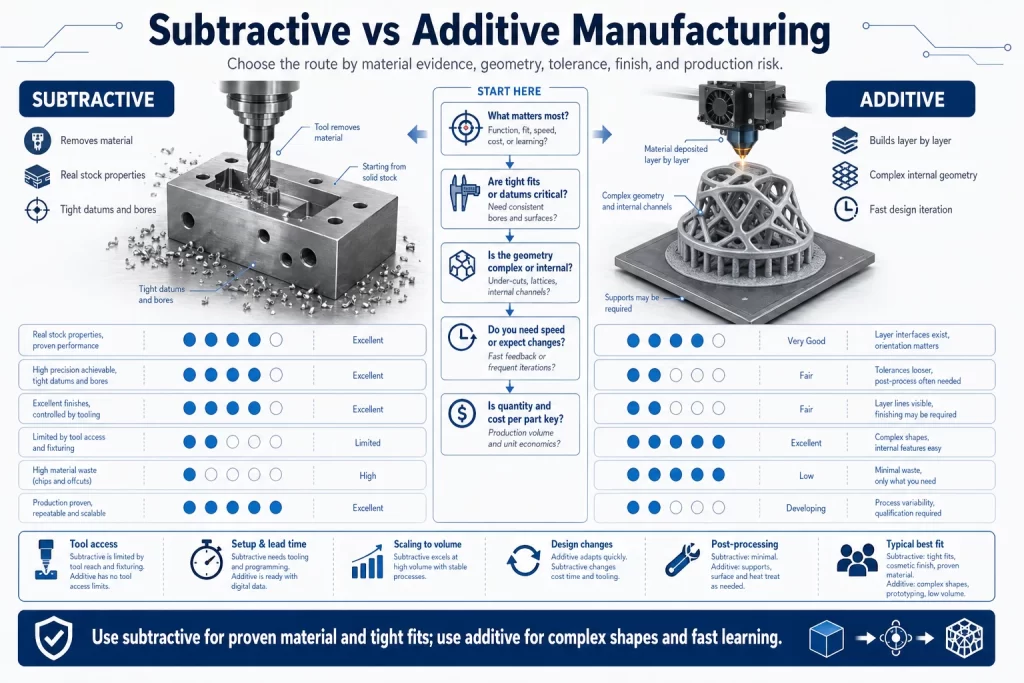


How to Choose the Right 3D Printing Process for Functional Prototypes and Low-Volume Parts

Compare SLS, SLA, FDM, MJF and metal 3D printing for functional prototypes, visual models, fixtures, low-volume parts and RFQ decisions for buyers.
What Procurement Engineers Should Check Before Ordering 3D Printed Parts

A practical RFQ guide for custom 3D printed parts covering CAD files, process choice, material, tolerance, finish, inspection and supplier review.
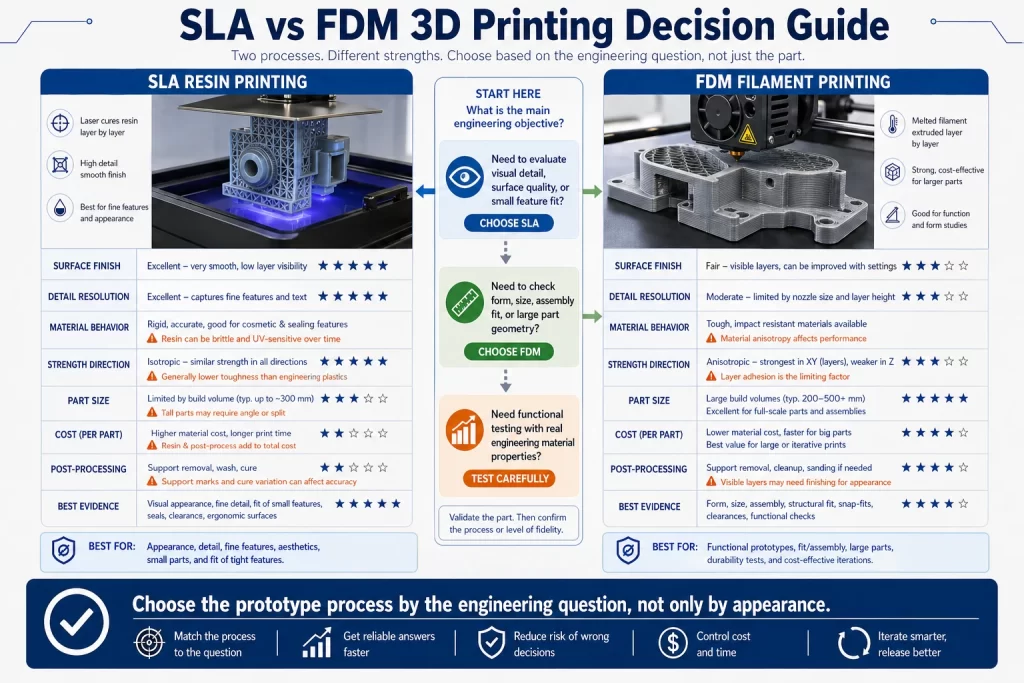
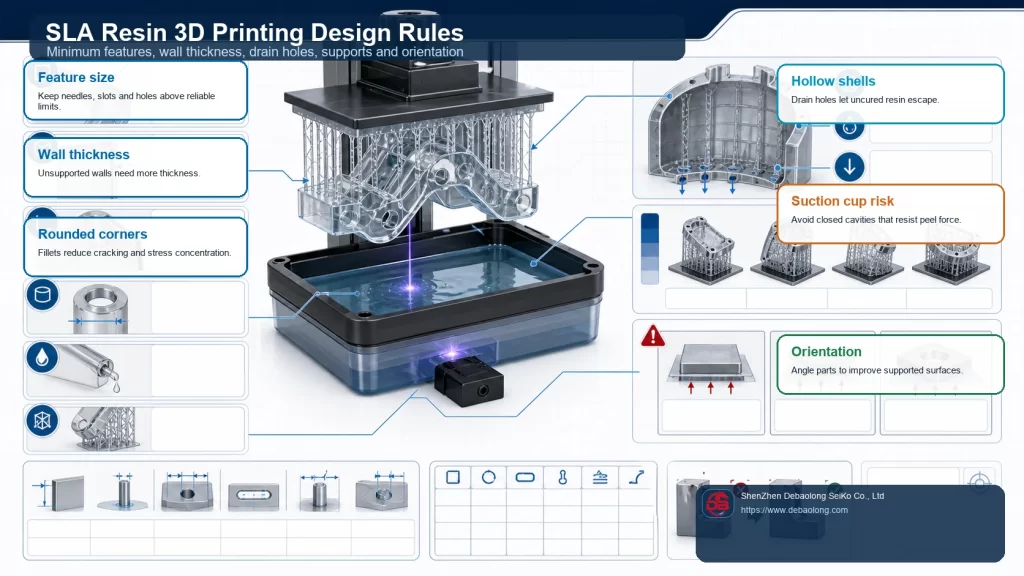
SLA 3D Printing Technology: Resin Process and Limits

Learn how SLA 3D printing works, including resin curing, build platform motion, supports, washing, UV post-curing, fine detail, smooth finish and limits.
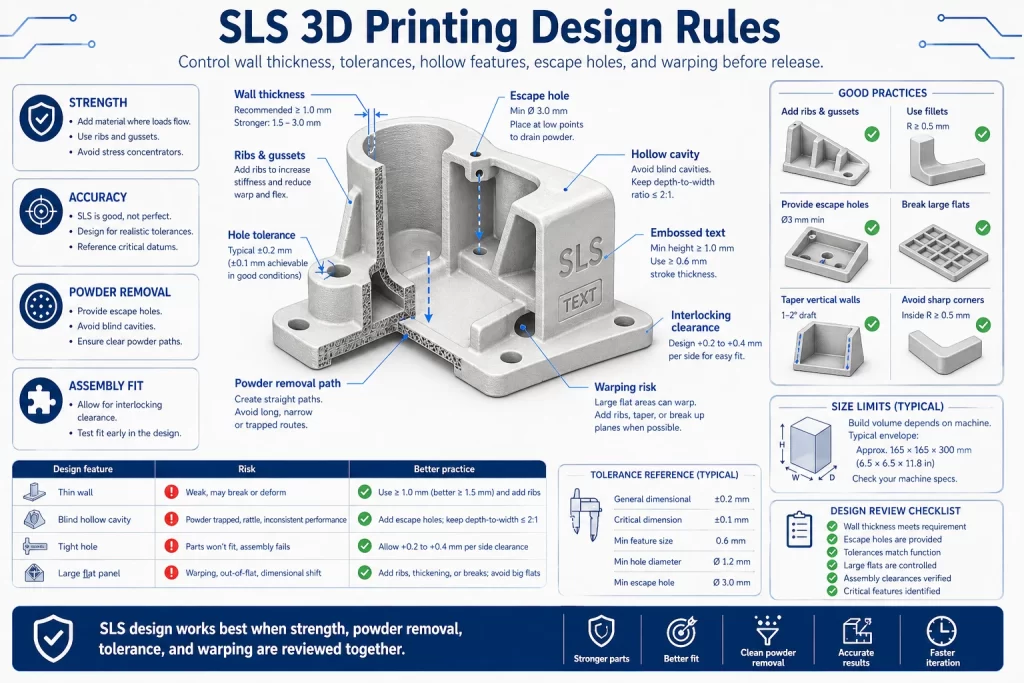
SLS 3D Printing Technology: Process and Nylon Materials

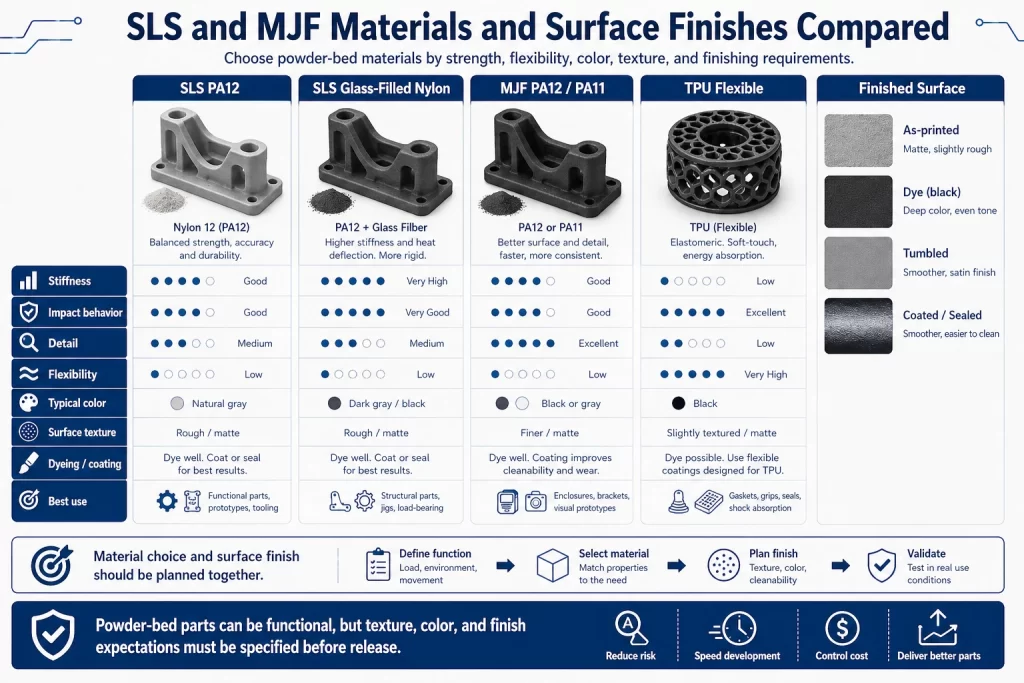
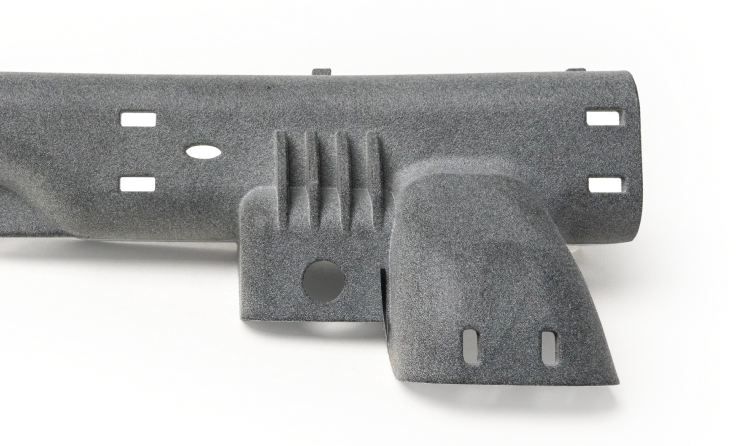
Learn how SLS 3D printing works, including powder preheating, laser sintering, cooling, depowdering, nylon materials, advantages and limits.
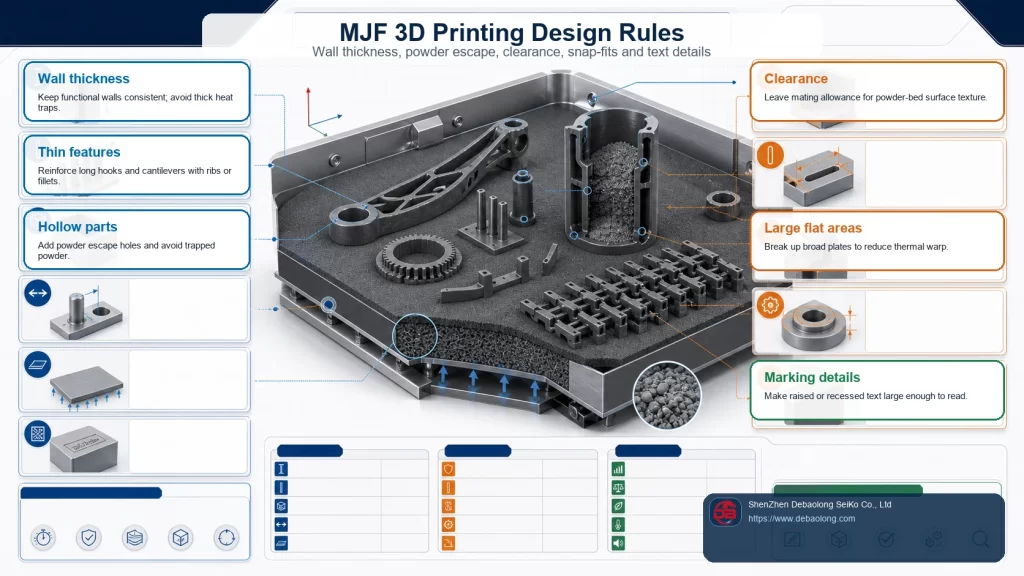
MJF 3D Printing Design Guidelines for Functional Nylon Parts

Design better MJF nylon parts by reviewing dimensions, raised and engraved details, tolerances, lattice infill, walls, assemblies and escape holes.
FDM 3D Printing Design Tips for Stronger Functional Parts

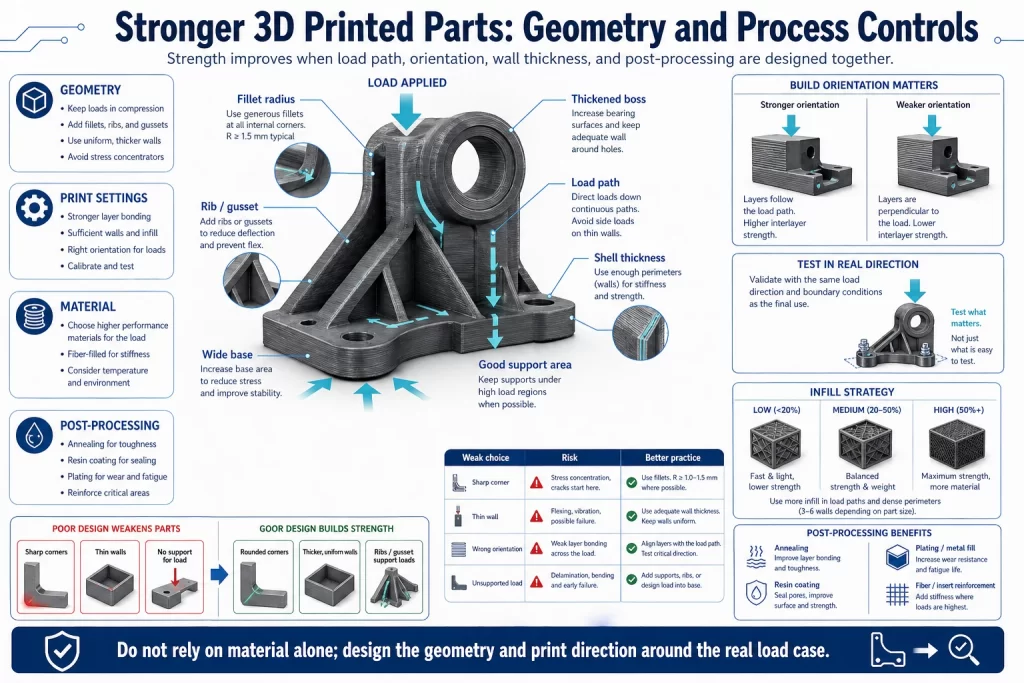
Improve FDM 3D printed parts by designing for build limits, support structures, overhangs, elephant foot, corners, wall thickness and orientation.
3D Printing File Formats: STL, OBJ, AMF and 3MF Guide

Compare STL, OBJ, AMF and 3MF file formats for 3D printing, including mesh geometry, color, units, metadata, materials and slicer readiness.
Open-Source 3D Printing Projects: Engineering Guide

Explore challenging open-source 3D printing projects and the engineering lessons behind printed vehicles, drones, mechanisms, robotics and tools.
3D Printing Tolerances for Process and Design Control

Understand 3D printing tolerances across MJF, SLS, SLA, FDM and metal printing, including shrinkage, layer height, feature size and finishing.
Desktop vs Industrial SLA 3D Printing Selection Guide

Compare desktop and industrial SLA 3D printing for accuracy, resin choice, build size, surface finish, post-processing, cost and production use.