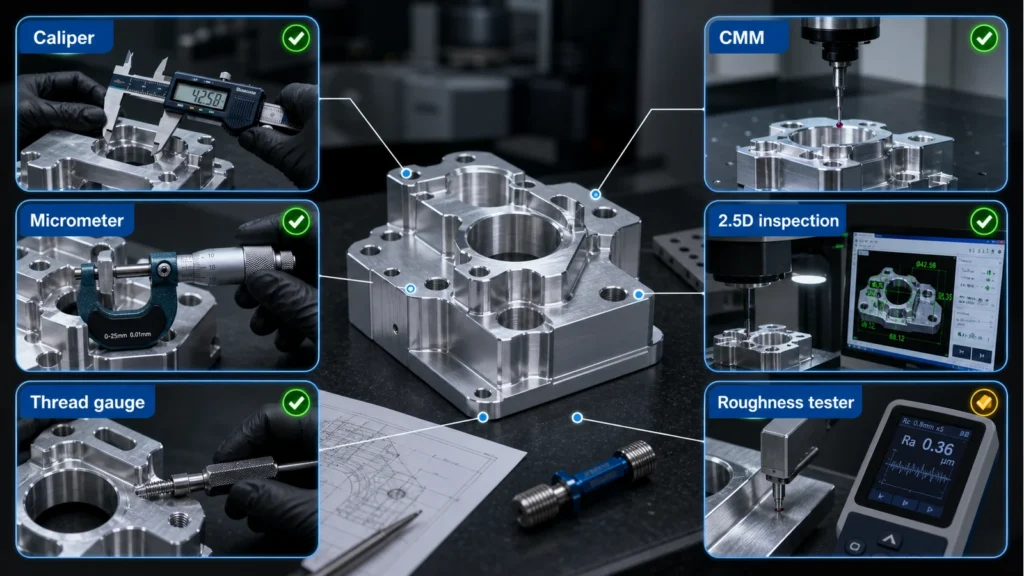

Choosing a 3D printing material is not only a catalog decision. The material must match load, heat exposure, flexibility, detail requirement, surface finish expectation, tolerance, post-processing, and production quantity. A strong material on paper can still fail if the chosen printing process, build orientation, or service environment does not fit the application.
This guide groups the materials by behavior so engineers, designers, and sourcing teams can move from application requirements to a realistic polymer family.
Start with the Material Behavior You Need
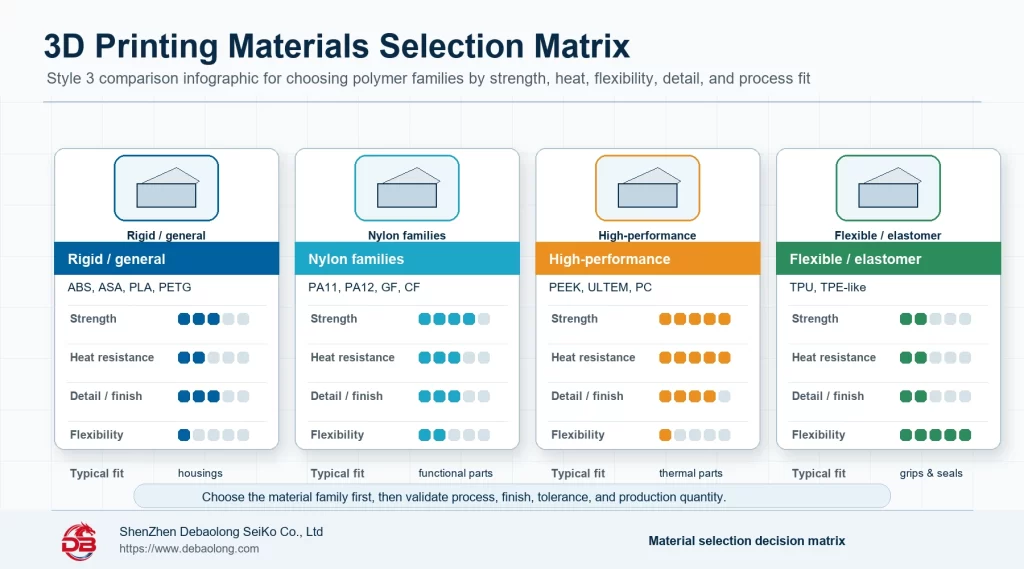
A useful first distinction is between rigid and flexible printable polymers. That is a useful first filter, but engineering selection should go further. Rigid polymers may be inexpensive, tough, transparent, heat resistant, carbon-filled, glass-filled, or chemically resistant. Flexible polymers may be selected for grip, sealing, impact absorption, or abrasion resistance.
| Requirement | Common material directions | Typical process fit |
|---|---|---|
| General rigid prototypes | ABS, ASA, PLA, PETG | FDM for these thermoplastics; SLA uses distinct photopolymer resins |
| Functional nylon parts | PA11, PA12, glass-filled PA12, carbon-filled nylon | SLS, MJF, FDM |
| Heat and chemical resistance | PC, PEEK, ULTEM 1010, ULTEM 9085, CE 221 | FDM or resin process depending on material |
| Clear or smooth prototypes | Watershed XC, clear or PC-like SLA materials | SLA |
| Flexible parts | TPU, TPE-like flexible resin | SLS, MJF, selected elastomer processes |
Rigid Plastics for 3D Printing
Rigid polymers are used for housings, brackets, fixtures, covers, form-and-fit prototypes, and functional test parts. The right choice depends on impact strength, heat resistance, chemical exposure, dimensional stability, surface finish, and cost.
ABS M30
ABS M30 is a named FDM material for rigid prototypes and tooling applications. Check the supplier datasheet for the exact printing system, support material and test conditions. Heat exposure and chemical contact require application-specific review; a generic ABS description does not establish resistance to a particular chemical concentration or service temperature.
ABS ESD7
ABS ESD7 is an electrostatic-dissipative thermoplastic used when static discharge can damage electronics or create safety risk. It is commonly selected for electronic fixtures, assembly aids, and handling tools.
ABS SL 782
ABS-like SLA resin offers a rigid, durable surface with good detail and surface quality. It is useful for accurate prototypes, consumer product models, packaging concepts, electronic housings, toys, and automotive-style components. Its heat deflection temperature is lower than high-performance thermoplastics, so service temperature must be reviewed.
ASA
ASA is an amorphous thermoplastic known for weather resistance, UV stability, and useful mechanical performance. It is often chosen for outdoor prototypes, covers, and functional parts that require better environmental resistance than standard ABS.
Nylon PA11
PA11 is a nylon family considered for impact-sensitive and flexible functional parts. Specify the actual grade and printing process, then compare conditioned test data for the intended loading and environment. Hardness values need a stated scale and test method; a family name alone does not establish them.
Nylon PA12
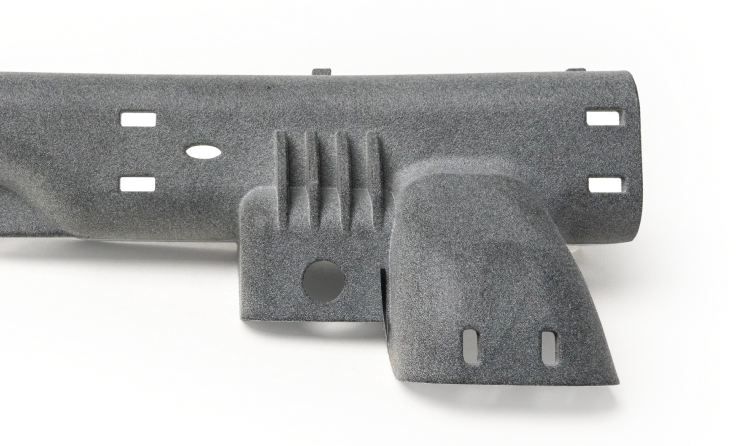
Nylon PA12 is one of the most widely used 3D printing materials. It offers toughness, tensile strength, impact resistance, low moisture absorption, and good flexibility without easy fracture. It is common in SLS, MJF, and FDM workflows for durable functional parts.
Nylon PA12 Glass-Filled
Glass-filled PA12 improves stiffness, heat resistance, and dimensional stability compared with unfilled PA12. It is useful for stable, durable components in automotive, aerospace, consumer, and industrial applications.
Nylon 12 Carbon-Filled
Carbon-filled nylon combines nylon with carbon fiber reinforcement to improve structural performance. It is often chosen for lightweight brackets, stiff fixtures, housings, and industrial prototypes where higher stiffness-to-weight ratio is needed.
PC-ABS
PC-ABS blends polycarbonate and ABS to improve toughness and impact resistance. It is used for automotive interior and exterior components, electrical housings, computer parts, and parts that need a balance of strength and manufacturability.
PC-ISO
PC-ISO is a named Stratasys FDM polycarbonate grade. The manufacturer’s PC-ISO information identifies material-level biocompatibility qualifications and compatible printing systems. Review the current datasheet, build conditions and intended use before selection. Material qualifications do not certify a finished Debaolong part or establish food-contact or medical approval; the complete manufacturing, cleaning and application requirements need separate validation.
PC-Like Heat-Resistant Translucent Materials
PC-like translucent SLA materials are used when the part requires strength, stiffness, heat resistance, fine detail, and a translucent visual effect. They are often selected for lighting prototypes, electronic components, and concept models.
Polycarbonate
FDM polycarbonate can be considered where toughness and heat resistance matter. Compare the exact grade, build orientation and test conditions rather than assigning one temperature rating to the whole family. Optical appearance, surface finish and the finished part’s service requirements need separate review.
PLA
PLA is derived from renewable resources such as starch or sugarcane. It is easy to print and useful for visual prototypes, simple functional models, and low-heat applications. Its glass transition temperature is relatively low, so it is not ideal for hot service conditions.
PETG
PETG provides chemical stability, durability, and practical processing behavior. It is widely used for consumer goods, packaging-style prototypes, bottles, and parts that need a balance of toughness and printability. Surface wear and flexibility should be considered.
PEEK
PEEK offers high chemical resistance, mechanical strength, dimensional stability, and stiffness at elevated temperatures. It is appropriate for aerospace, oil and gas, semiconductor, and other high-performance applications when process capability and cost are justified.
ULTEM 1010
ULTEM 1010 has excellent heat resistance, chemical stability, and tensile strength among FDM thermoplastics. It can support demanding tools, fixtures, medical-style components, and industrial applications where high temperature resistance is important.
ULTEM 9085
ULTEM 9085 offers high strength-to-weight ratio, impact resistance, heat resistance, and flame retardancy. It is used for prototypes, fixtures, composite tooling, and transportation-related applications where certified performance may be required.
Watershed XC 11122
Watershed XC is a low-viscosity SLA material that can produce rigid, water-resistant, nearly transparent parts. It is useful for lenses, concept models, medical-style prototypes, and consumer electronics models.
Xtreme Polypropylene-Like Materials
Polypropylene-like SLA materials provide toughness, elongation, impact resistance, and clean surface quality. They are useful for snap-fit prototypes, consumer housings, and parts that need some flexibility without becoming elastomeric.
Rigid Polyurethane and Epoxy-Like Resins
Rigid polyurethane, epoxy, and cyanate ester style resins are selected when the application needs strong, stiff, accurate parts with good surface finish, thermal behavior, or UV stability. They are often used for housings, clips, covers, brackets, fixtures, lighting components, and industrial prototypes.
Flexible Plastics for 3D Printing
Flexible materials are selected when the part must bend, compress, absorb impact, or provide grip. They can be useful for seals, covers, soft-touch components, protective pads, and flexible functional prototypes.
TPU / TPE-Like Flexible Materials
TPU and TPE-like materials combine rubber-like flexibility with abrasion resistance and chemical resistance. They can bend and recover without permanent deformation when designed within realistic strain limits.
Estane 3D TPU M95A
Estane TPU M95A is a semi-flexible material with abrasion resistance, tear resistance, corrosion resistance, and high elongation. It is useful for parts that need both elastomeric behavior and plastic-like durability.
How to Choose the Right 3D Printing Material
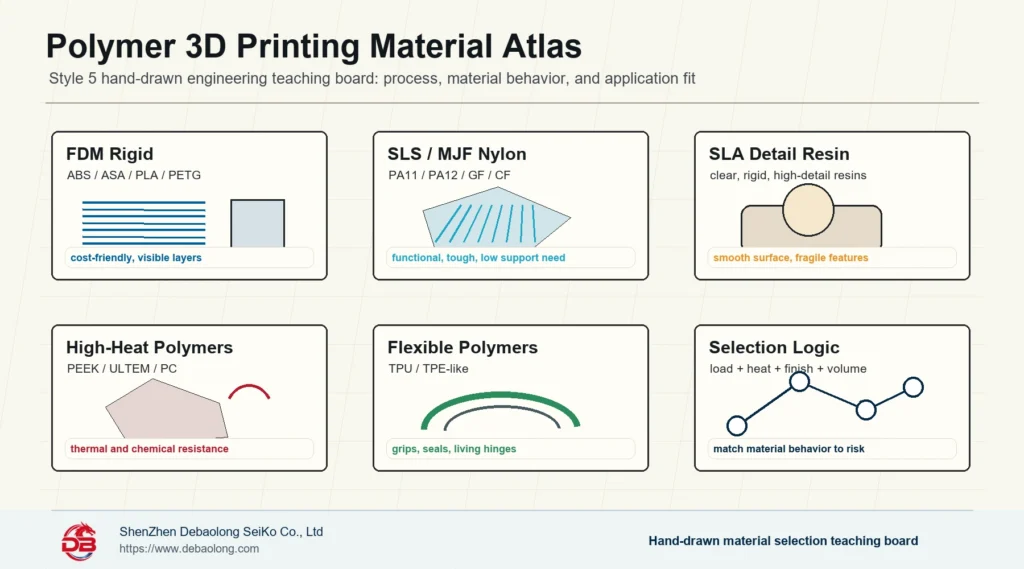
Start with the part’s real operating conditions. A prototype that only needs visual approval can use a different material than a fixture that carries load, a housing exposed to heat, or a flexible part that must survive repeated bending. Then confirm the printing process, surface finish, tolerance expectation, post-processing, and quantity.
- For low-cost visual or basic functional prototypes, consider PLA, ABS, ASA, PETG, or standard resin options.
- For durable functional parts, consider PA12, PA11, glass-filled PA12, or carbon-filled nylon.
- For high-temperature and chemically demanding applications, review PC, PEEK, ULTEM, and selected high-performance resins.
- For smooth detail and transparent prototypes, SLA materials may be more suitable than FDM.
- For flexible components, TPU and TPE-like materials should be checked for hardness, elongation, abrasion resistance, and geometry.
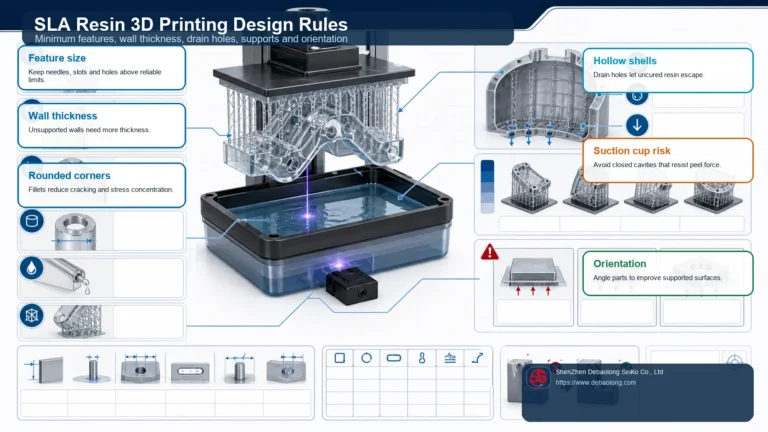
For related design rules, DEBAOLONG’s SLA design guide explains printable resin features, while the PolyJet design guide covers fine-detail and surface-quality considerations. For broader manufacturing strategy, our DFM prototyping guide helps connect material selection to production risk.
Conclusion
A good 3D printing material choice begins with function, not with a material list. Strength, heat resistance, flexibility, surface finish, tolerance, and post-processing must be reviewed together. When the material, process, geometry, and service environment are aligned, 3D printing becomes a reliable tool for prototypes, functional parts, fixtures, and low-volume production support.
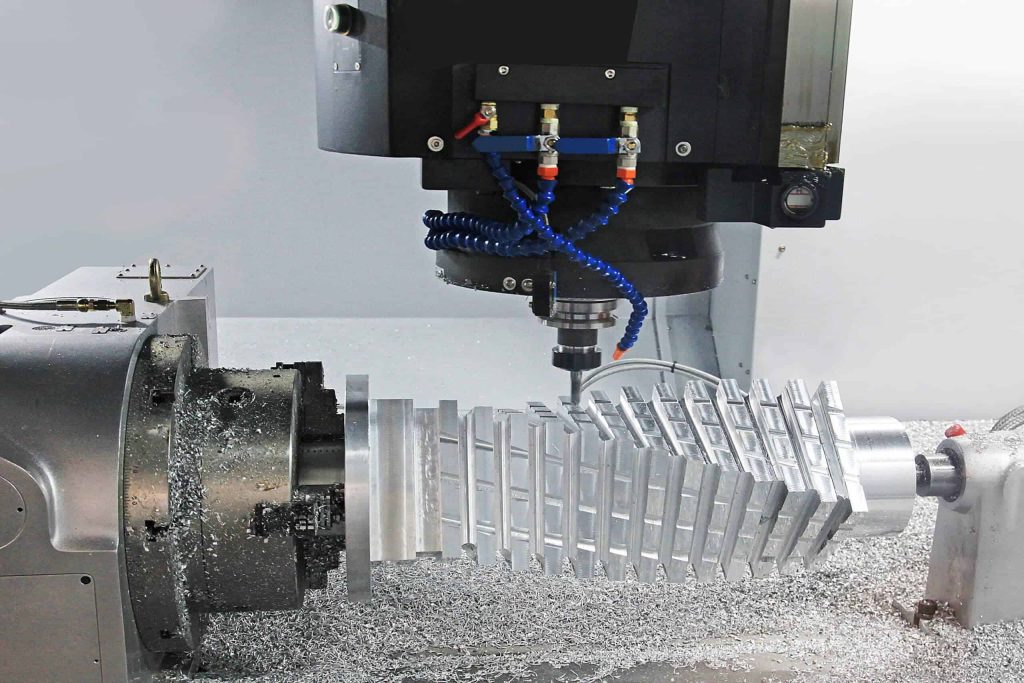
DEBAOLONG supports prototype and low-volume manufacturing decisions across 3D printing, CNC machining, sheet metal fabrication, injection molding, and production-oriented DFM review. If a printed part may later move into machining or molding, material selection should also consider the next manufacturing step.