Engineering review for every RFQ
CNC · 3D Printing · Sheet Metal · Injection Molding
Prototype · Low Volume · Production
Process, material, finish and inspection decisions connected

Shenzhen, China

Search
Menu

A practical manufacturing partner connecting process, materials, applications and review.

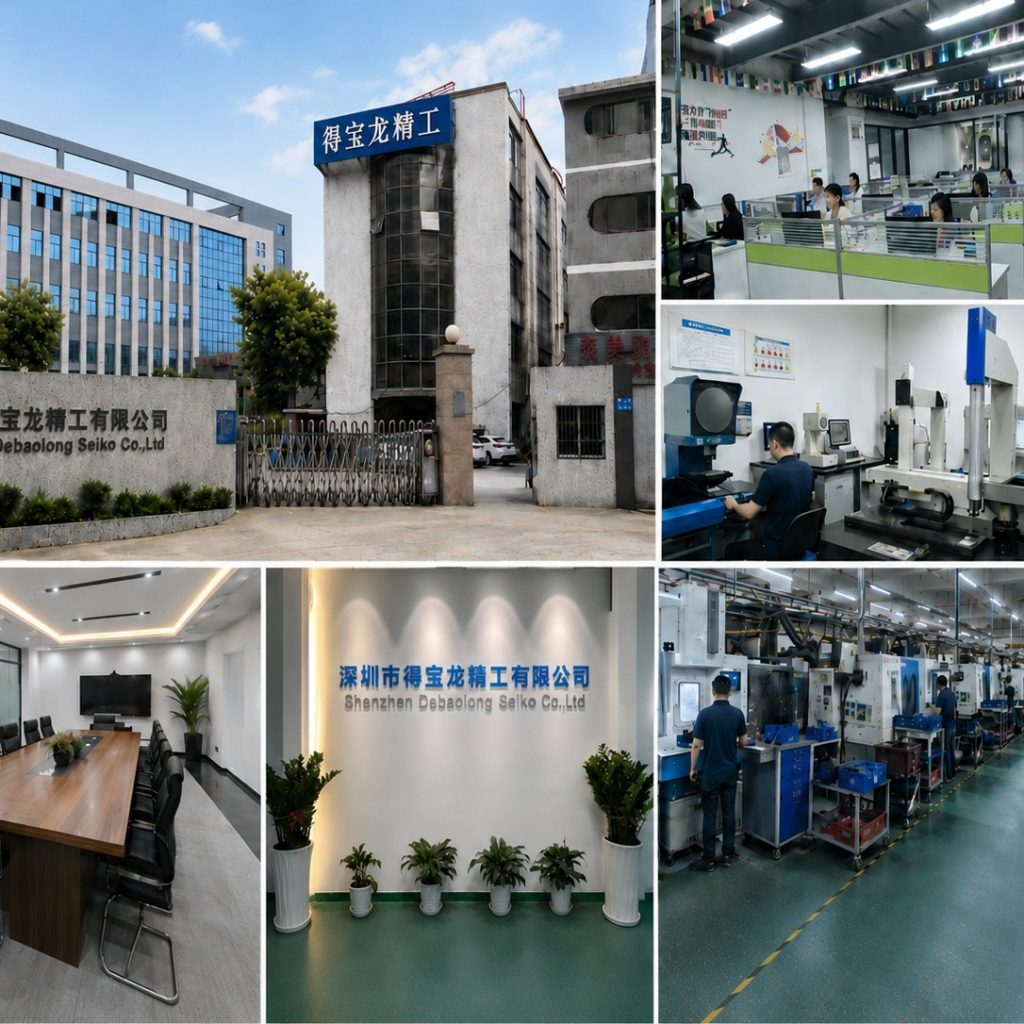
The factory collage shows building, workshop and manufacturing context.

An illustrative planning graphic connects critical features, manufacturing decisions and engineering review. It is not a production inspection record.


Use Contact for general conversation or Engineering Review for a project-specific brief.

METAL

Copper

Review copper components against the specified grade and stock condition, including conductivity requirements and thermal interfaces. Confirm contact areas, machining, joining, burr control and finish or masking requirements. Use the actual drawing and acceptance criteria to resolve the manufacturing route through engineering review.
debaolong (1)
ENGINEERING DOSSIER

Connect copper conductivity, thermal role, distortion control and contact surfaces

Conductivity depends on the complete interface

Copper is often considered for thermal or electrical paths, but alloy, temper, surface condition and joint design govern the useful result.

Machining and thin-feature control

Soft or gummy cutting behavior, broad sealing faces and thin fins require stable support, suitable tools and deliberate burr management.

Oxidation and contact zones

Appearance changes and surface films may be acceptable or critical depending on sealing, brazing, plating or electrical contact intent.

Inspection for thermal hardware

Tie flatness, ports, sealing surfaces and interface cleanliness to the assembly drawing rather than a generic copper tolerance.
MATERIAL IDENTITY

Identity, supplied condition and route fit for Copper

Copper is often considered for thermal or electrical paths, but alloy, temper, surface condition and joint design govern the useful result.
Specify the exact Copper grade, supplied form, condition and any certification requirement. The family name alone is not a purchase specification.
debaolong (1)
DECISION CONTROLS

What the Copper decision must keep visible

Machining and thin-feature control

Soft or gummy cutting behavior, broad sealing faces and thin fins require stable support, suitable tools and deliberate burr management.

Oxidation and contact zones

Appearance changes and surface films may be acceptable or critical depending on sealing, brazing, plating or electrical contact intent.

Inspection for thermal hardware

Tie flatness, ports, sealing surfaces and interface cleanliness to the assembly drawing rather than a generic copper tolerance.
PROJECT-SPECIFIC DECISION DATA

Material dossier before Copper release

Confirm exact grade, form, environment and manufacturing route; a family label alone is not a released specification.
Decision itemWhat must be resolvedEvidence at release
Conductivity depends on the complete interfaceCopper is often considered for thermal or electrical paths, but alloy, temper, surface condition and joint design govern the useful result.Exact grade, form and condition
Machining and thin-feature controlSoft or gummy cutting behavior, broad sealing faces and thin fins require stable support, suitable tools and deliberate burr management.Process, geometry and interfaces
Oxidation and contact zonesAppearance changes and surface films may be acceptable or critical depending on sealing, brazing, plating or electrical contact intent.Drawing, finish and critical checks
Inspection for thermal hardwareTie flatness, ports, sealing surfaces and interface cleanliness to the assembly drawing rather than a generic copper tolerance.Drawing, finish and critical checks
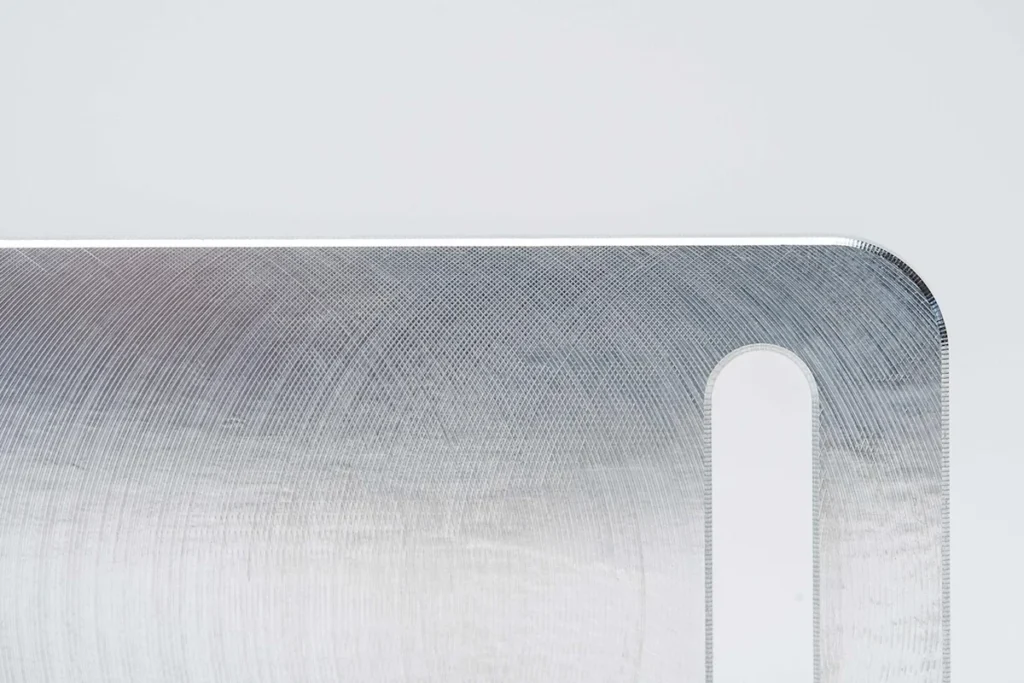
Close-up of copper and aluminum machined contact surfaces and connection holes for energy storage hardware.
APPLICATION BOUNDARY

Match Copper evidence to the real component and environment

Evaluate Copper against load, temperature, chemical exposure, wear, electrical/thermal role, appearance and documentation needs of the actual component.
Confirm stock availability, section changes, wall thickness, threads, inserts, joining, dimensional stability and finish compatibility before releasing a Copper design.
PART AND PROCESS EVIDENCE

Copper identity, process and application evidence

debaolong (1)
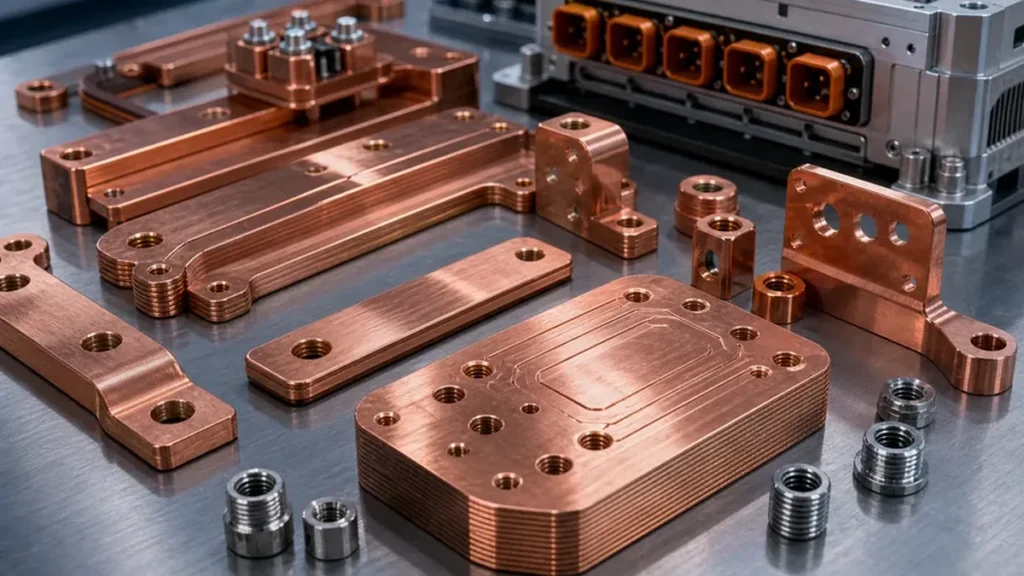
Copper-coloured component reference; confirm alloy, conductivity requirements and the released drawing for the actual part.
Close-up of copper and aluminum machined contact surfaces and connection holes for energy storage hardware.
Conductive-interface reference showing copper and aluminum components; confirm the actual material, contact condition and acceptance criteria. Not a project test report.
Copper and aluminum conductive support parts and machined interfaces for energy storage systems.
Assembly-layout reference for conductive support parts; review joints, contact surfaces and isolation against the actual design. Not proof of a copper grade or production lot.
DECISION QUESTIONS

Copper selection and documentation questions

What should I include in a copper-part RFQ?

Send the controlled CAD and drawing, copper grade and stock condition, quantity, and the intended electrical or thermal role. Identify contact faces, sealing surfaces, joining requirements, burr limits and any finish or masking zones. State the acceptance evidence needed for those interfaces. If the grade or route is unresolved, identify that decision in the brief so it can be reviewed before release.

Which interfaces need project-specific confirmation?

Appearance changes and surface films may be acceptable or critical depending on sealing, brazing, plating or electrical contact intent. Do not generalize performance from the material-family label. Confirm grade, condition, environment and acceptance requirements before release.

What should accompany release?

Tie flatness, ports, sealing surfaces and interface cleanliness to the assembly drawing rather than a generic copper tolerance. Drawing, finish and critical checks
PROJECT BRIEF

Copper material brief and evidence checklist

Use these page-specific checks to confirm the exact Copper identity, supplied condition, manufacturing route and inspection evidence. A family label alone is not a released material specification.

Grade and condition — Conductivity depends on the complete interface

Copper is often considered for thermal or electrical paths, but alloy, temper, surface condition and joint design govern the useful result. State exact grade, form and supplied condition on the controlled drawing.

Functional behavior — Machining and thin-feature control

Soft or gummy cutting behavior, broad sealing faces and thin fins require stable support, suitable tools and deliberate burr management. Name the environment, interfaces and functional evidence that must be protected.

Finish and inspection — Oxidation and contact zones

Appearance changes and surface films may be acceptable or critical depending on sealing, brazing, plating or electrical contact intent. Define finish compatibility and the inspection record required at release.
CONTINUE THE ENGINEERING REVIEW

Continue the engineering review for Copper

For route planning, review CNC machining. For the assembly questions behind this material choice, use the heat-sink and thermal-hardware guide. Send the controlled drawing and unresolved copper-interface requirements through Upload CAD. These references support a project review; a reference image does not establish a material grade or test result.