Shenzhen, China
Find manufacturing processes, materials, finishes, applications and engineering guidance.
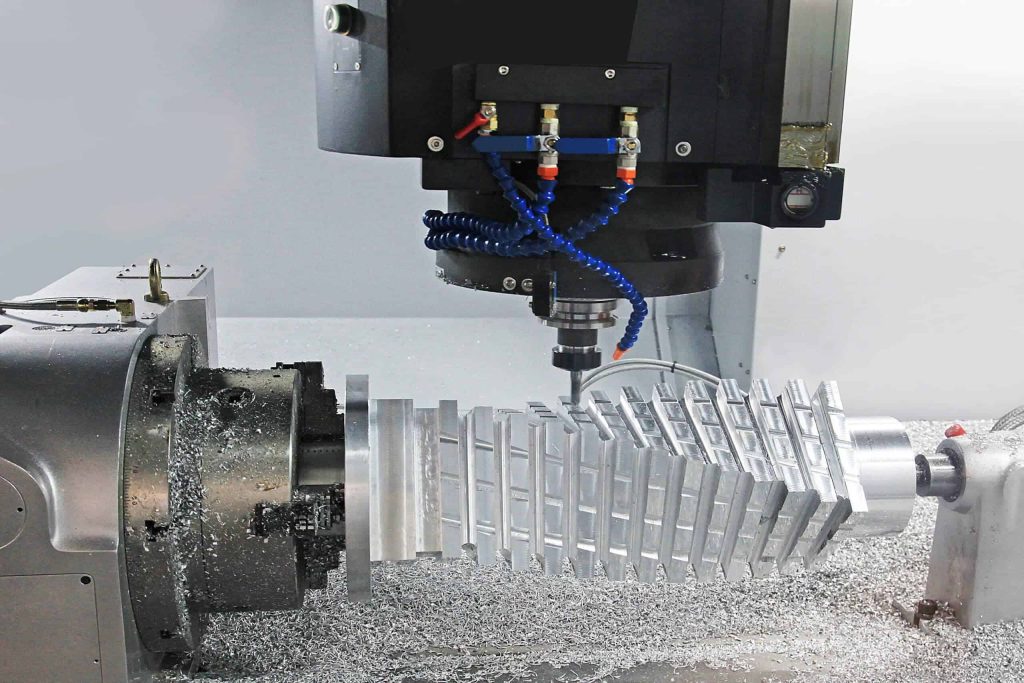
Review milling or turning through setup, material, surface intent and critical interfaces.
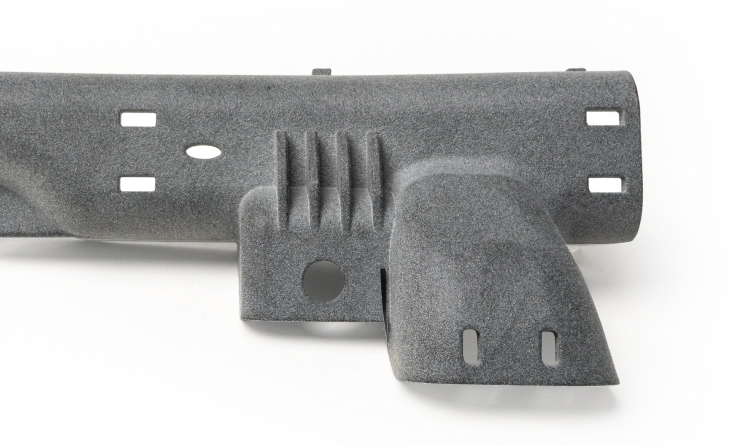
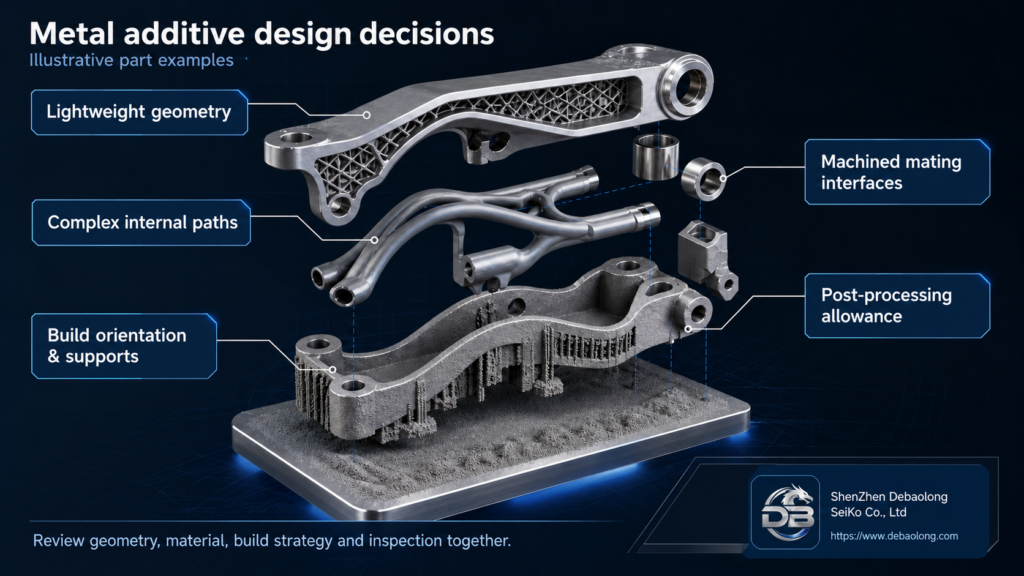
Connect process, orientation, wall, support and post-processing to the part intent.
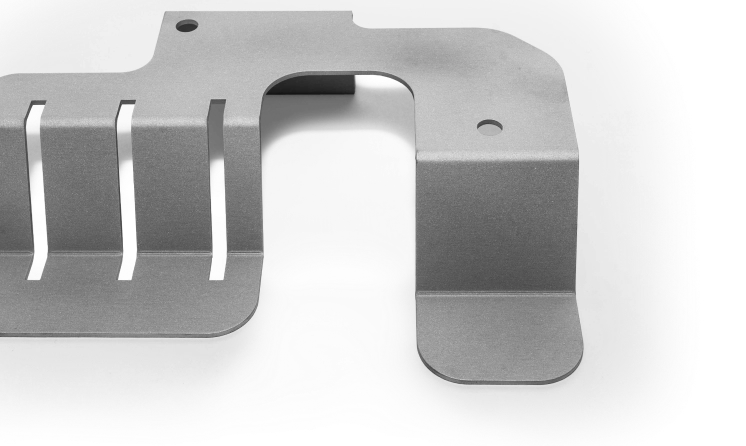
Keep gauge, bend strategy, assembly and finish decisions in one review path.
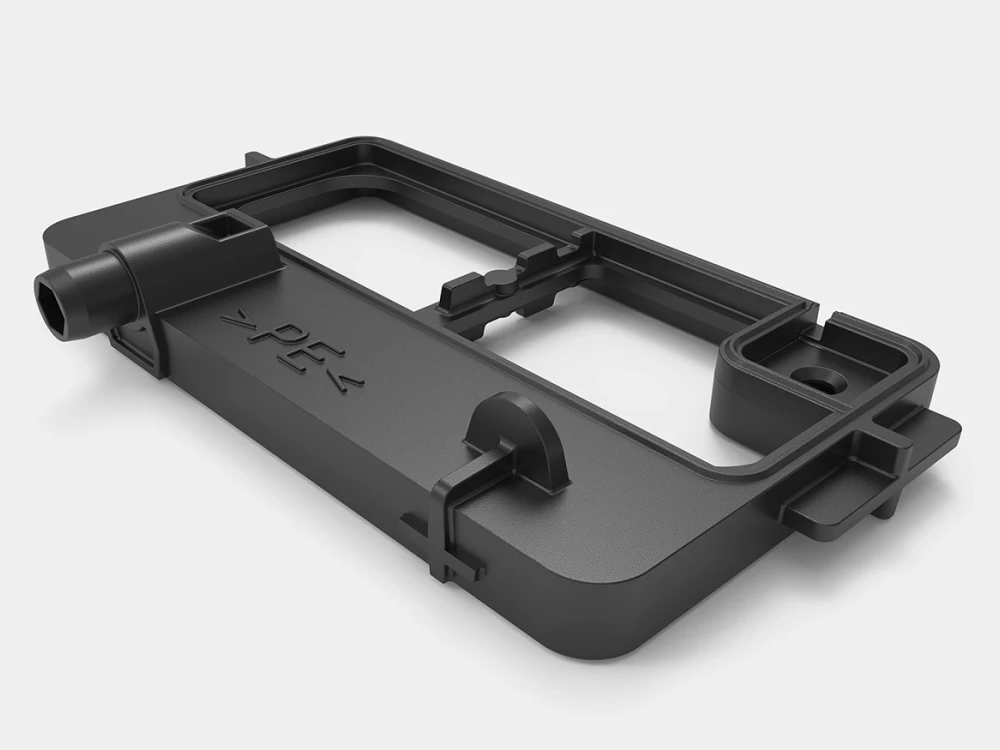
Link part geometry, polymer choice, tooling intent and repeat-production context.

Compare strength, stability, conductivity, machinability and finish relationships.
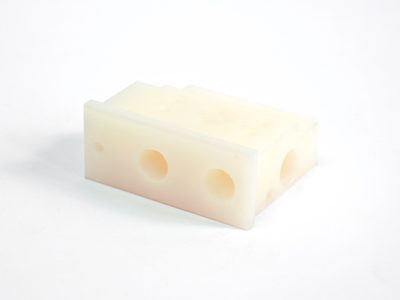
Review moisture, stability, temperature, fit and production-route implications.
Select through process, orientation, geometry and post-processing rather than a name alone.
Material choice stays connected to bend behavior, hardware, assembly and coating.
Compare surface-finishing options by material, function and manufacturing process.

Compare surface goals, material compatibility and process requirements before choosing a finish.

A practical manufacturing partner connecting process, materials, applications and review.
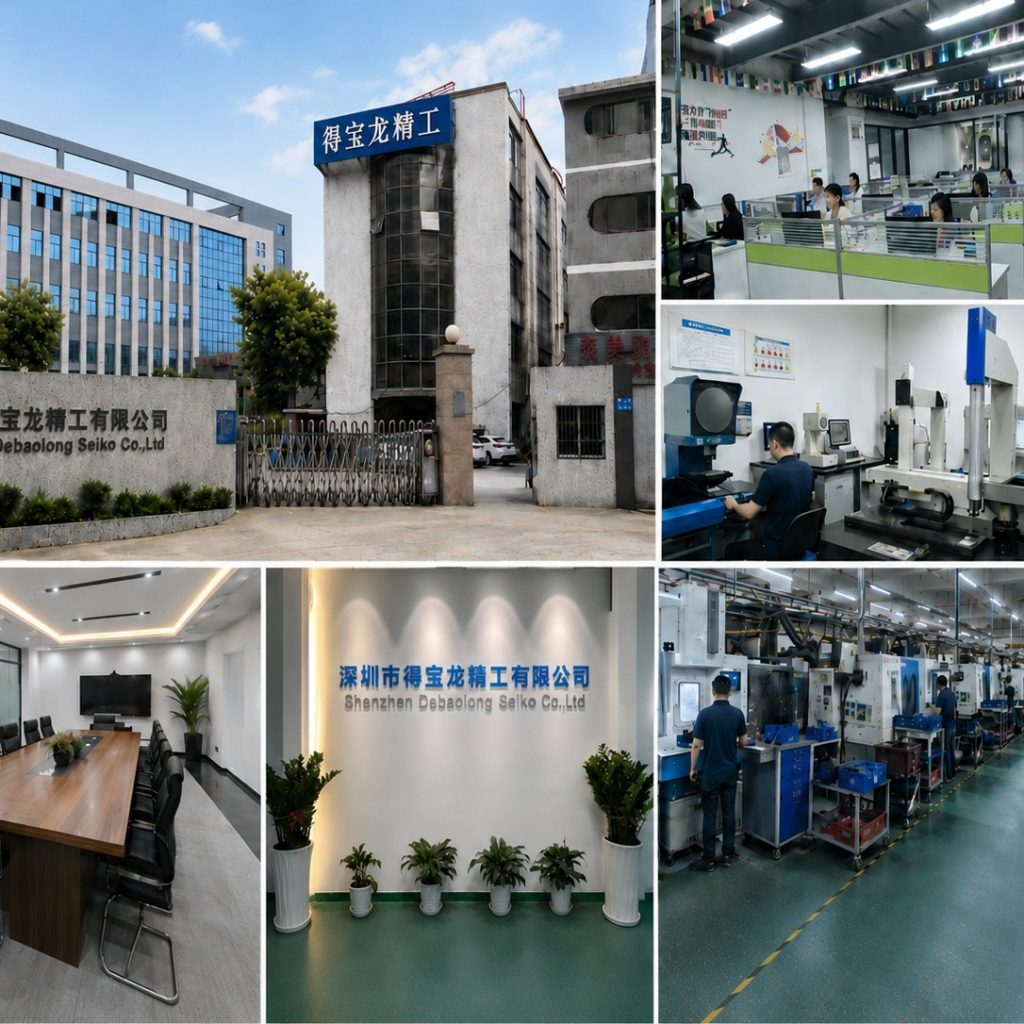
Explore factory context connected to manufacturing routes.
The factory collage shows building, workshop and manufacturing context.
Explore inspection planning connected to manufacturing decisions and engineering review.

An illustrative planning graphic connects critical features, manufacturing decisions and engineering review. It is not a production inspection record.

Use Contact for general conversation or Engineering Review for a project-specific brief.
Explore Debaolong materials by process compatibility, part intent, finish relationship and engineering context.
Metals · machining, forming, conductivity and finish
Engineering plastics · stability, moisture, fit and temperature
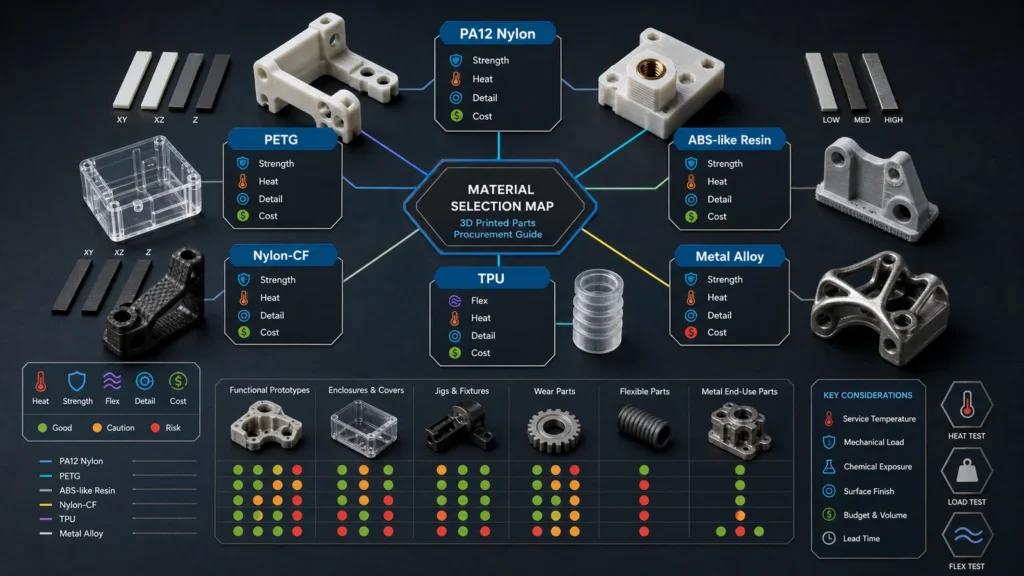
Additive materials · process, orientation and post-processing
Sheet materials · gauge, bend, hardware and coating
Material choices organized through additive process and part intent.
Sheet alloy choices connected to gauge, bends, hardware and coating.
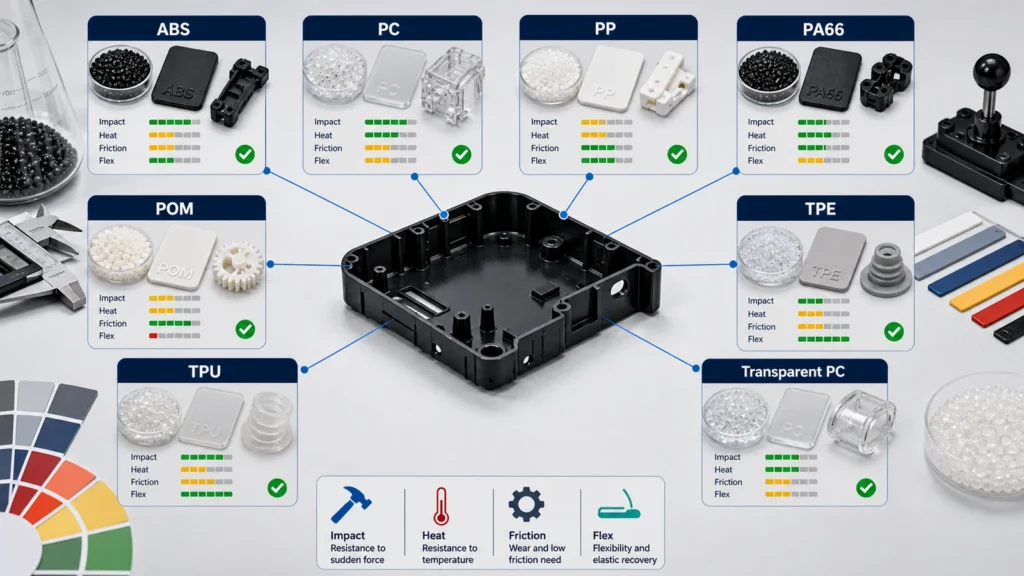
Polymer choices connected to wall, draft, shrinkage, gate and production intent.
Control tool marks and surface appearance while keeping dimensional and inspection requirements in view.
Compare process compatibility, function and production context.
Connect cosmetic quality, masking and inspection to the finish intent.
Review powder-coating benefits, material compatibility and application context before specifying the finish.
Part function, environment, production stage, geometry, finish intent and critical interfaces create better guidance than a material name alone.
Compare material families by manufacturing route, then confirm the exact grade, supplied form and project requirements during engineering review.
Confirm alloy, sheet thickness, bend requirements, joining and finish together. Explore sheet-material guidance.
Titanium: Specify the alloy, supplied form, critical interfaces and drawing requirements. Confirm material availability and the intended manufacturing route during engineering review.
Polycarbonate: State the exact grade, appearance or transparency requirement, service environment and critical dimensions before shortlisting a stock form or process.
PEI: Identify the resin grade and reinforcement, operating conditions and documentation requirements. Confirm the supplied form and inspection criteria for the part.
PTFE: Describe the sealing, sliding or other intended function, assembly interfaces and service conditions. Review grade, fillers and dimensional requirements together.
Polypropylene: Specify the grade, part function, environment and production quantity. Confirm whether the prototype and production parts will use the same material and manufacturing route.
Casting-resin family: polyurethane and casting-resin systems are reviewed case by case. Specify target hardness, color, service conditions and application requirements in the RFQ.
MATERIAL SELECTION BY PROCESS
ADDITIVE MATERIAL GATEWAYS
Compare material families by manufacturing route, then confirm the exact grade, supplied form and project requirements during engineering review.
Choose a process below to compare representative materials. Swipe the process tabs on smaller screens.
Representative materials
Application-specific polymers: medical, food-contact and regulated-use topics require project-specific material and compliance confirmation; they are not presented as automatic production-capability claims.