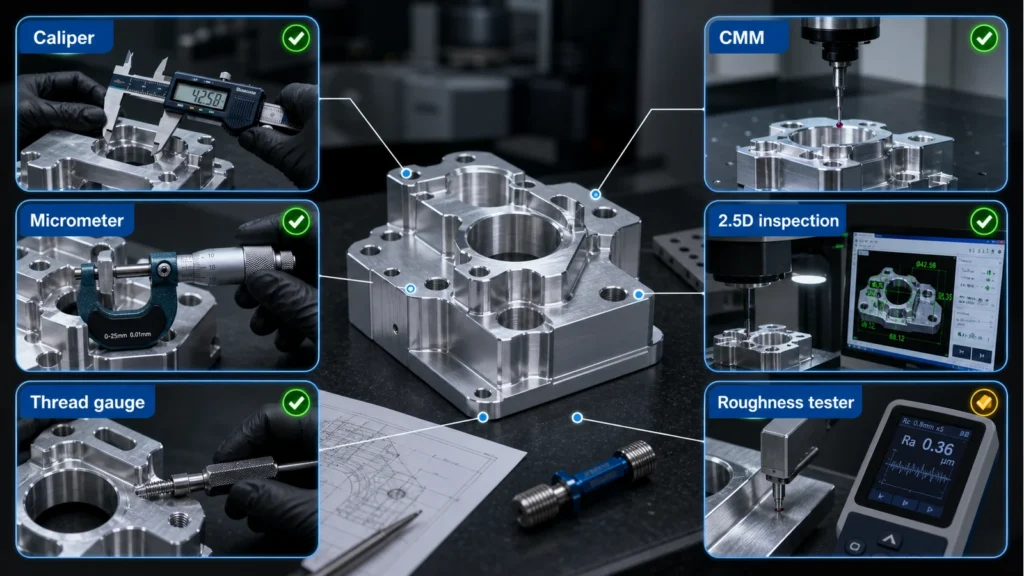

Use this checklist to compare polymer CNC machining and 3D printing for plastic prototypes, functional parts, tolerances, materials and production risk.
CNC Machining and 3D Printing as Plastic Routes
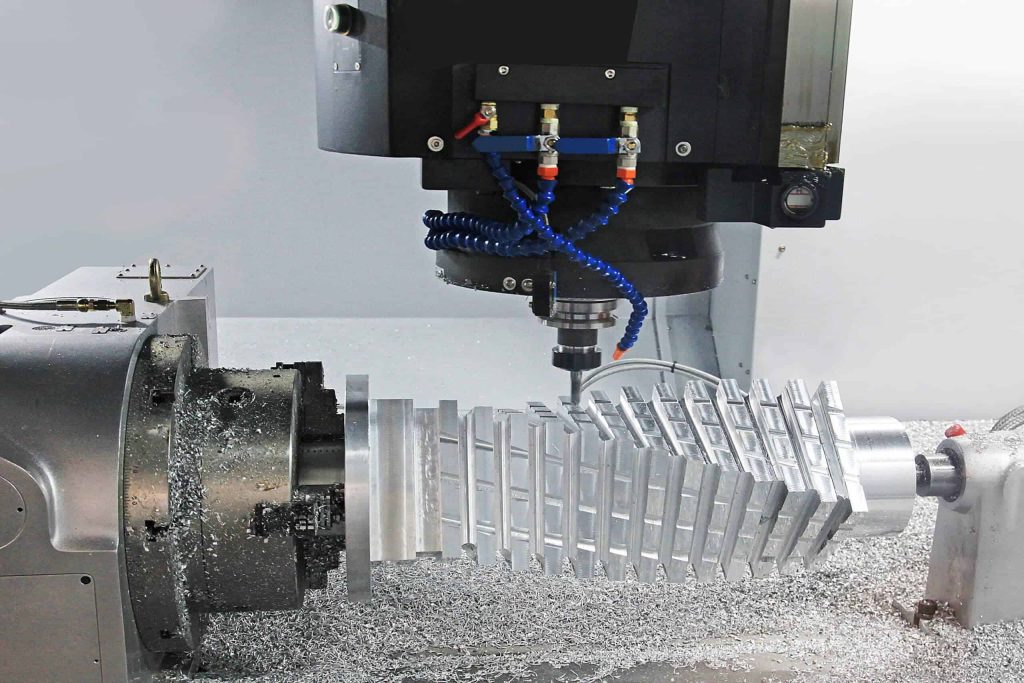
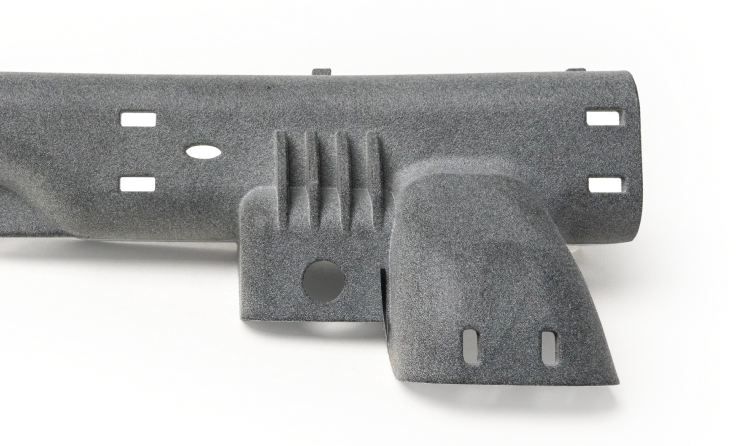
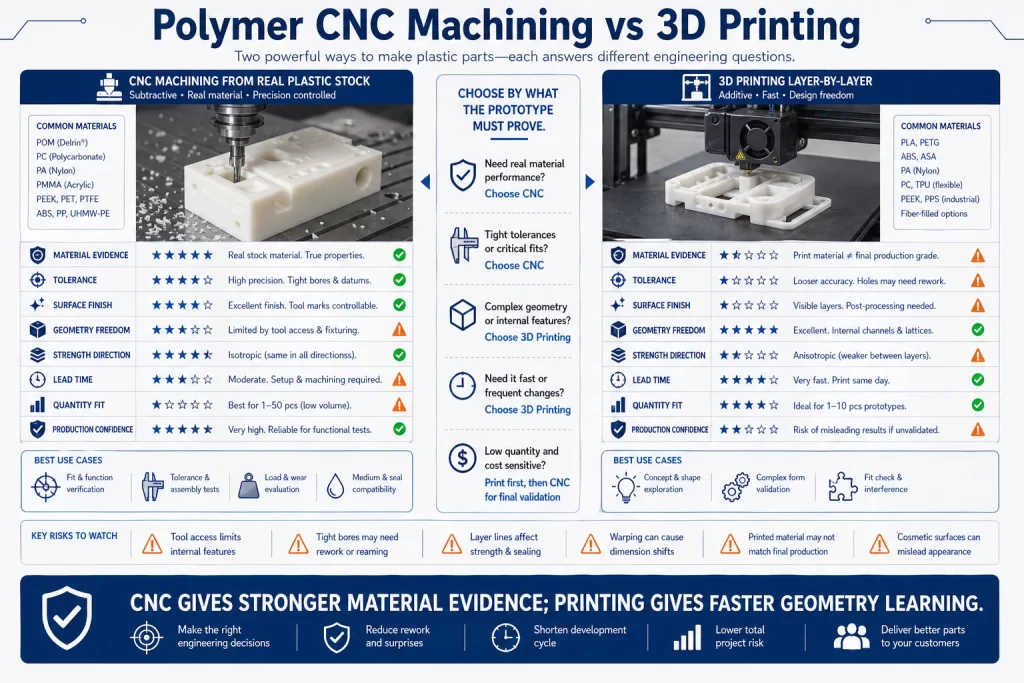
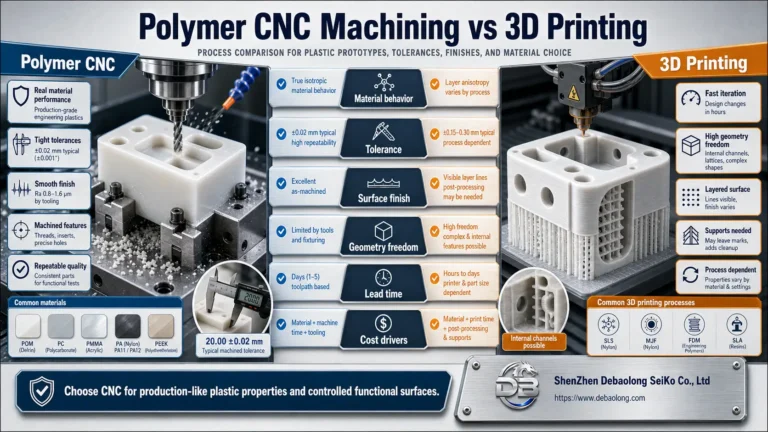
Polymer CNC machining removes material from real plastic stock, while 3D printing builds parts layer by layer. CNC is strong when final material behavior, tolerance and machined surfaces matter. Printing is strong when geometry changes quickly or complex shapes need to be tested.
The source checklist correctly frames this as a decision between subtractive and additive evidence.
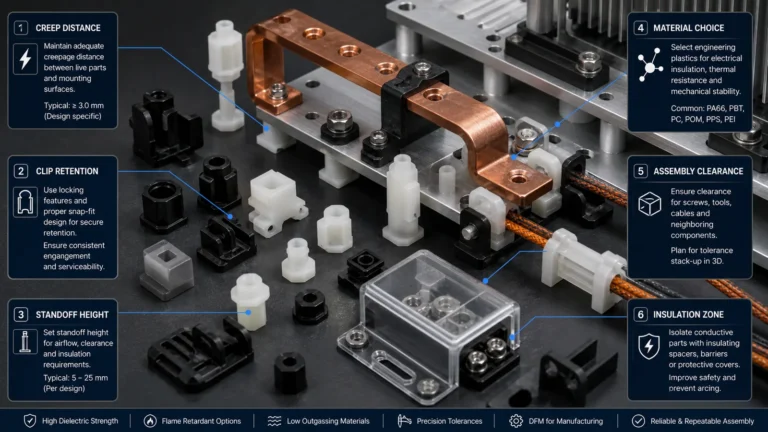
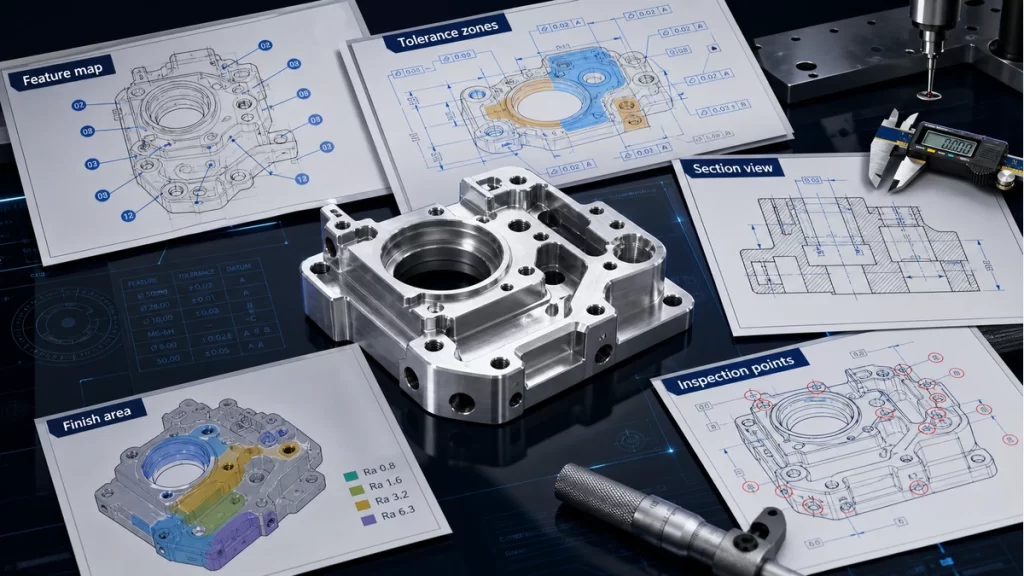
In practical terms, cnc machining and 3d printing as plastic routes should be translated into drawing notes, process limits, material choices, tolerance expectations, finish requirements and inspection points before the design is released. For polymer cnc machining vs 3d printing: engineering checklist for plastic parts, the useful result is not just a general comparison, but a manufacturing decision that buyers, engineers and suppliers can apply consistently during quoting, prototyping and production planning. This is where a topic moves from educational guidance into a real release standard.
Strength, Lead Time and Quantity
If the part must carry load in a known engineering plastic, CNC machining may provide more useful evidence. If the team needs a fast shape review, printing may be enough. Quantity also matters because a few prototypes and a small batch do not share the same cost logic.
Lead time should be compared together with what the part is expected to prove.
In practical terms, strength, lead time and quantity should be translated into drawing notes, process limits, material choices, tolerance expectations, finish requirements and inspection points before the design is released. For polymer cnc machining vs 3d printing: engineering checklist for plastic parts, the useful result is not just a general comparison, but a manufacturing decision that buyers, engineers and suppliers can apply consistently during quoting, prototyping and production planning. This is where a topic moves from educational guidance into a real release standard.
Machinability, Tolerances and Material Needs
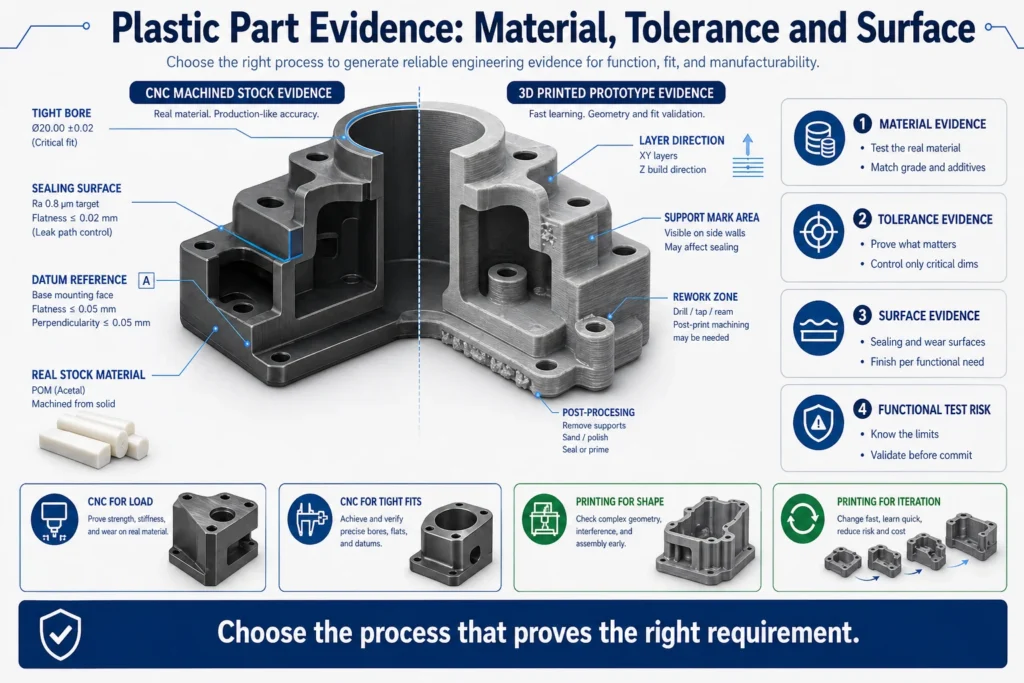
A design with inaccessible internal geometry may not be suitable for CNC machining, while a design with tight bores, sealing faces or datum surfaces may not be suitable for ordinary printing. Material availability can also decide the route.
The correct process is the one that gives the least misleading prototype result.
In practical terms, machinability, tolerances and material needs should be translated into drawing notes, process limits, material choices, tolerance expectations, finish requirements and inspection points before the design is released. For polymer cnc machining vs 3d printing: engineering checklist for plastic parts, the useful result is not just a general comparison, but a manufacturing decision that buyers, engineers and suppliers can apply consistently during quoting, prototyping and production planning. This is where a topic moves from educational guidance into a real release standard.
Fast Check for Engineering Buyers
Ask whether final material behavior matters, how tight the dimensions are, how complex the geometry is, how many parts are needed and whether the result will guide production. Those questions prevent process selection by habit.
DEBAOLONG can review polymer parts against both CNC and 3D printing constraints before manufacturing begins.
In practical terms, fast check for engineering buyers should be translated into drawing notes, process limits, material choices, tolerance expectations, finish requirements and inspection points before the design is released. For polymer cnc machining vs 3d printing: engineering checklist for plastic parts, the useful result is not just a general comparison, but a manufacturing decision that buyers, engineers and suppliers can apply consistently during quoting, prototyping and production planning. This is where a topic moves from educational guidance into a real release standard.
Quick Selection Checklist for Plastic Part Programs
The source checklist is valuable because it forces teams to compare the plastic part against real needs instead of comparing technologies in the abstract. Strength, tolerance, geometry accessibility, material type, timing and batch size should be answered clearly before choosing CNC machining or 3D printing.
DEBAOLONG uses this type of checklist to prevent misleading prototypes. If the final application depends on machined material behavior or tight bores, a printed concept may not be enough. If the main question is form, fit or geometry iteration, printing may be the faster and more useful route.
In practical terms, quick selection checklist for plastic part programs should be translated into drawing notes, process limits, material choices, tolerance expectations, finish requirements and inspection points before the design is released. For polymer cnc machining vs 3d printing: engineering checklist for plastic parts, the useful result is not just a general comparison, but a manufacturing decision that buyers, engineers and suppliers can apply consistently during quoting, prototyping and production planning. This is where a topic moves from educational guidance into a real release standard.
DEBAOLONG Engineering Review
This article has been rebuilt around the source article’s actual engineering logic instead of being treated as a short summary. The purpose is to preserve the useful decision sequence: process capability, material fit, tolerance impact, finish expectations, production risk, validation steps and how the next manufacturing decision should be made.
Before release, the design team should confirm the intended application, required quantity, critical dimensions, operating environment, acceptable finish, cleaning requirements where relevant, and the inspection method that will be used to validate the part. These details turn a manufacturing article into a production-ready review standard and reduce late changes after prototyping or tooling work has already started.
For broader manufacturing planning, review the DEBAOLONG Manufacturing Engineering Knowledge Center, compare major manufacturing process options, or use DFM for prototyping to connect early design decisions with production-ready parts.
FAQ
How should engineers use this polymer cnc machining vs 3d printing: engineering checklist for plastic parts guide?
Use it as a practical release checklist before quoting, prototyping or production handoff. The best result is a clearer manufacturing decision, not simply a longer list of process facts.
Why does source-aligned structure matter in this topic?
Because each source section answers a different engineering question. Keeping those questions separate makes it easier to review geometry, material, cost, finish, quantity and production risk without silently collapsing useful detail.
Can DEBAOLONG help turn the review into a manufacturable plan?
Yes. DEBAOLONG can review geometry, materials, tolerances, finish requirements, visual expectations and production intent before the project moves into manufacturing.