Engineering review for every RFQ
CNC · 3D Printing · Sheet Metal · Injection Molding
Prototype · Low Volume · Production
Process, material, finish and inspection decisions connected

Shenzhen, China

A practical manufacturing partner connecting process, materials, applications and review.

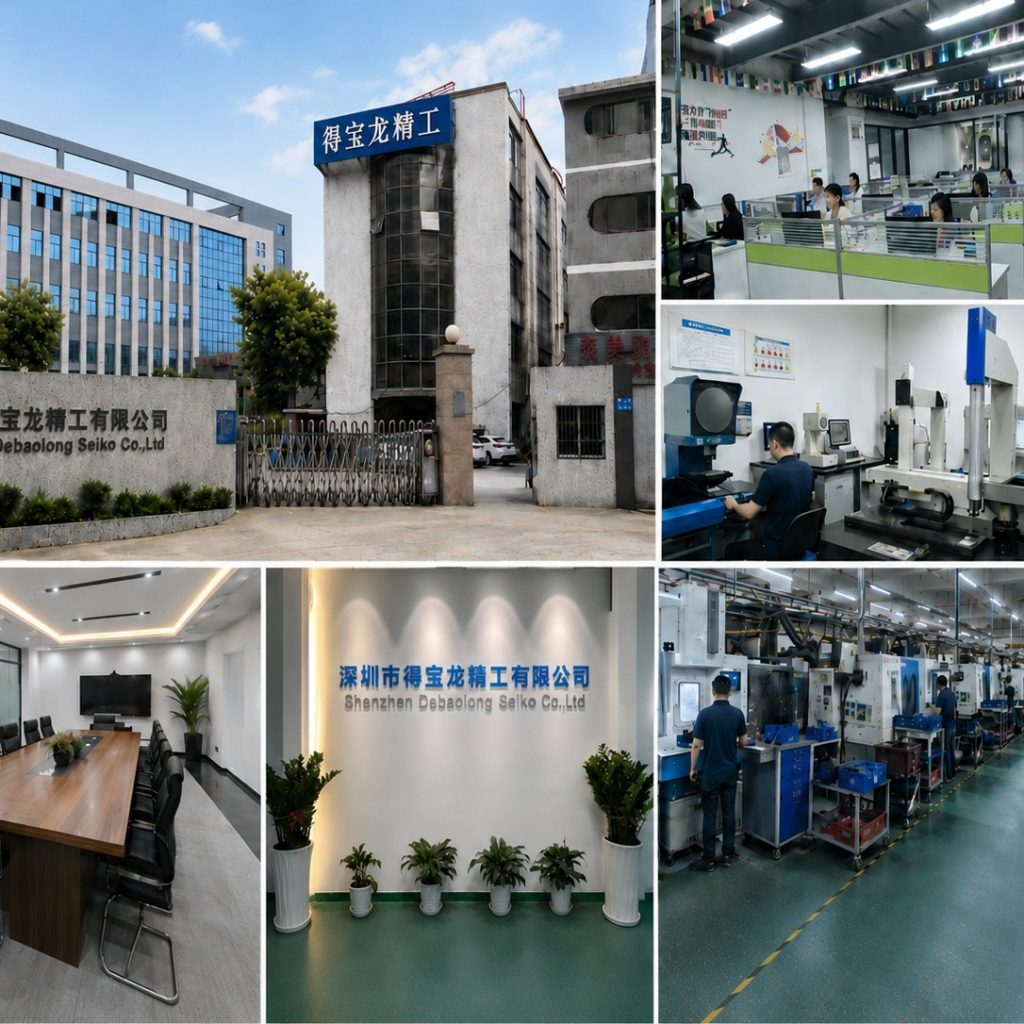
The factory collage shows building, workshop and manufacturing context.

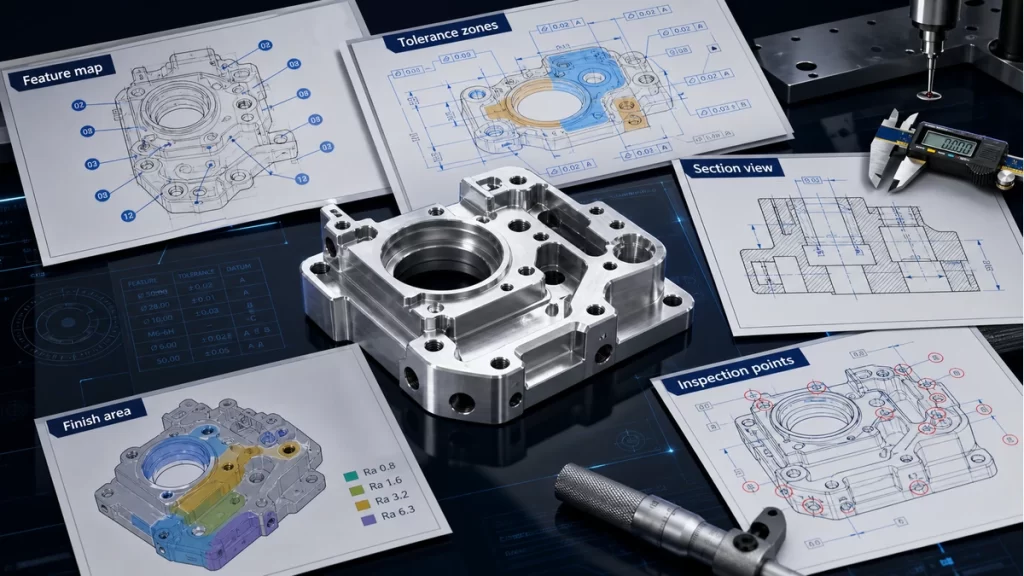
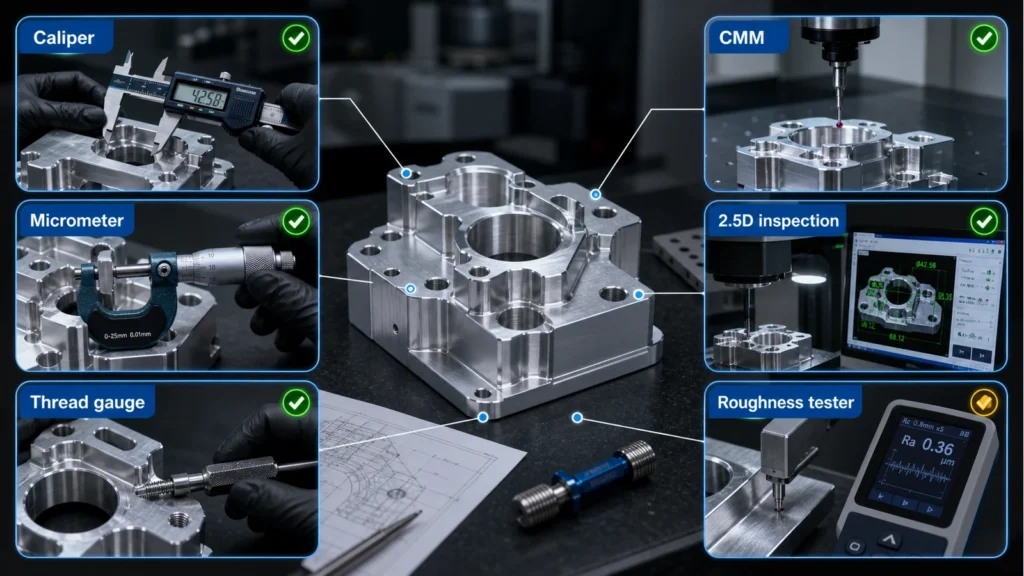
An illustrative planning graphic connects critical features, manufacturing decisions and engineering review. It is not a production inspection record.

Use Contact for general conversation or Engineering Review for a project-specific brief.

3D PRINTING MATERIALS

Choose additive material through process, function and finish.

Assorted white and gray 3D-printed plastic parts spread on a white surface, including lattice structures and mechanical components.
Representative additive part geometries — explore processes.

Start with how the part will be used, then compare thermal behavior, flexibility, detail, layer orientation and post-processing.

PROCESS + MATERIAL

Four practical additive material routes

Material names alone are not enough. The printing process changes strength direction, detail, support, porosity and surface outcome.

01

Useful for concept models, fixtures and larger low-cost parts where layer direction and support strategy matter.

02

High-detail surfaces and fine features for visual, fit and fluid-path prototypes.

03

Support-free powder-bed parts for functional geometry, nesting and durable prototypes.

04

Functional polymer parts with balanced detail, repeatability and post-processing options.

SELECTION METHOD

Define the performance envelope before choosing a resin or polymer

Use the application, not a generic ranking, to narrow the route.

01

Function

Prototype appearance, assembly fit, fixture duty or end-use load.

02

Environment

Temperature, UV, moisture, chemicals and sterilization exposure.

03

Geometry

Wall thickness, overhangs, trapped powder, support access and orientation.

04

Finish

Color, texture, sealing, coating, dyeing and dimensional verification.

MATERIAL SELECTION BY PROCESS

Representative materials, connected to the process that will shape them

Compare material families by manufacturing route, then confirm the exact grade, supplied form and project requirements during engineering review.

Choose a process below to compare representative materials. Swipe the process tabs on smaller screens.

POLYMER EXTRUSION

FDM

Representative materials

  • ABS
  • PLA
  • Carbon-fiber nylon
  • TPU
Black thermoplastic bracket with visible extrusion layers and mounting holes
Representative FDM part geometry. Confirm the exact material grade during engineering review.
PHOTOPOLYMER

SLA

Representative materials

  • Clear resin
  • White resin
  • Black resin
  • Yellow resin
Orange resin prototype with smooth surfaces and circular mounting features
Representative SLA part geometry. Confirm the exact material grade during engineering review.
POLYMER POWDER BED

SLS

Representative materials

  • PA12
  • PA12-CF
White polymer part with a circular flange and recessed geometric features
Representative SLS part geometry. Confirm the exact material grade during engineering review.
POLYMER POWDER BED

MJF

Representative materials

  • PA12
  • PA12-CF
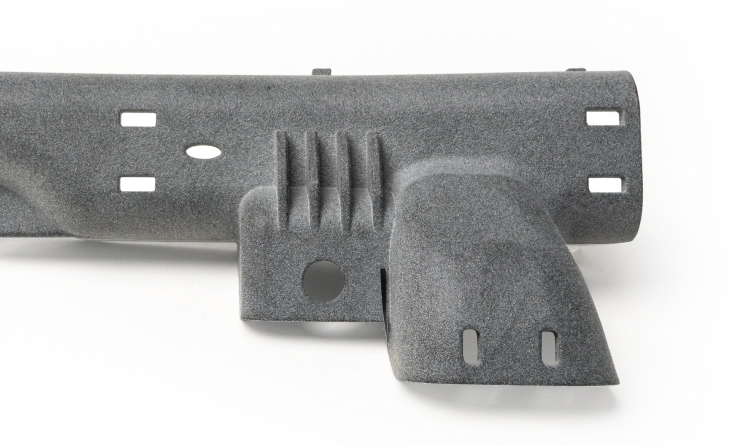
Gray polymer housings and ribbed components with a powder-bed surface texture
Representative MJF part geometry. Confirm the exact material grade during engineering review.
METAL POWDER BED

SLM / Metal 3D Printing

Representative materials

  • Aluminum
  • Stainless steel
  • Titanium
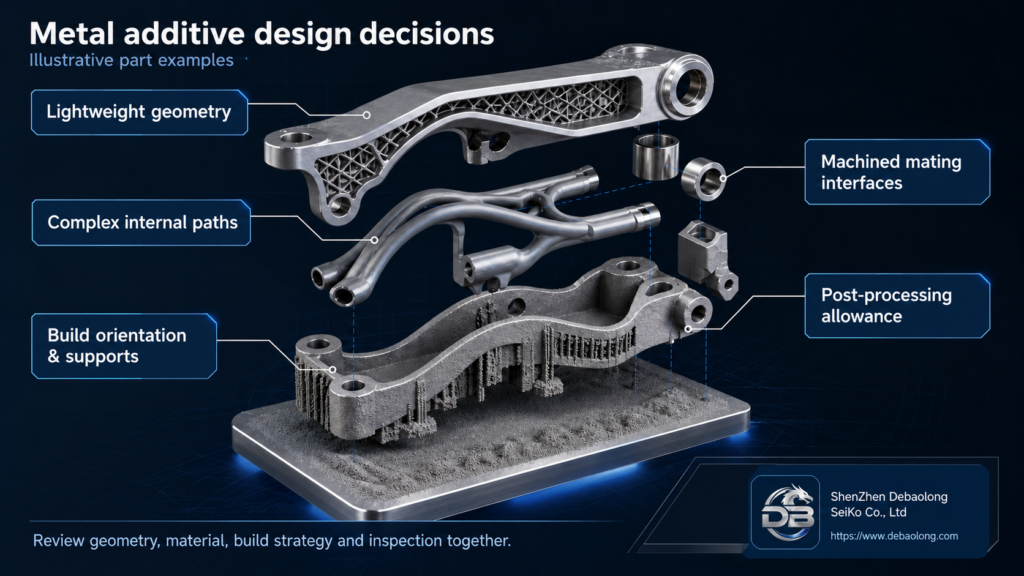
Illustration of metal additive design choices: lattice bracket, internal passages, build supports, mating interfaces and machining allowance.
Illustrative metal additive geometry — not a production or inspection record.

Application-specific polymers: medical, food-contact and regulated-use topics require project-specific material and compliance confirmation; they are not presented as automatic production-capability claims.

Match the process and material to the real part requirement

Send geometry, quantity, functional surfaces and service conditions for a focused additive review.