Engineering review for every RFQ
CNC · 3D Printing · Sheet Metal · Injection Molding
Prototype · Low Volume · Production
Process, material, finish and inspection decisions connected

Shenzhen, China

Search
Menu

A practical manufacturing partner connecting process, materials, applications and review.

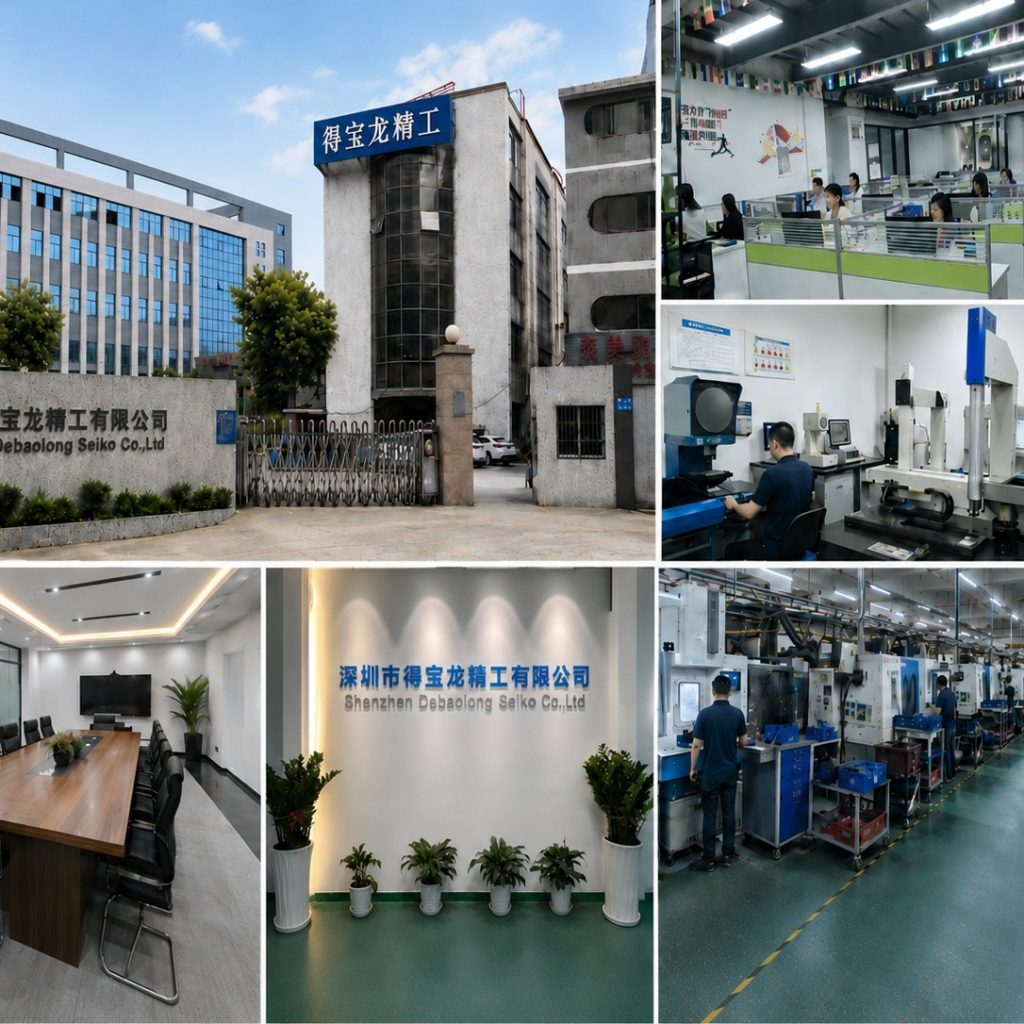
The factory collage shows building, workshop and manufacturing context.

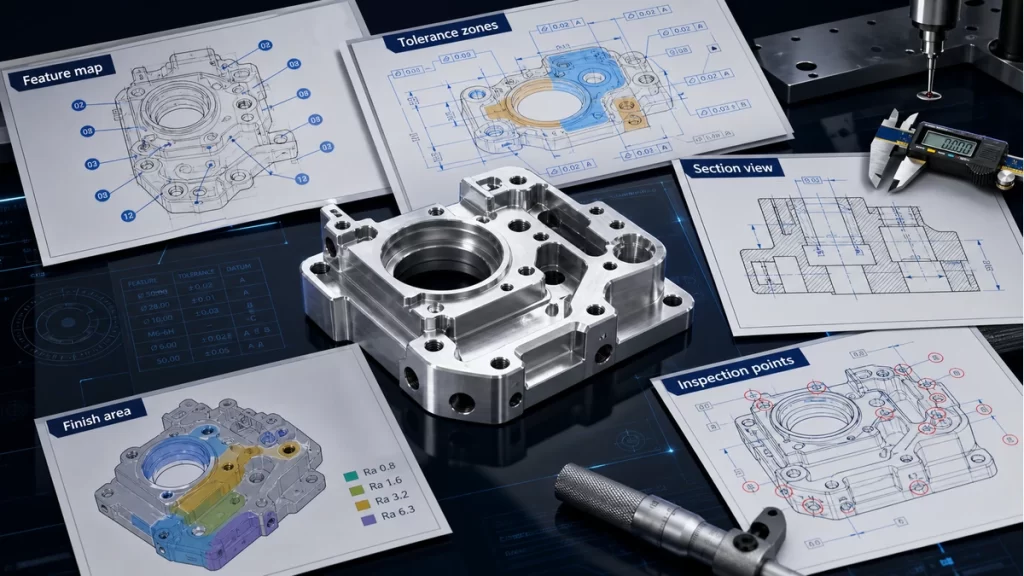
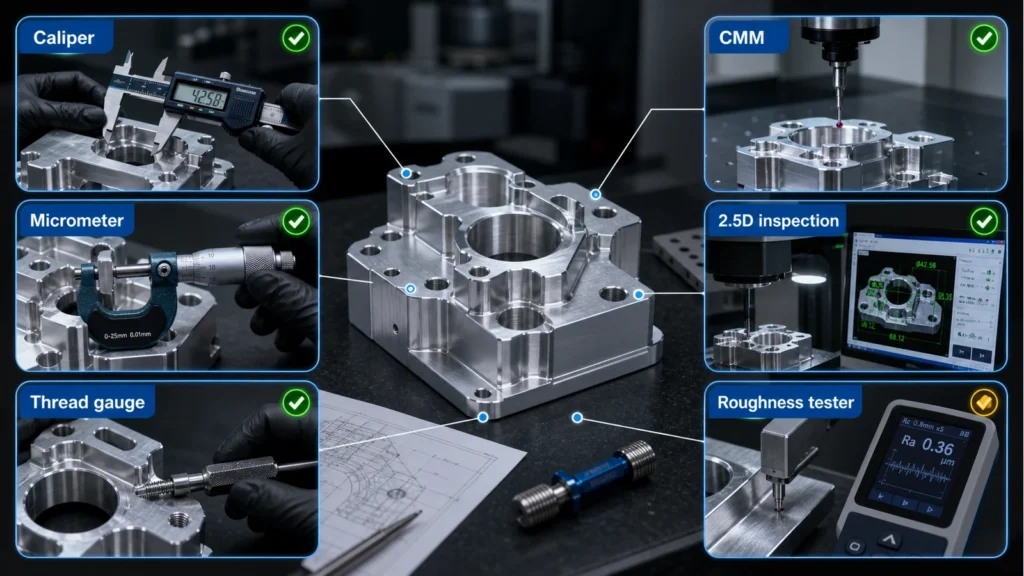
An illustrative planning graphic connects critical features, manufacturing decisions and engineering review. It is not a production inspection record.

Use Contact for general conversation or Engineering Review for a project-specific brief.
METAL

Alloy steel

High strength and toughness, fatigue resistance. Alloy steels contain other alloying elements in addition to carbon, which improves hardness, toughness, fatigue resistance and wear resistance.
NJuIlMyqSwuUJAcHd2Eu SS 303
ENGINEERING DOSSIER

Resolve alloy-steel grade, heat-treatment sequence and finish path before machining

Grade and heat-treatment route lead the decision

Alloy steel may support demanding mechanical parts, but the exact grade, delivery condition and any later heat treatment govern machining and final behavior.

Machining sequence and stability

Stock condition, interrupted cuts, thin features and heat-treatment timing can change distortion and the best point to finish critical geometry.

Corrosion and mass context

Higher strength does not remove corrosion, weight or joining considerations; state the operating environment and interface needs.

Protection and inspection

Black oxide, plating, paint or oiling require a compatible material and dimensional plan; inspect hardness or treatment evidence only when specified.
MATERIAL IDENTITY

Identity, supplied condition and route fit for Alloy steel

Alloy steel may support demanding mechanical parts, but the exact grade, delivery condition and any later heat treatment govern machining and final behavior.
Specify the exact Alloy steel grade, supplied form, condition and any certification requirement. The family name alone is not a purchase specification.
NJuIlMyqSwuUJAcHd2Eu SS 303
DECISION CONTROLS

What the Alloy steel decision must keep visible

Machining sequence and stability

Stock condition, interrupted cuts, thin features and heat-treatment timing can change distortion and the best point to finish critical geometry.

Corrosion and mass context

Higher strength does not remove corrosion, weight or joining considerations; state the operating environment and interface needs.

Protection and inspection

Black oxide, plating, paint or oiling require a compatible material and dimensional plan; inspect hardness or treatment evidence only when specified.
PROJECT-SPECIFIC DECISION DATA

Material dossier before Alloy steel release

Confirm exact grade, form, environment and manufacturing route; a family label alone is not a released specification.
Decision itemWhat must be resolvedEvidence at release
Grade and heat-treatment route lead the decisionAlloy steel may support demanding mechanical parts, but the exact grade, delivery condition and any later heat treatment govern machining and final behavior.Exact grade, form and condition
Machining sequence and stabilityStock condition, interrupted cuts, thin features and heat-treatment timing can change distortion and the best point to finish critical geometry.Process, geometry and interfaces
Corrosion and mass contextHigher strength does not remove corrosion, weight or joining considerations; state the operating environment and interface needs.Drawing, finish and critical checks
Protection and inspectionBlack oxide, plating, paint or oiling require a compatible material and dimensional plan; inspect hardness or treatment evidence only when specified.Drawing, finish and critical checks
Stainless Steel Mounting Brackets for Laboratory Instruments manufacturing guide featured image
APPLICATION BOUNDARY

Match Alloy steel evidence to the real component and environment

Evaluate Alloy steel against load, temperature, chemical exposure, wear, electrical/thermal role, appearance and documentation needs of the actual component.
Confirm stock availability, section changes, wall thickness, threads, inserts, joining, dimensional stability and finish compatibility before releasing a Alloy steel design.
PART AND PROCESS EVIDENCE

Alloy steel identity, process and application evidence

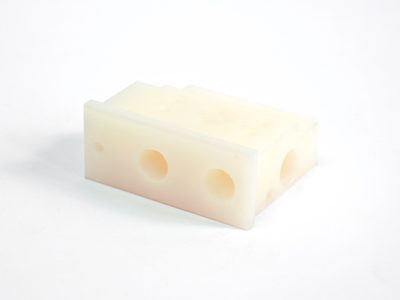
NJuIlMyqSwuUJAcHd2Eu SS 303
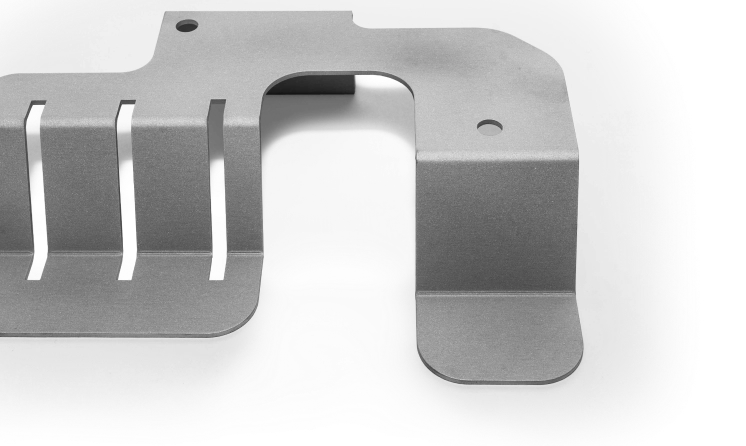
Stainless-steel part reference (SS 303 source image); not evidence of an alloy-steel grade or delivery condition.
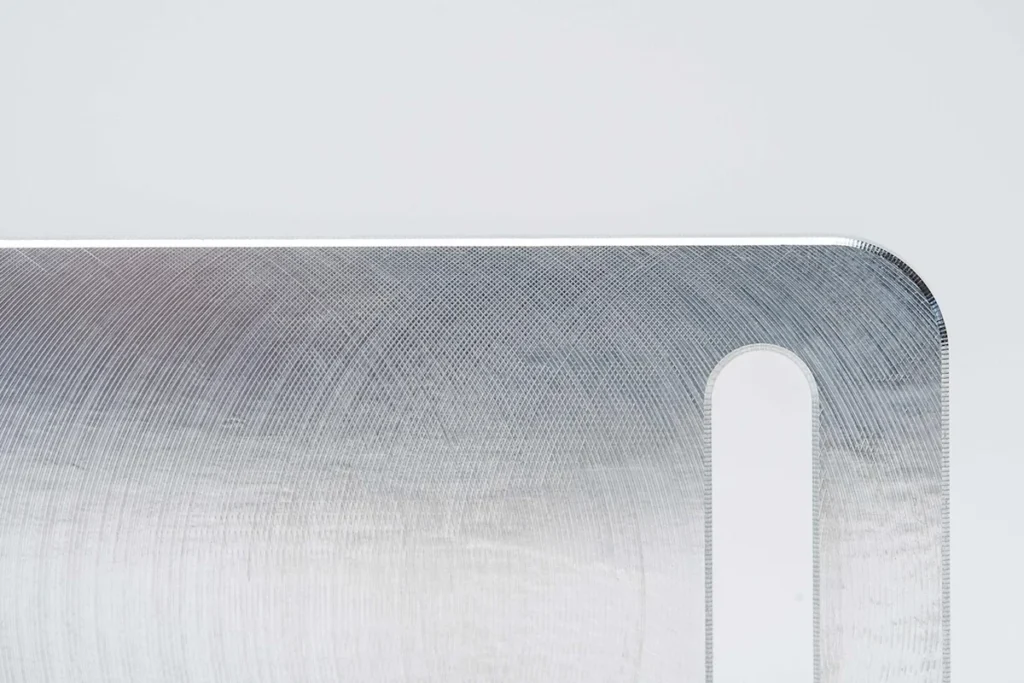
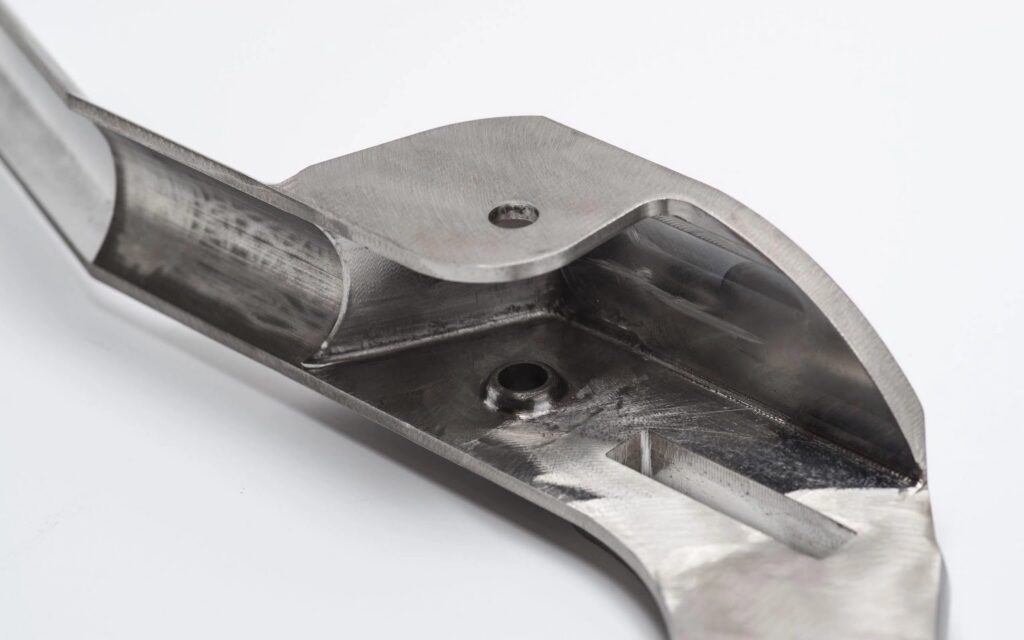
Stainless Steel Mounting Brackets for Laboratory Instruments manufacturing guide featured image
Stainless-steel bracket reference; review the alloy-steel grade, environment and interfaces for the actual component.
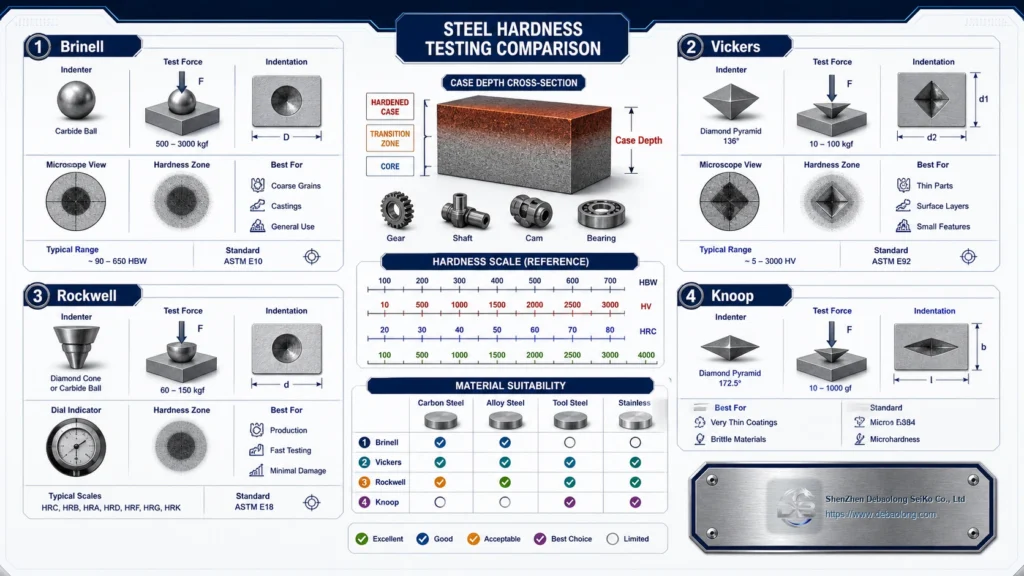
Steel hardness testing comparison showing Brinell, Vickers, Rockwell and Knoop indentation methods, case depth and material suitability.
Illustrative hardness-testing chart; not a test report for this part. Use the drawing-specified method and acceptance criteria.
DECISION QUESTIONS

Alloy steel selection and documentation questions

What must be defined before reviewing Alloy steel?

Provide the exact grade or material specification, supplied form and delivery condition, drawing revision, critical dimensions and planned heat-treatment sequence. Identify whether final machining occurs before or after treatment so distortion and critical geometry can be reviewed.

Which interfaces need project-specific confirmation?

Higher strength does not remove corrosion, weight or joining considerations; state the operating environment and interface needs. Do not generalize performance from the material-family label. Confirm grade, condition, environment and acceptance requirements before release.

What should accompany release?

Provide the released drawing revision, specified surface protection, critical dimensions and inspection requirements. Include hardness or treatment evidence only when the specification requires it; acceptance must follow the approved project requirements.
PROJECT BRIEF

Alloy steel material brief and evidence checklist

Use these page-specific checks to confirm the exact Alloy steel identity, supplied condition, manufacturing route and inspection evidence. A family label alone is not a released material specification.

Grade and condition — Grade and heat-treatment route lead the decision

Alloy steel may support demanding mechanical parts, but the exact grade, delivery condition and any later heat treatment govern machining and final behavior. State exact grade, form and supplied condition on the controlled drawing.

Functional behavior — Machining sequence and stability

Stock condition, interrupted cuts, thin features and heat-treatment timing can change distortion and the best point to finish critical geometry. Name the environment, interfaces and functional evidence that must be protected.

Finish and inspection — Corrosion and mass context

Higher strength does not remove corrosion, weight or joining considerations; state the operating environment and interface needs. Define finish compatibility and the inspection record required at release.
CONTINUE THE ENGINEERING REVIEW

Continue the engineering review for Alloy steel

Connect this decision to the related manufacturing route, material, finish and file-review workflow.