

For service inquiries, contact us at Phone: +86 13652345309 | Email: info@debaolong.com
Home » 3D Printing » SLA vs FDM 3D Printing: How Engineers Choose the Right Process

Blog

SLA vs FDM 3D Printing: How Engineers Choose the Right Process

Compare SLA and FDM 3D printing for accuracy, surface finish, strength, materials, cost and prototype decision-making in engineering projects.
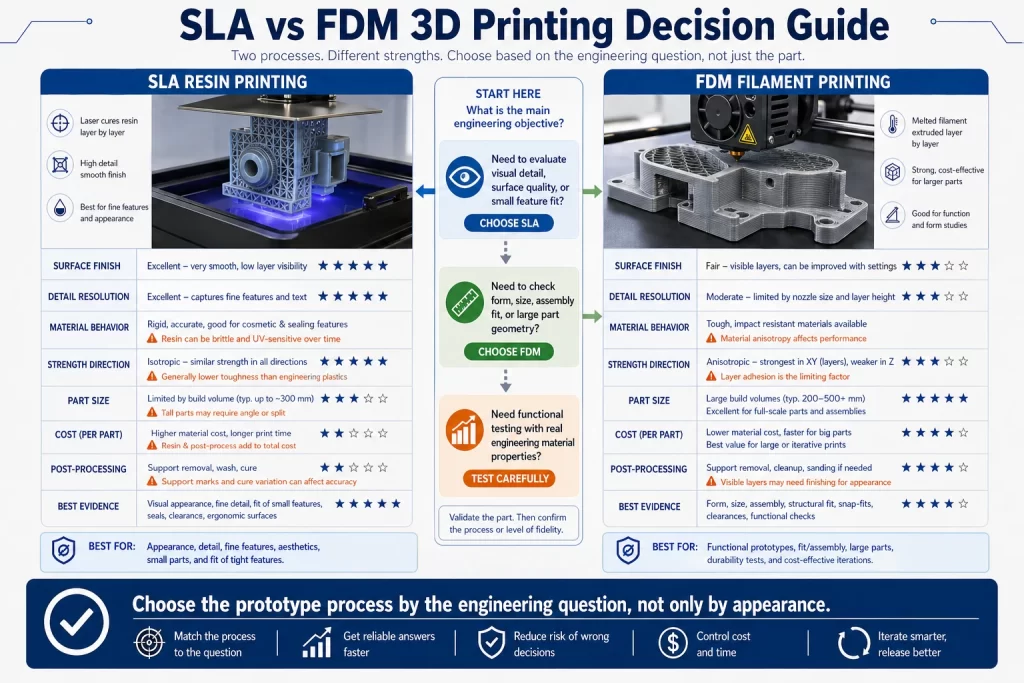
Table of Contents

Compare SLA and FDM 3D printing for accuracy, surface finish, strength, materials, cost and prototype decision-making in engineering projects.

SLA versus FDM 3D printing decision guide comparing surface finish, dimensional accuracy, material behavior, support marks, part strength, cost, speed, and prototype validation needs.

3D Printing Technology Basics

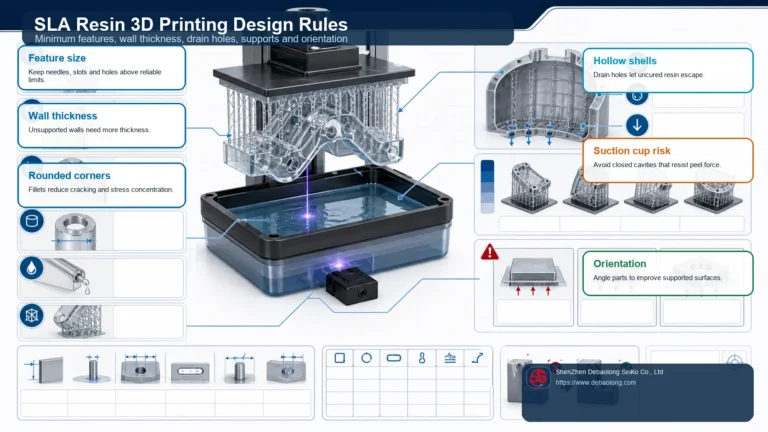
SLA and FDM both build parts layer by layer, but they differ in how material is delivered and hardened. SLA cures liquid photopolymer resin with light, which supports fine detail and smooth surfaces. FDM melts thermoplastic filament and extrudes it through a nozzle, which makes it practical for larger models and quick functional checks.

This difference affects material behavior, feature size, post-processing, cost and the kind of engineering evidence each prototype can provide.

In practical terms, 3d printing technology basics should be translated into drawing notes, process limits, material choices, tolerance expectations, finish requirements and inspection points before the design is released. For sla vs fdm 3d printing: how engineers choose the right process, the useful result is not just a general comparison, but a manufacturing decision that buyers, engineers and suppliers can apply consistently during quoting, prototyping and production planning. This is where a topic moves from educational guidance into a real release standard.

Build Materials: Resin vs Thermoplastic Filament

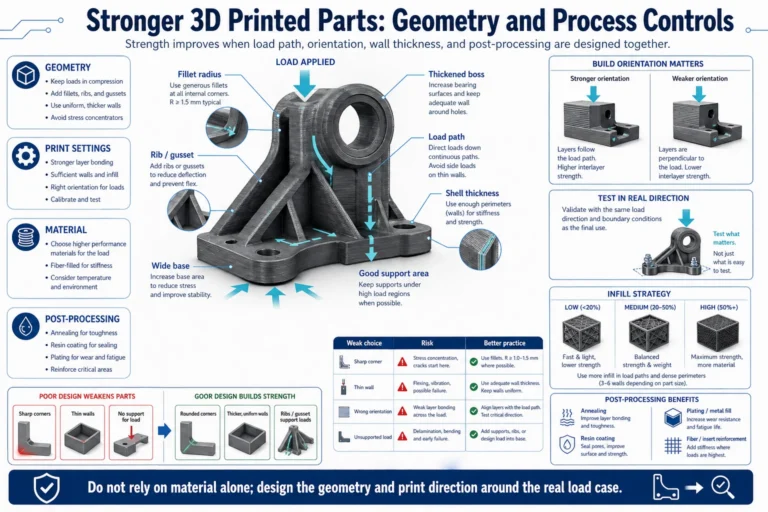
SLA materials are resin-based and can simulate clear, rigid, flexible or heat-resistant properties, but they remain photopolymers with their own aging and mechanical limits. FDM materials include PLA, ABS, ASA, PETG, nylon and other thermoplastics, giving teams familiar options for handling samples and rough functional trials.

Choose the material by test purpose. A visual model may favor SLA, while a bracket concept or larger fit-check model may favor FDM.

In practical terms, build materials: resin vs thermoplastic filament should be translated into drawing notes, process limits, material choices, tolerance expectations, finish requirements and inspection points before the design is released. For sla vs fdm 3d printing: how engineers choose the right process, the useful result is not just a general comparison, but a manufacturing decision that buyers, engineers and suppliers can apply consistently during quoting, prototyping and production planning. This is where a topic moves from educational guidance into a real release standard.

Cost Effectiveness, Accuracy and Surface Finish

FDM is often economical for larger or simpler parts, while SLA can reduce finishing effort when surface quality matters. SLA normally produces sharper details and smoother surfaces; FDM can still be accurate enough for many assembly checks when orientation and tolerance expectations are realistic.

For engineering work, the key is to avoid judging prototypes only by appearance. A smooth part is not automatically the best functional evidence.

In practical terms, cost effectiveness, accuracy and surface finish should be translated into drawing notes, process limits, material choices, tolerance expectations, finish requirements and inspection points before the design is released. For sla vs fdm 3d printing: how engineers choose the right process, the useful result is not just a general comparison, but a manufacturing decision that buyers, engineers and suppliers can apply consistently during quoting, prototyping and production planning. This is where a topic moves from educational guidance into a real release standard.

Industrial and Desktop Printer Differences

Industrial machines generally offer better process control, repeatability and material options than desktop systems. Desktop printers are useful for early design exploration, but industrial production support needs a stronger review of tolerance, material and repeatability.

DEBAOLONG connects process choice with the next manufacturing decision so the prototype supports production planning rather than only visual review.

In practical terms, industrial and desktop printer differences should be translated into drawing notes, process limits, material choices, tolerance expectations, finish requirements and inspection points before the design is released. For sla vs fdm 3d printing: how engineers choose the right process, the useful result is not just a general comparison, but a manufacturing decision that buyers, engineers and suppliers can apply consistently during quoting, prototyping and production planning. This is where a topic moves from educational guidance into a real release standard.

How to Choose Between SLA and FDM in Practice

The source article ends by treating SLA and FDM as a practical decision rather than a purely technical debate. Engineers should decide which process answers the next project question more reliably: appearance and detail, functional handling, quick iteration, or a rough production-like check.

That means comparing geometry, build size, surface expectations, material behavior, timeline and finishing effort together. DEBAOLONG uses this comparison to keep prototype selection aligned with the downstream manufacturing route instead of treating each printed sample as an isolated experiment.

In practical terms, how to choose between sla and fdm in practice should be translated into drawing notes, process limits, material choices, tolerance expectations, finish requirements and inspection points before the design is released. For sla vs fdm 3d printing: how engineers choose the right process, the useful result is not just a general comparison, but a manufacturing decision that buyers, engineers and suppliers can apply consistently during quoting, prototyping and production planning. This is where a topic moves from educational guidance into a real release standard.

DEBAOLONG Engineering Review

This article has been rebuilt around the source article’s actual engineering logic instead of being treated as a short summary. The purpose is to preserve the useful decision sequence: process capability, material fit, tolerance impact, finish expectations, production risk, validation steps and how the next manufacturing decision should be made.

Before release, the design team should confirm the intended application, required quantity, critical dimensions, operating environment, acceptable finish, cleaning requirements where relevant, and the inspection method that will be used to validate the part. These details turn a manufacturing article into a production-ready review standard and reduce late changes after prototyping or tooling work has already started.

For broader manufacturing planning, review the DEBAOLONG Manufacturing Engineering Knowledge Center, compare major manufacturing process options, or use DFM for prototyping to connect early design decisions with production-ready parts.

FAQ

How should engineers use this sla vs fdm 3d printing: how engineers choose the right process guide?

Use it as a practical release checklist before quoting, prototyping or production handoff. The best result is a clearer manufacturing decision, not simply a longer list of process facts.

Why does source-aligned structure matter in this topic?

Because each source section answers a different engineering question. Keeping those questions separate makes it easier to review geometry, material, cost, finish, quantity and production risk without silently collapsing useful detail.

Can DEBAOLONG help turn the review into a manufacturable plan?

Yes. DEBAOLONG can review geometry, materials, tolerances, finish requirements, visual expectations and production intent before the project moves into manufacturing.


Related Debaolong manufacturing services

For production planning or quotation support, compare Debaolong’s 3D printing service and 3D printing materials guide. Our engineering team can review drawings, materials, tolerances, finishing requirements, and lead-time targets before manufacturing.
author avatar
Debaolong

Related Articles

Supports

Please enable JavaScript in your browser to complete this form.