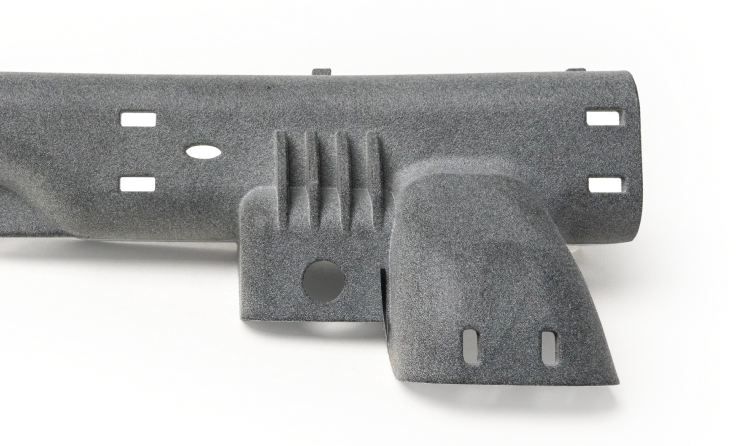
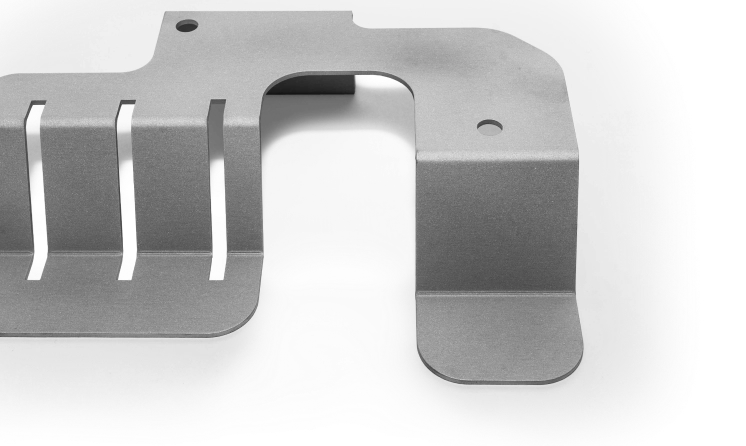
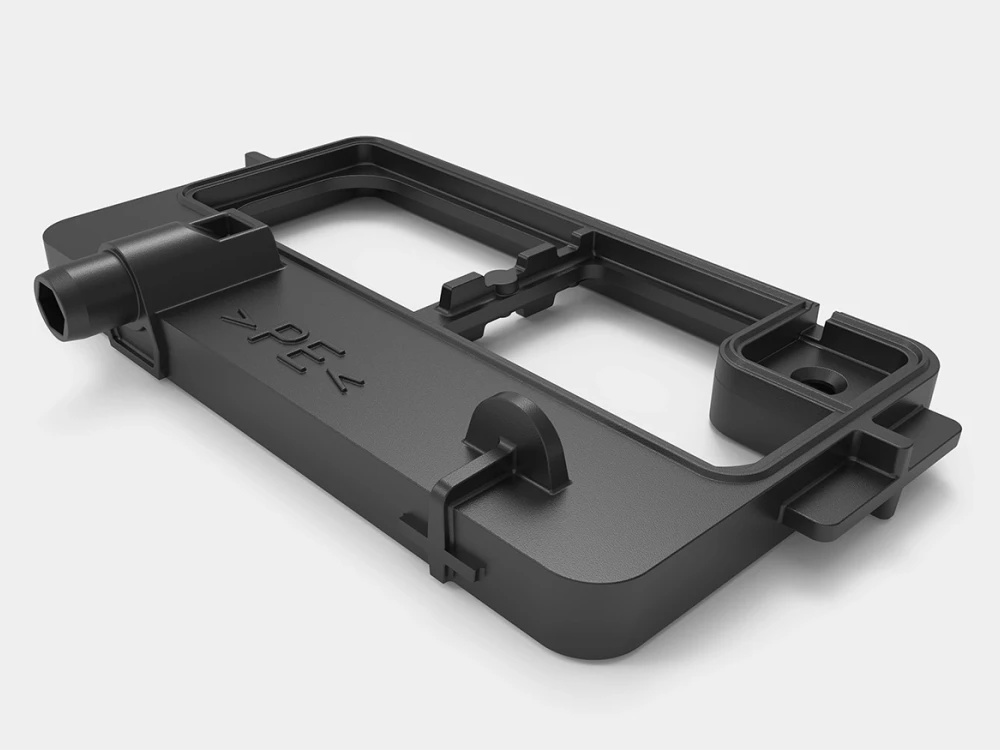
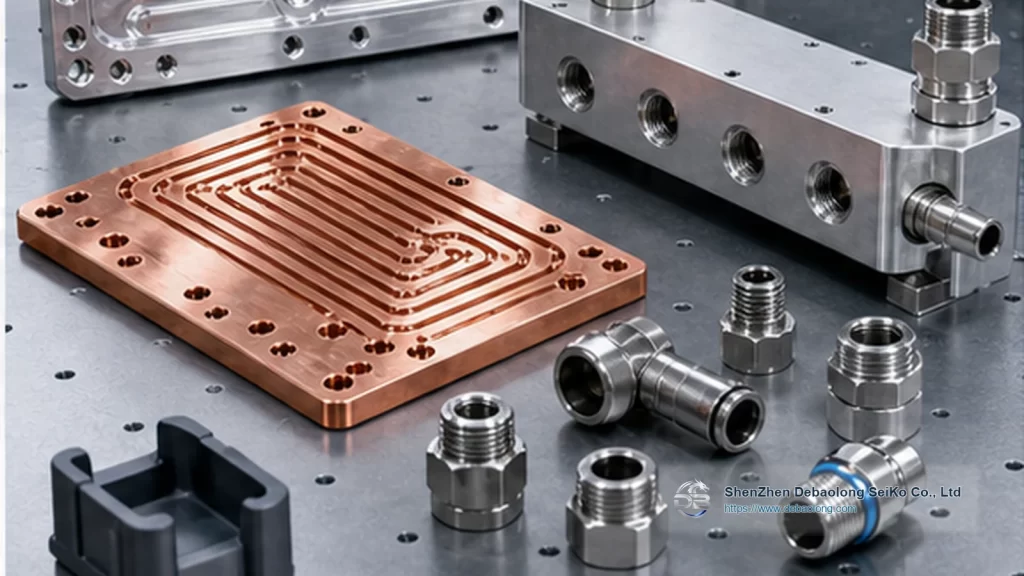



Learn SLS 3D printing design rules for build size, tolerances, hollow parts, interlocking components, engraving, embossing, warpage and functional nylon parts.
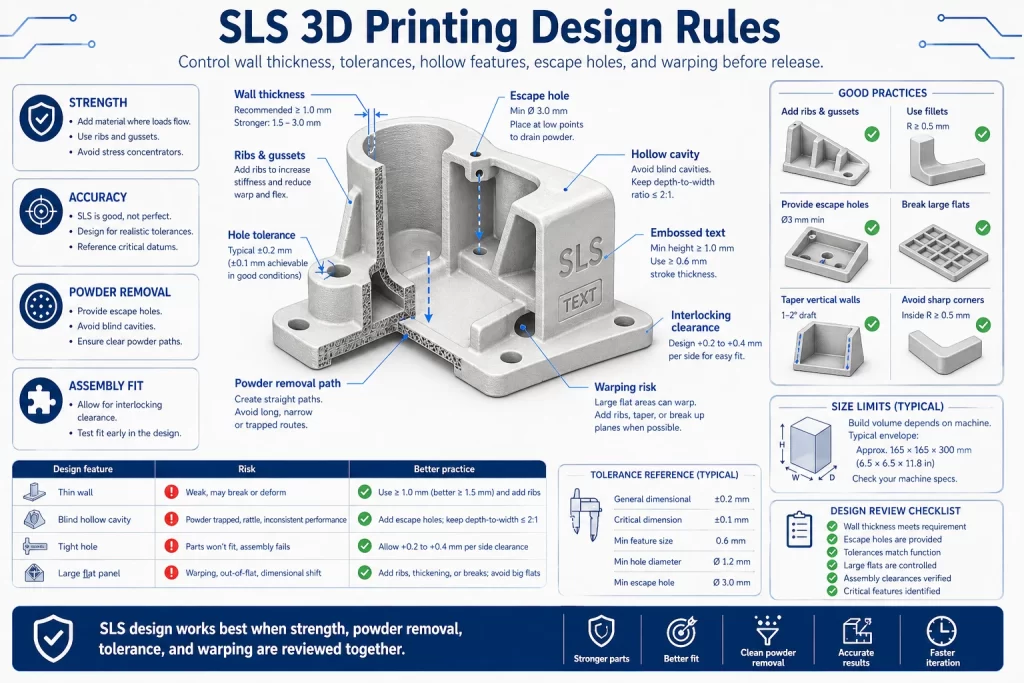
SLS Size Limits and Wall Thickness
SLS can build complex nylon parts without traditional support structures, but size and wall thickness still control strength, accuracy and powder removal.
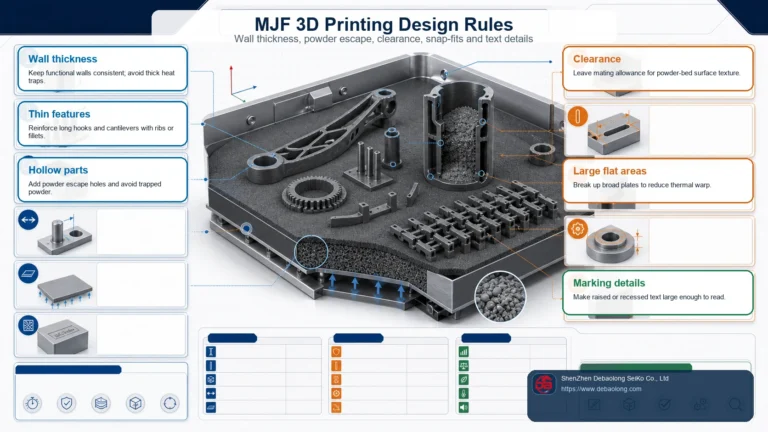
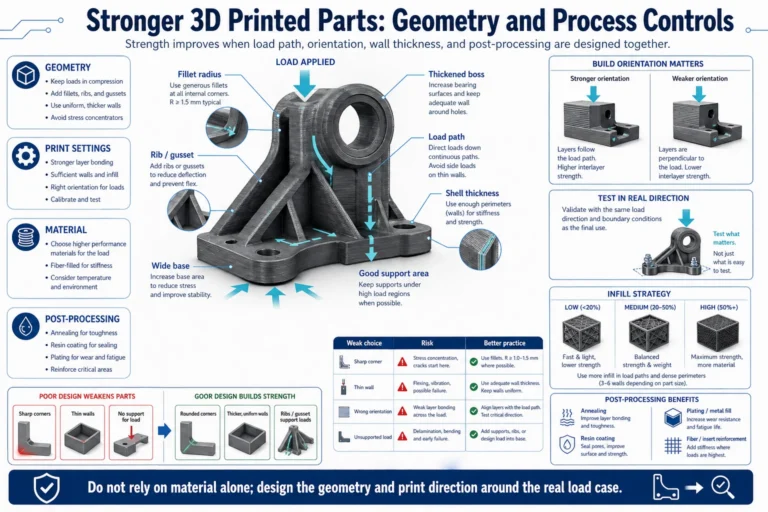
Thin walls may become fragile, while large flat areas can warp. Balanced walls, ribs and curved surfaces can improve stability without unnecessary mass.
Tolerances and Hole Sizes
SLS tolerances depend on part size, geometry, orientation and post-processing. Tight bores, shafts or sealing faces may need secondary machining.
Small holes and pins should be sized for process capability. Features that look acceptable in CAD may close, fuse or become fragile after printing.
Hollow Parts and Escape Holes
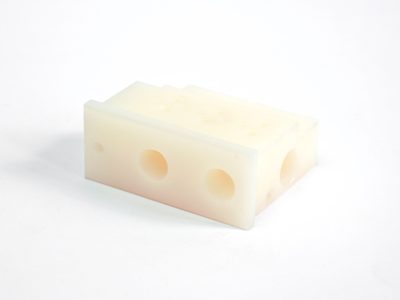
Hollowing reduces weight and material use, but trapped powder needs a planned escape route. Hole location should allow cleaning and inspection.
Do not hollow load-bearing areas without checking stiffness. Internal cavities can also hide powder, moisture or cleaning residue.
Interlocking Parts, Engraving and Embossing
SLS can print interlocking assemblies, but clearances must account for powder, heat, surface texture and finishing. Moving parts need more space than perfect CAD contact suggests.
Engraved and embossed text needs enough depth, height and spacing to survive printing and post-processing. Very small text is often better added by labeling or marking later.
Warping and DEBAOLONG Design Review
Warpage risk rises with large flat surfaces, uneven wall thickness and unbalanced geometry. Orientation, rib placement and wall balancing can reduce distortion.
DEBAOLONG reviews SLS parts for wall thickness, detail size, hollowing, powder removal, clearances, finish and whether nylon printing fits the final use.
Turn the model into a reviewable SLS brief
| Feature | Show in CAD or drawing | Agree before release |
|---|---|---|
| Hollow housing | Cavity sections and accessible openings | Powder removal and verification approach |
| Clip or thin arm | Load direction, root geometry and mating part | Fit and handling checks in the selected nylon |
| Large panel | Flatness-critical zones and local wall changes | Orientation and finished-part acceptance |
| Moving assembly | Required motion and finishing allowance | Clearance and operation after depowdering |
| Marking | Text geometry and reading requirement | Legibility after the intended finish |
These are review questions, not universal minimum dimensions. Formlabs’ SLS design guide distinguishes geometry and material-specific considerations; use supplier guidance for the selected process and confirm the finished-part requirements.
Practical Release Checklist
Before releasing a design for quotation or production, confirm the intended application, annual or batch quantity, material requirement, critical dimensions, cosmetic expectations, operating environment, inspection method and acceptable lead time. These inputs make the manufacturing recommendation more reliable and prevent the article’s guidance from being used as a generic rule without project context.
For related planning, review Knowledge Center, compare major manufacturing process options, or use DFM for prototyping before production release.
Review the SLS capability with the part purpose, chosen material and required finish, or compare other additive processes before sending CAD for review.