

Explore how automotive teams use 3D printing for prototypes, assembly aids, fixtures, interior models, lightweight concepts and low-volume production support.
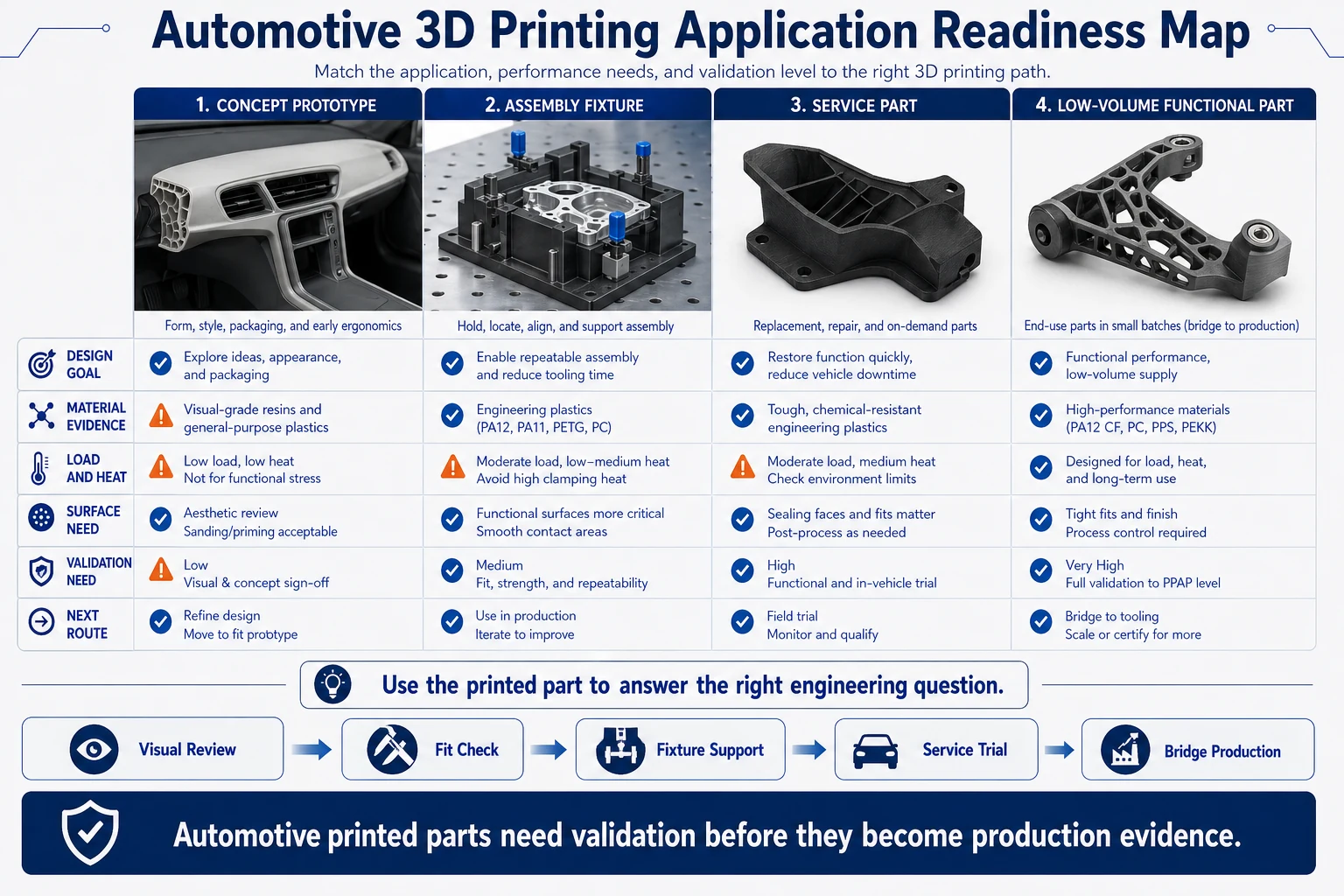
Product Innovation and Automotive Development Speed
Automotive programs use 3D printing to shorten the loop between CAD and physical review. Engineers can evaluate packaging, ergonomics, duct routing, trim concepts, bracket location and assembly access before tooling begins.
This supports product innovation because more ideas can be tested while design change is still inexpensive.
In practical terms, product innovation and automotive development speed should be translated into drawing notes, process limits, material choices, tolerance expectations, finish requirements and inspection points before the design is released. For 3d printing in automotive engineering: prototypes, fixtures and low-volume parts, the useful result is not just a general comparison, but a manufacturing decision that buyers, engineers and suppliers can apply consistently during quoting, prototyping and production planning. This is where a topic moves from educational guidance into a real release standard.
Supply Chain, Spare Parts and Customization
Printed parts can support development builds, service concepts, spare part trials and custom accessories when conventional tooling is too slow or too expensive. They are also useful for assembly aids and temporary production support.
For real vehicle use, material qualification is essential. Heat, vibration, chemicals, UV exposure and fatigue cannot be ignored.
In practical terms, supply chain, spare parts and customization should be translated into drawing notes, process limits, material choices, tolerance expectations, finish requirements and inspection points before the design is released. For 3d printing in automotive engineering: prototypes, fixtures and low-volume parts, the useful result is not just a general comparison, but a manufacturing decision that buyers, engineers and suppliers can apply consistently during quoting, prototyping and production planning. This is where a topic moves from educational guidance into a real release standard.
Suitable Technologies and Materials
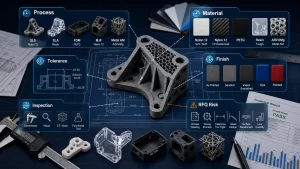
SLA can support smooth visual models, SLS and MJF can support durable nylon parts, FDM can create large quick iterations, and metal additive methods can support specialized high-performance geometry. The right route depends on surface, strength, accuracy and environment.
A fixture, interior model and under-hood component all require different material thinking.
In practical terms, suitable technologies and materials should be translated into drawing notes, process limits, material choices, tolerance expectations, finish requirements and inspection points before the design is released. For 3d printing in automotive engineering: prototypes, fixtures and low-volume parts, the useful result is not just a general comparison, but a manufacturing decision that buyers, engineers and suppliers can apply consistently during quoting, prototyping and production planning. This is where a topic moves from educational guidance into a real release standard.
Industry Examples and Engineering Limits
Well-known automotive examples show the potential of additive manufacturing, but they also show that serious applications require validation. Printed prototypes should help teams decide what to machine, mold, cast or fabricate next.
DEBAOLONG treats automotive printing as part of a full manufacturing plan rather than an isolated sample-making step.
In practical terms, industry examples and engineering limits should be translated into drawing notes, process limits, material choices, tolerance expectations, finish requirements and inspection points before the design is released. For 3d printing in automotive engineering: prototypes, fixtures and low-volume parts, the useful result is not just a general comparison, but a manufacturing decision that buyers, engineers and suppliers can apply consistently during quoting, prototyping and production planning. This is where a topic moves from educational guidance into a real release standard.
Choosing the Right Automotive Printing Stage
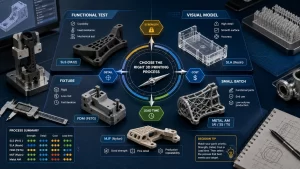
The source article covers multiple automotive stages, so the practical decision is not just whether to print, but where printing creates the most engineering value. A concept model, jig, spare-part trial, motorsport component and customer-facing feature do not share the same validation burden.
Teams should separate fast learning tasks from production intent. DEBAOLONG uses that distinction to decide when additive manufacturing remains a development aid and when the part should transition into CNC machining, molding, sheet metal fabrication or a more tightly controlled production process.
In practical terms, choosing the right automotive printing stage should be translated into drawing notes, process limits, material choices, tolerance expectations, finish requirements and inspection points before the design is released. For 3d printing in automotive engineering: prototypes, fixtures and low-volume parts, the useful result is not just a general comparison, but a manufacturing decision that buyers, engineers and suppliers can apply consistently during quoting, prototyping and production planning. This is where a topic moves from educational guidance into a real release standard.
DEBAOLONG Engineering Review
This article has been rebuilt around the source article’s actual engineering logic instead of being treated as a short summary. The purpose is to preserve the useful decision sequence: process capability, material fit, tolerance impact, finish expectations, production risk, validation steps and how the next manufacturing decision should be made.
Before release, the design team should confirm the intended application, required quantity, critical dimensions, operating environment, acceptable finish, cleaning requirements where relevant, and the inspection method that will be used to validate the part. These details turn a manufacturing article into a production-ready review standard and reduce late changes after prototyping or tooling work has already started.
For broader manufacturing planning, review the DEBAOLONG Manufacturing Engineering Knowledge Center, compare major manufacturing process options, or use DFM for prototyping to connect early design decisions with production-ready parts.
FAQ
How should engineers use this 3d printing in automotive engineering: prototypes, fixtures and low-volume parts guide?
Use it as a practical release checklist before quoting, prototyping or production handoff. The best result is a clearer manufacturing decision, not simply a longer list of process facts.
Why does source-aligned structure matter in this topic?
Because each source section answers a different engineering question. Keeping those questions separate makes it easier to review geometry, material, cost, finish, quantity and production risk without silently collapsing useful detail.
Can DEBAOLONG help turn the review into a manufacturable plan?
Yes. DEBAOLONG can review geometry, materials, tolerances, finish requirements, visual expectations and production intent before the project moves into manufacturing.
Related Debaolong manufacturing services
For production planning or quotation support, compare Debaolong’s 3D printing service and CNC machining service. Our engineering team can review drawings, materials, tolerances, finishing requirements, and lead-time targets before manufacturing.
Related Engineering Resources