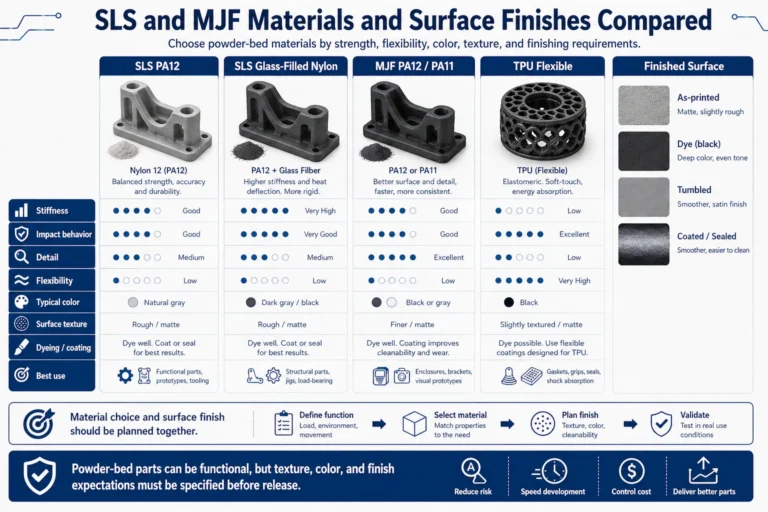

Compare MJF and SLS post-processing methods including bead blasting, media tumbling, dyeing, painting, waterproofing and metal plating for functional nylon parts.
Why Post-Processing Matters for MJF and SLS
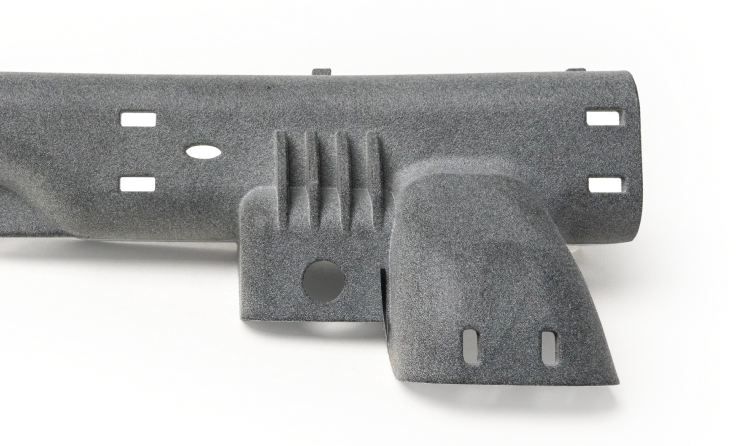
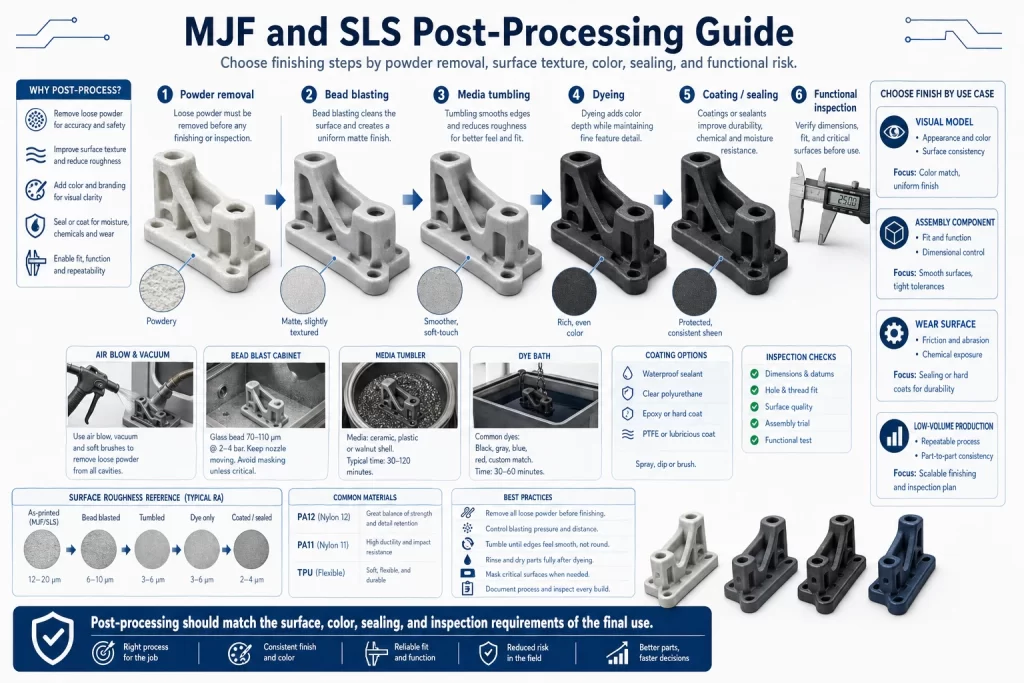
MJF and SLS parts usually leave the printer with powder residue and a matte or grainy surface. Post-processing improves handling, appearance, color, sealing, wear behavior and customer-facing quality.
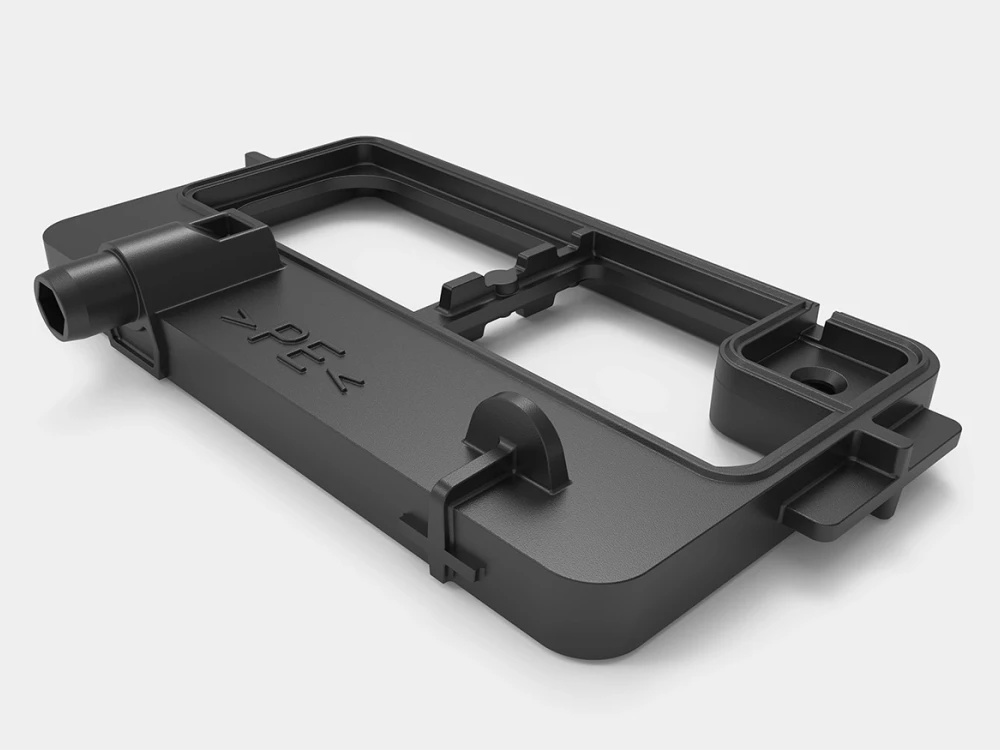
The correct finish depends on whether the part is a visual model, functional prototype, assembly component or low-volume production part.
Powder-bed parts usually leave the printer with residual powder and a matte, slightly grainy texture. Post-processing turns the raw part into something cleaner, safer to handle and closer to the intended use.
The right finish depends on whether the part is for visual review, functional testing, assembly, customer handling or low-volume production.
Bead Blasting and Powder Removal
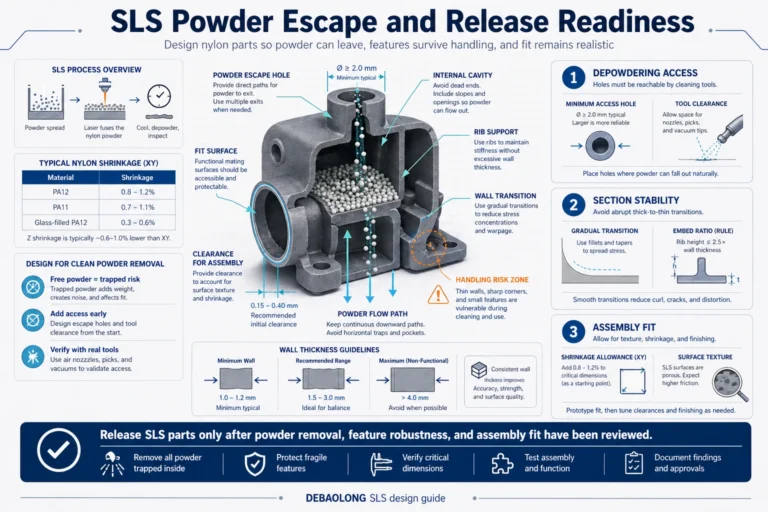
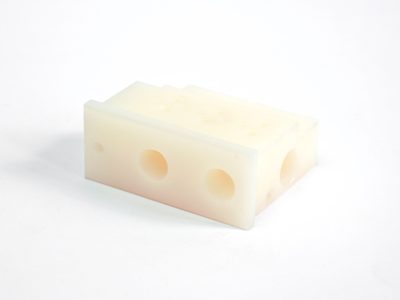
Bead blasting removes loose powder and evens out the surface. It is often one of the first steps after printing because trapped powder and residue can affect fit, appearance and cleanliness.
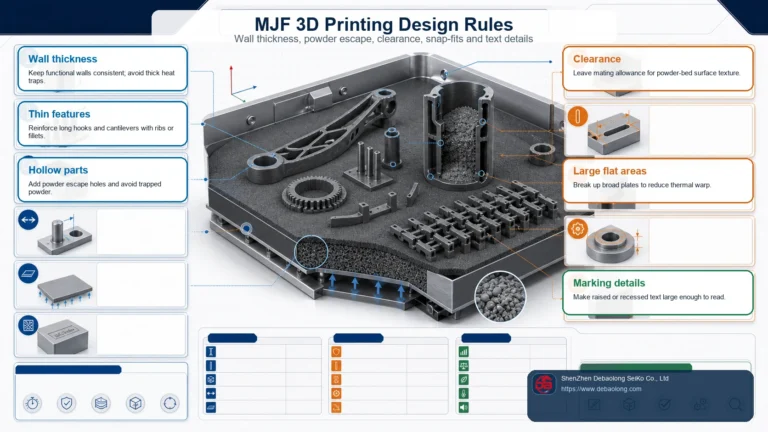
Designers should consider powder removal when creating cavities, holes, channels and interlocking features.
Bead blasting removes loose powder and evens the surface. It is often the first step because leftover powder can affect fit, cleanliness and appearance.
Designers should plan for powder removal in holes, channels, cavities and interlocking features. A feature that cannot be cleaned may not be suitable for the process.
Media Tumbling and Surface Smoothing
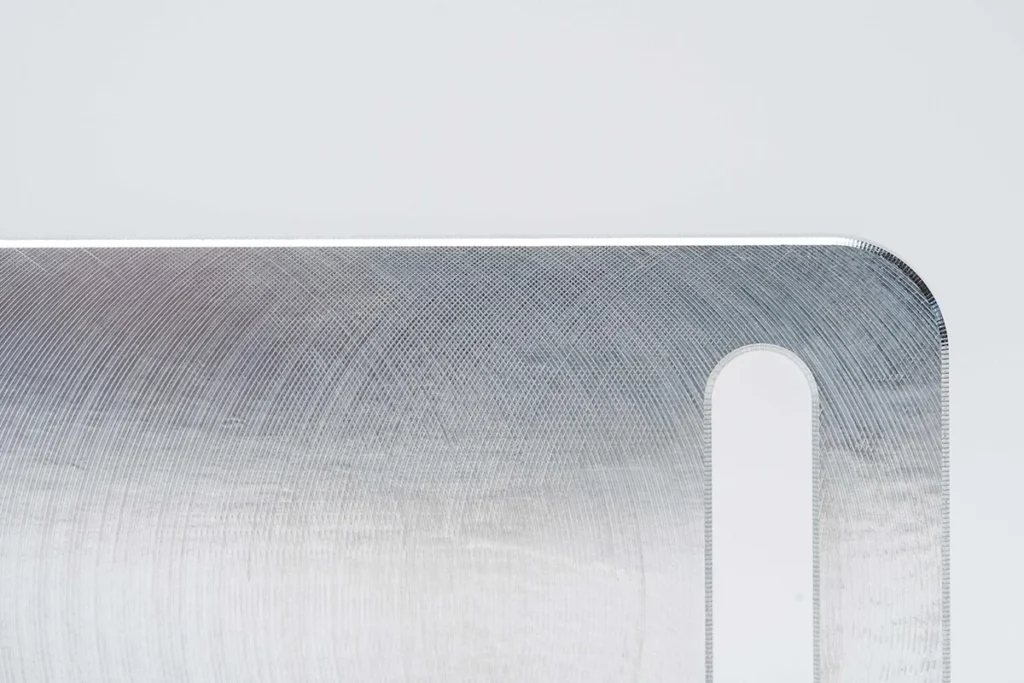
Media tumbling can smooth surfaces and reduce roughness, especially on nylon parts. It may slightly round edges or change fine details, so critical features should be reviewed before finishing.
This process is useful when a part needs better tactile quality or a more consistent surface without heavy coating.
Media tumbling improves tactile quality and can reduce roughness, especially on nylon parts. It can also soften edges and slightly alter small details.
Critical dimensions, clips, thin walls and engraved features should be reviewed before tumbling so the finish does not remove useful geometry.
Dyeing, Painting, Waterproofing and Plating
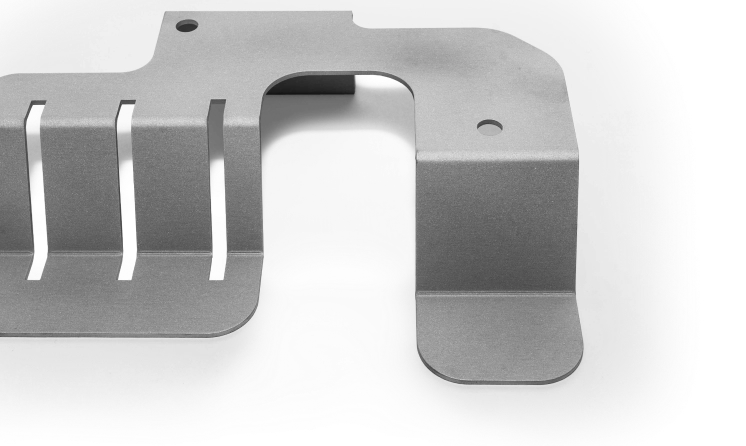
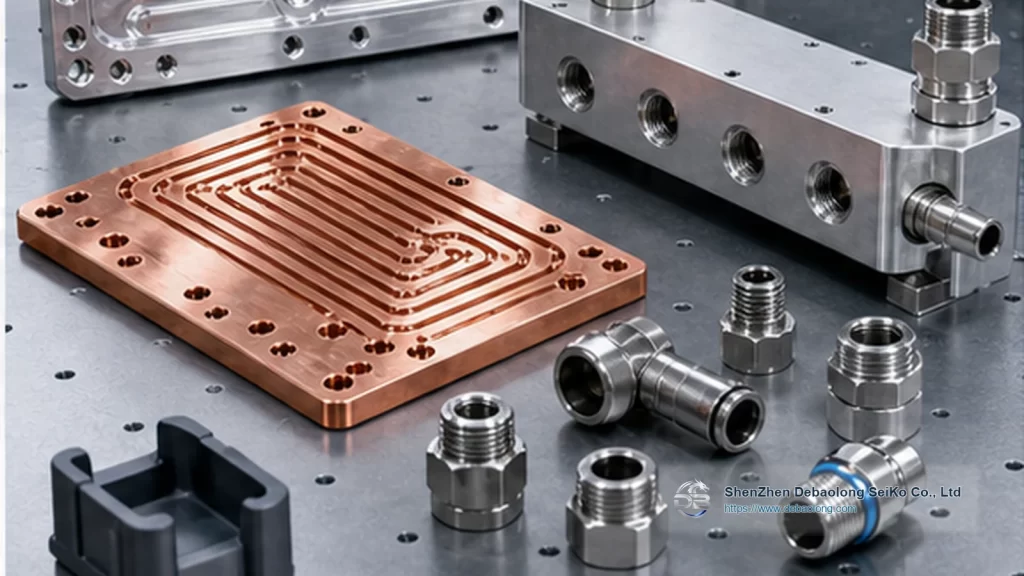
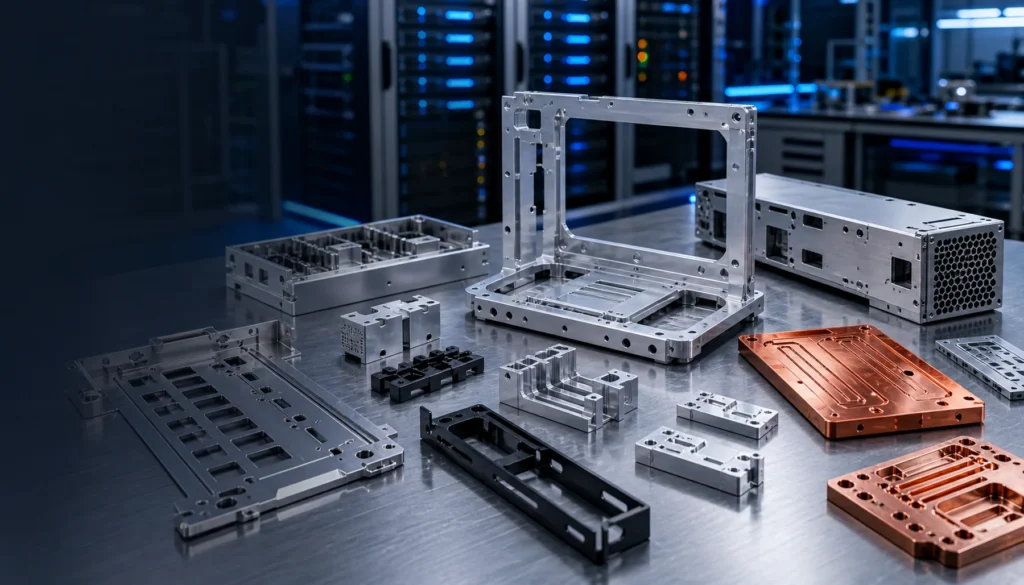
Dyeing can add color to SLS and MJF nylon parts, while painting or coating can improve appearance and surface protection. Waterproofing treatments may help selected parts resist fluid absorption, and metal plating can add conductivity, stiffness or a metallic surface.
Each finishing step can affect dimensions, flexibility, surface feel and inspection.
Dyeing adds color without heavy coating thickness. Painting and coating can improve appearance or protection but may affect fits and flexibility.
Waterproofing and metal plating are more functional finishes. They should be selected around sealing, conductivity, wear or stiffness requirements rather than appearance alone.
DEBAOLONG Finishing Review
DEBAOLONG reviews post-processing with the part function in mind. We check whether the finish supports appearance, sealing, wear, cleaning, assembly or production requirements before applying it to SLS or MJF parts.
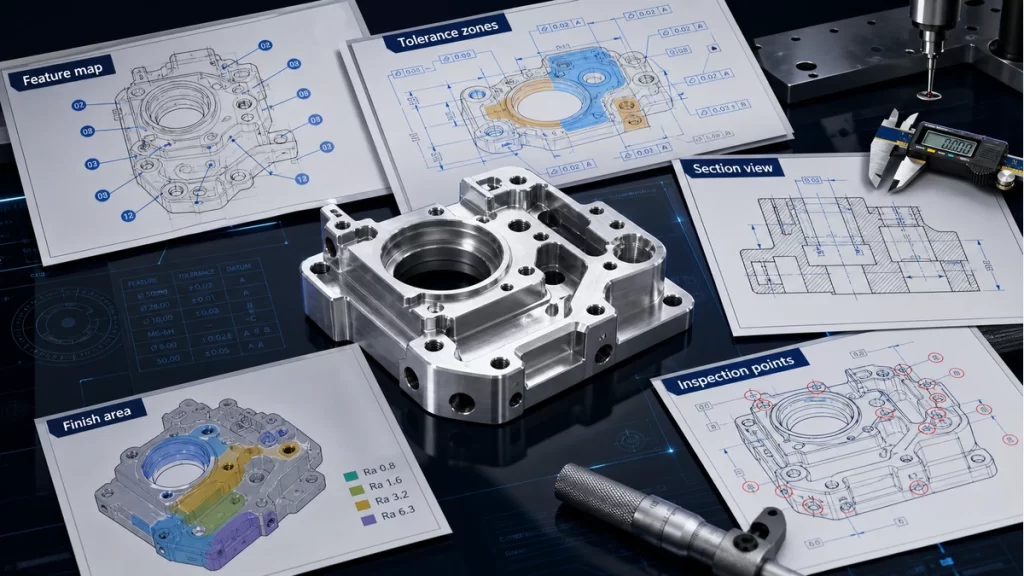
DEBAOLONG reviews finishing together with geometry, material and inspection. A finish that improves appearance but damages tolerance or assembly behavior is not a good production choice.
For repeat orders, finishing instructions should become part of the controlled release package so parts remain consistent across batches.
Practical Release Checklist
Before releasing a design for quotation or production, confirm the intended application, annual or batch quantity, material requirement, critical dimensions, cosmetic expectations, operating environment, inspection method and acceptable lead time. These inputs make the manufacturing recommendation more reliable and prevent the article’s guidance from being used as a generic rule without project context.
For related planning, review Knowledge Center, compare major manufacturing process options, or use DFM for prototyping before production release.
FAQ
How should engineers use this post-processing for mjf and sls parts: blasting, tumbling, dyeing and coating guide?
Use it as a decision checklist before quoting, prototyping or production release. The most useful result is a clearer specification, not just a faster order.
When should the design be reviewed by a manufacturer?
Review should happen before the design is treated as frozen, especially when material, tolerance, surface finish, wall thickness, cleaning, assembly or production quantity affects the result.
Can DEBAOLONG help turn the review into a production-ready plan?
Yes. DEBAOLONG can review geometry, material selection, tolerance, finish, inspection and process choice so the project moves from prototype evidence toward a controlled manufacturing route.