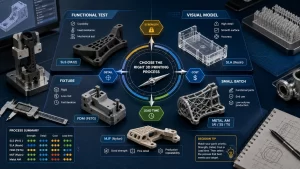


Teams often compare CNC machining and 3D printing as if one process must be better in every case. In reality, the better choice depends on what the part needs to prove right now. A concept model, a functional prototype, a tolerance-sensitive assembly part and a bridge-production housing are not the same manufacturing problem.
That is why process selection should be tied to the current engineering goal. The fastest method for early geometry exploration may not be the best method for material validation, and the best method for one prototype phase may not be the best bridge to production.
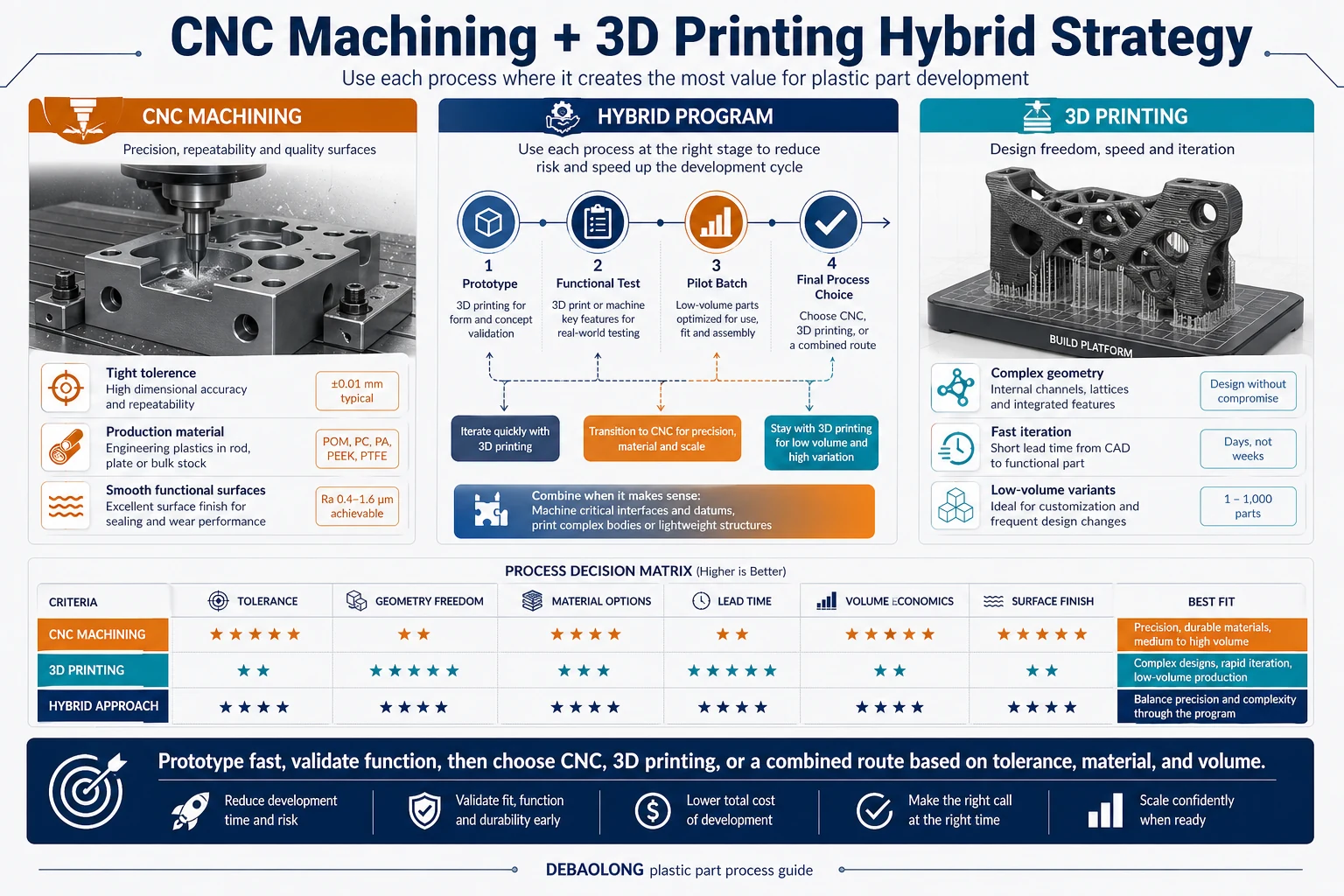
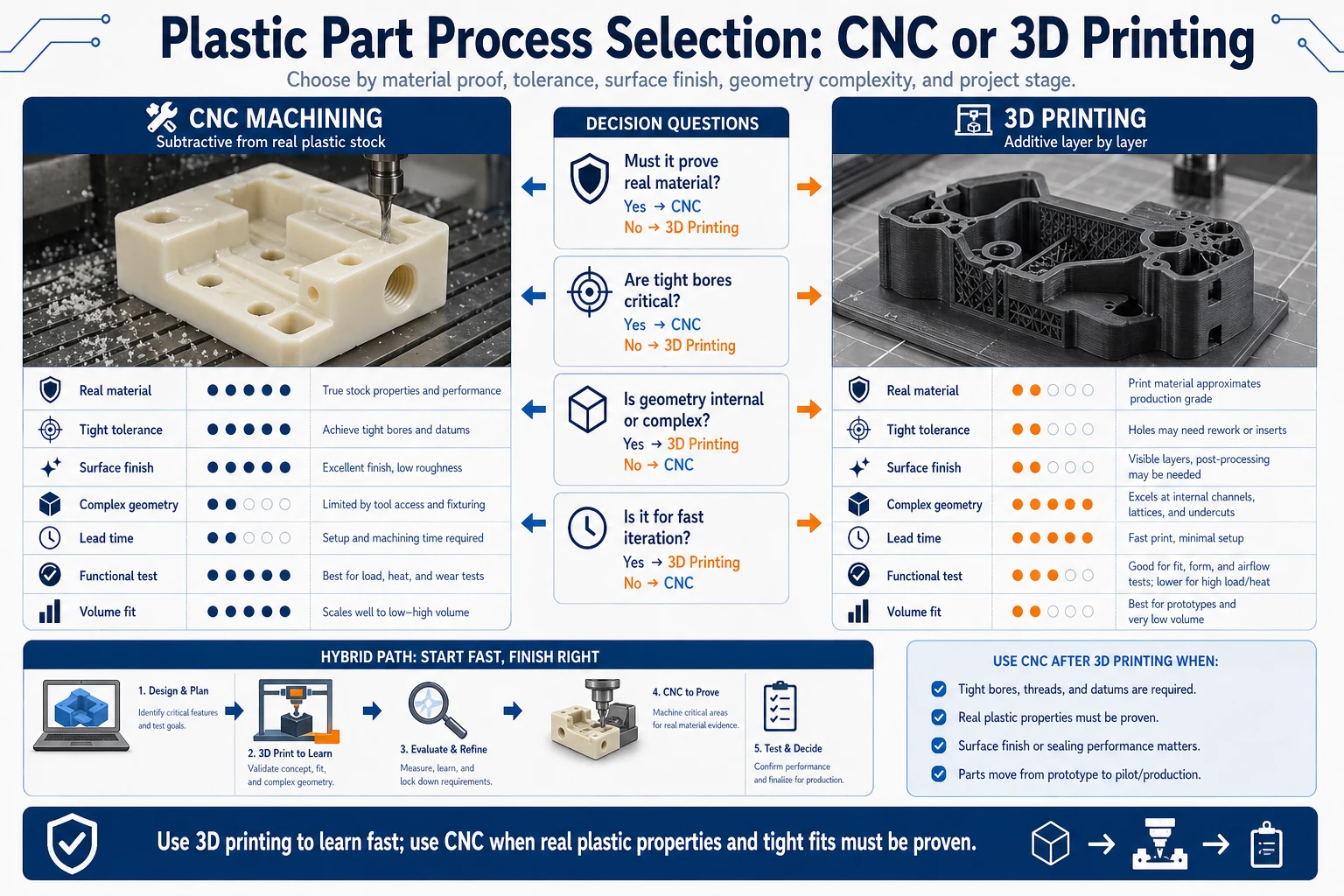
1. Start with the project stage, not the machine preference
In the concept phase, 3D printing often wins because it can produce shapes quickly, adapt to geometry changes and avoid setup overhead. If the goal is simply to confirm envelope, layout or user interaction, additive manufacturing usually answers the question faster. But once the part must prove tighter fit, true stock-material behavior or more predictable tolerances, CNC machining often becomes more relevant.
This distinction matters because many teams waste money by asking an early prototype method to answer a later-stage engineering question. The process should match the learning goal of the current phase.
2. Compare geometry freedom against tolerance and finish needs
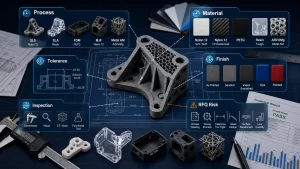
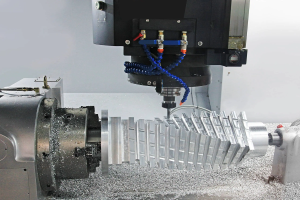
3D printing is strong when geometry is complex, internal forms are important, or iteration speed outweighs precision. CNC machining is strong when the part has prismatic structure, controlled bores, functional datums or surfaces that must align cleanly with other parts. Neither advantage is absolute, but each becomes obvious when the geometry and function are reviewed honestly.
Surface finish and downstream handling also influence the decision. A part that needs a more predictable machined appearance or tight assembly behavior may be better suited to machining, while a part whose main challenge is geometric freedom may gain more from additive.
3. Material behavior can change the right answer completely
One of the most important differences between the processes is material realism. CNC machining gives access to engineering plastic stock with known properties, which is valuable when the project must validate wear, stiffness, chemical resistance or thermal behavior in a meaningful way. 3D printing, by contrast, offers process-specific material families that can range from excellent concept materials to highly functional production materials depending on the technology chosen.
The key is not to ask whether one material category is better in general. It is to ask whether the chosen process can produce a part whose material behavior is close enough for the current engineering decision.
4. Cost should be measured against learning value and next-step readiness
Per-part cost is only one part of the decision. Setup time, geometry changes, secondary finishing, quantity and design freeze status all influence the real economics. A slightly more expensive first part can still be the cheaper choice if it shortens the design cycle or avoids the wrong tooling decision later.
Likewise, when quantity starts climbing and the geometry is stabilizing, teams should compare both CNC machining and 3D printing against injection molding or another scalable route. Process choice is not static. It should evolve with the project.
5. Use both processes when the program benefits from both
Many successful development programs use additive manufacturing early for fast geometry work and CNC machining later for function, tolerance or customer-ready evaluation. This is often more effective than forcing one process to do everything. At DEBAOLONG, we recommend mapping each manufacturing route to a specific project purpose so that speed, realism and cost are balanced intentionally rather than by habit.
For related process planning, review our CNC vs 3D printing guide, compare with CNC cost drivers, and see broader manufacturing route selection.
Use a repeatable decision checklist
Teams make better process choices when they ask the same questions every time: is the design still changing, does the test require true stock material, are critical fits involved, and is there already a likely path to higher volume? A checklist like this reduces subjective decision-making and makes the process choice easier to defend across engineering, purchasing and management.
That discipline is especially useful when several stakeholders prefer different methods for different reasons. A structured decision framework keeps the program focused on what the part must prove next.
FAQ
Is CNC machining always more accurate than 3D printing?
For many plastic parts it offers tighter and more predictable tolerance control, but the answer still depends on the geometry and additive process involved.
When is 3D printing the better first option?
It is usually stronger for fast geometry iteration, complex shapes and early design exploration.
Should the same part ever be made by both methods?
Yes. Many teams prototype additively and then validate function or production readiness with machined parts.
Related Engineering Resources