





Sheet metal thickness affects far more than stiffness. It influences bend behavior, flat-pattern accuracy, hardware choice, manufacturing cost, weight and the overall practicality of the part. Engineers often use gauge numbers as shorthand, but gauge values can become misleading because the same gauge does not always represent the same real thickness across different materials.
That is why fabrication documents should always communicate true thickness in millimeters or inches. Gauge can still be noted when useful for purchasing or shop shorthand, but it should never be the only thickness definition in a serious production drawing.
1. Understand why gauge alone is not enough
Gauge is a historical reference system, not a universal engineering dimension. A steel gauge number and an aluminum gauge number may point to different actual thickness values, which means a drawing that says only “16 gauge” is incomplete unless the material family is also defined clearly. That ambiguity can create expensive errors between design, procurement and fabrication teams.
Real thickness values remove that confusion. They allow bending, cutting and inspection to be based on exact dimensions rather than on assumptions about which gauge table someone had in mind.
2. Thickness selection changes the whole fabrication strategy
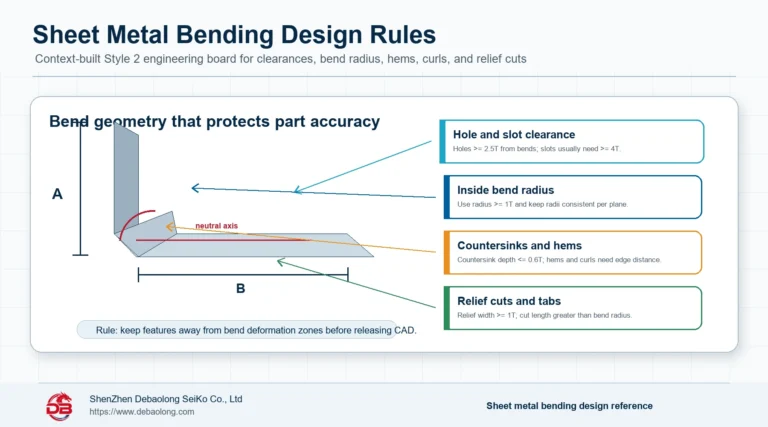
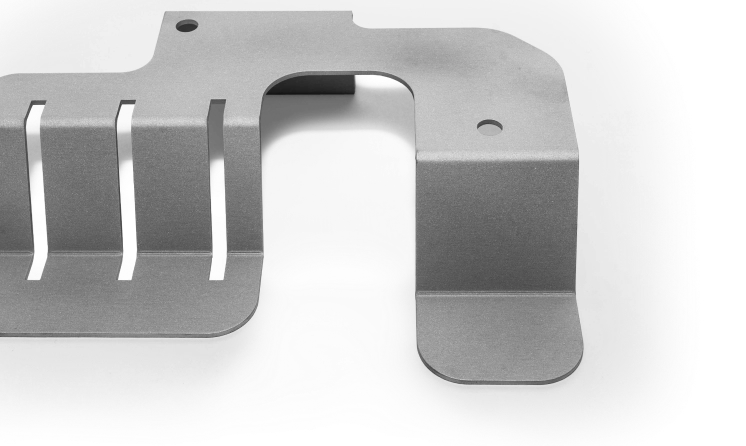
Choosing sheet thickness is not only a strength calculation. It changes bend radius, flange behavior, minimum feature size, hardware compatibility and available stock options. Thicker material may improve stiffness, but it can also increase bend force, weight and cost. Thinner material may reduce mass and material use, but it may need additional forming features or reinforcements to remain stable.
The best thickness choice therefore depends on the entire part system: function, geometry, finish, hardware, forming sequence and supply availability. A number chosen too early often has to be corrected later.
3. Make drawings explicit and globally understandable
A strong sheet metal drawing states material, actual thickness, finish and any relevant forming assumptions directly. Gauge can be listed as a secondary reference, but the engineering definition should remain in real units. This is especially important when the design may be sourced globally, where gauge usage and interpretation can vary between suppliers.
At DEBAOLONG, we recommend finalizing thickness only after the geometry, process route and supply practicality are reviewed together. That makes the part easier to quote, easier to fabricate and less likely to suffer from avoidable conversion errors.
For related fabrication planning, review sheet metal design guidelines, compare with sheet metal fabrication basics, and see how DFM thinking supports production.
Use a drawing checklist to avoid thickness confusion
Before release, the drawing should confirm real thickness units, material family, forming assumptions and stock availability. This is the simplest way to prevent downstream confusion when gauge shorthand is interpreted differently by different suppliers or buyers.
It also supports more reliable quoting because the fabricator can plan bends, hardware and sourcing against a clearly defined thickness rather than against a potentially ambiguous gauge number.
Thickness planning should happen with bends and hardware in mind
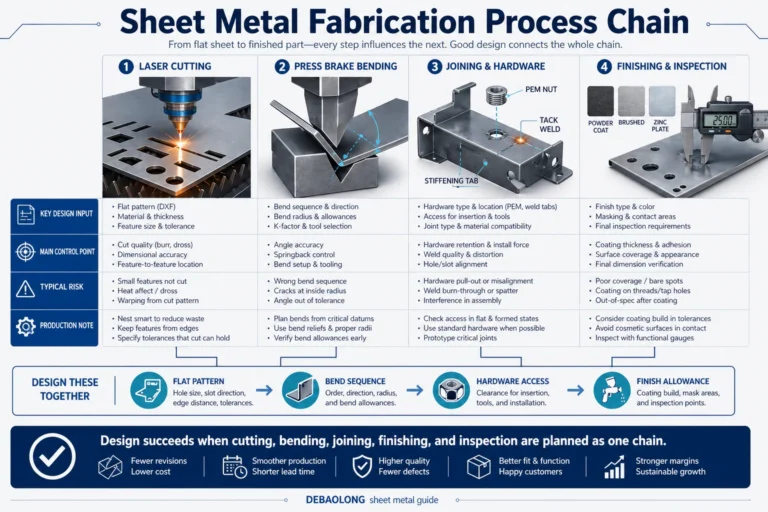
Thickness is often finalized too early, before the team has reviewed bend radius, minimum flange size, PEM or rivet hardware needs and likely stock availability. In practice, these downstream requirements can change whether a chosen sheet is easy to form or expensive to process. Reviewing thickness together with bend sequence and hardware selection usually creates a more reliable part than choosing the gauge from stiffness alone.
This is also why quoting conversations about sheet metal often change after the first DFM pass. A small shift in thickness can improve rigidity, simplify bending or make sourcing easier, but it should always be checked against weight, cost and the real product requirement.
FAQ
Is gauge enough to specify a sheet metal part?
No. Gauge should be supported by material context and true thickness in millimeters or inches.
Why should drawings use actual thickness values?
They remove ambiguity for fabrication, purchasing and inspection teams.
Does thicker material always make a better part?
Not always. Thickness must be balanced against bendability, weight, cost and the real structural need of the part.