






Improve CNC machined part designs with better radii, tolerances, wall thickness, pocket depth, threads, datum planning and manufacturing drawings.
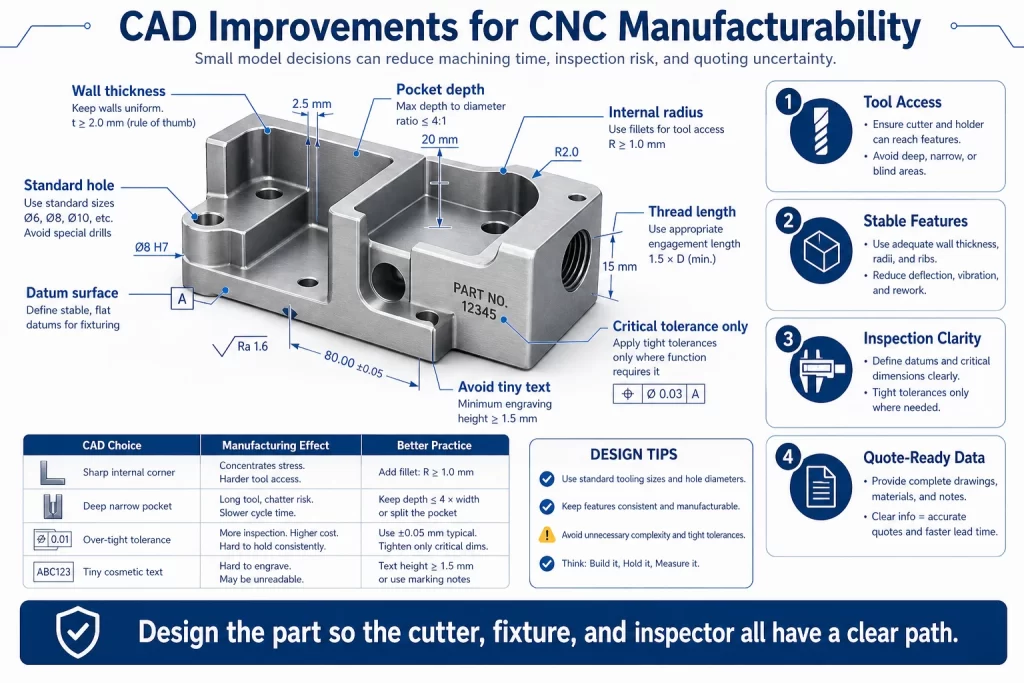
The 10 CAD Design Tips from the Source
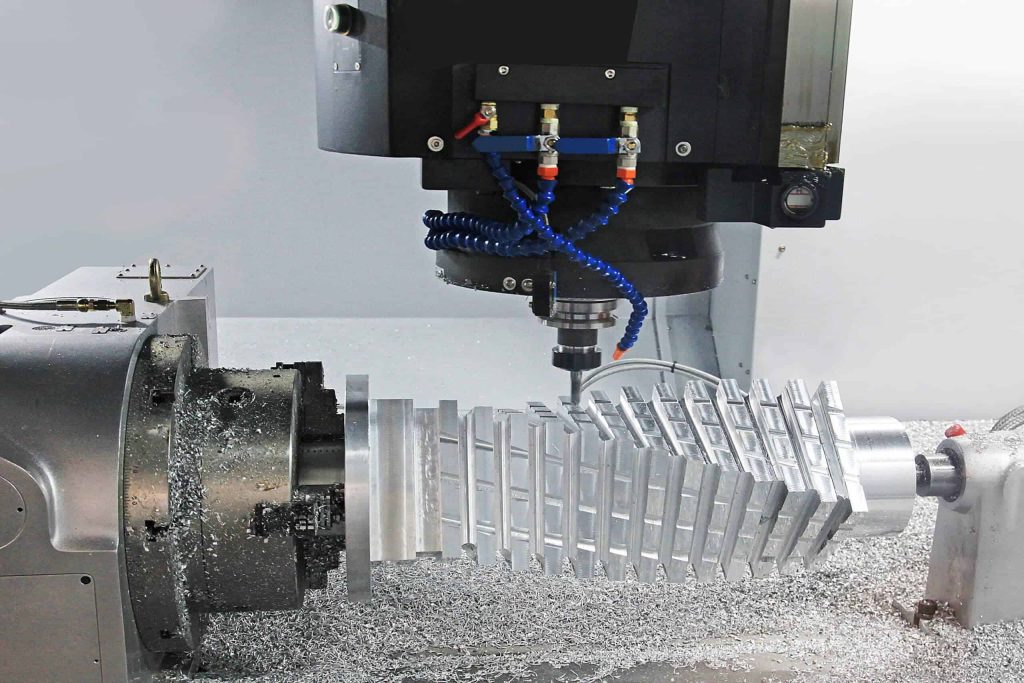
The source article covers ten CNC CAD improvements: manage thin walls, avoid non-machinable features, control tolerances, reduce non-functional cosmetic detail, optimize cavity depth-to-width ratio, add reasonable internal radii, limit thread length, avoid tiny features, use standard hole sizes and simplify text.
These rules connect directly to tool access, cutter stiffness, vibration, inspection time and setup risk.
In practical terms, the 10 cad design tips from the source should be translated into drawing notes, process limits, material choices, tolerance expectations, finish requirements and inspection points before the design is released. For 10 cad design improvements for more manufacturable cnc machined parts, the useful result is not just a general comparison, but a manufacturing decision that buyers, engineers and suppliers can apply consistently during quoting, prototyping and production planning. This is where a topic moves from educational guidance into a real release standard.
Thin Walls, Deep Cavities and Internal Radii
Thin walls can vibrate or distort during machining. Deep cavities require longer tools and may reduce accuracy. Sharp internal corners are not realistic for normal milling because cutters leave a radius.
Adding practical radii and reducing excessive depth improves cost and reliability.
In practical terms, thin walls, deep cavities and internal radii should be translated into drawing notes, process limits, material choices, tolerance expectations, finish requirements and inspection points before the design is released. For 10 cad design improvements for more manufacturable cnc machined parts, the useful result is not just a general comparison, but a manufacturing decision that buyers, engineers and suppliers can apply consistently during quoting, prototyping and production planning. This is where a topic moves from educational guidance into a real release standard.
Tolerances, Threads and Small Features
Tight tolerances should be reserved for functional features. Very long threads, tiny holes and miniature details increase tool wear and inspection burden. Standard sizes are usually easier to machine and source.
A drawing should identify critical features and allow general tolerances elsewhere.
In practical terms, tolerances, threads and small features should be translated into drawing notes, process limits, material choices, tolerance expectations, finish requirements and inspection points before the design is released. For 10 cad design improvements for more manufacturable cnc machined parts, the useful result is not just a general comparison, but a manufacturing decision that buyers, engineers and suppliers can apply consistently during quoting, prototyping and production planning. This is where a topic moves from educational guidance into a real release standard.
Quote-Ready CAD and Engineering Handoff
A strong release package includes clean CAD, material, quantity, finish, critical tolerances, threads and inspection requirements. This reduces quoting questions and lowers the chance of manufacturing the wrong revision.
DEBAOLONG uses CAD review to catch avoidable CNC issues before machining begins.
In practical terms, quote-ready cad and engineering handoff should be translated into drawing notes, process limits, material choices, tolerance expectations, finish requirements and inspection points before the design is released. For 10 cad design improvements for more manufacturable cnc machined parts, the useful result is not just a general comparison, but a manufacturing decision that buyers, engineers and suppliers can apply consistently during quoting, prototyping and production planning. This is where a topic moves from educational guidance into a real release standard.
A Release Checklist for Quote-Ready CAD Packages
The source article’s ten CAD tips point to a larger message: a manufacturable model is not just clean geometry, but a release package that explains what matters. Thin walls, deep cavities, text, threads, tolerances and hole sizes should be reviewed as part of one coherent machining plan.
DEBAOLONG uses that release checklist before quotation and machining begin. The goal is to turn CAD into an accurate production instruction set, so suppliers understand which features are standard, which ones are critical, and which decisions will most affect cost, tool access and inspection.
In practical terms, a release checklist for quote-ready cad packages should be translated into drawing notes, process limits, material choices, tolerance expectations, finish requirements and inspection points before the design is released. For 10 cad design improvements for more manufacturable cnc machined parts, the useful result is not just a general comparison, but a manufacturing decision that buyers, engineers and suppliers can apply consistently during quoting, prototyping and production planning. This is where a topic moves from educational guidance into a real release standard.
DEBAOLONG Engineering Review
This article has been rebuilt around the source article’s actual engineering logic instead of being treated as a short summary. The purpose is to preserve the useful decision sequence: process capability, material fit, tolerance impact, finish expectations, production risk, validation steps and how the next manufacturing decision should be made.
Before release, the design team should confirm the intended application, required quantity, critical dimensions, operating environment, acceptable finish, cleaning requirements where relevant, and the inspection method that will be used to validate the part. These details turn a manufacturing article into a production-ready review standard and reduce late changes after prototyping or tooling work has already started.
For broader manufacturing planning, review the DEBAOLONG Manufacturing Engineering Knowledge Center, compare major manufacturing process options, or use DFM for prototyping to connect early design decisions with production-ready parts.

FAQ
How should engineers use this 10 cad design improvements for more manufacturable cnc machined parts guide?
Use it as a practical release checklist before quoting, prototyping or production handoff. The best result is a clearer manufacturing decision, not simply a longer list of process facts.
Why does source-aligned structure matter in this topic?
Because each source section answers a different engineering question. Keeping those questions separate makes it easier to review geometry, material, cost, finish, quantity and production risk without silently collapsing useful detail.
Can DEBAOLONG help turn the review into a manufacturable plan?
Yes. DEBAOLONG can review geometry, materials, tolerances, finish requirements, visual expectations and production intent before the project moves into manufacturing.