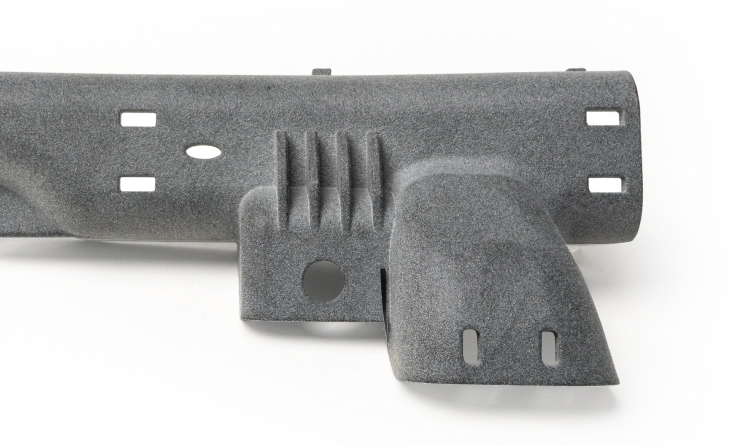
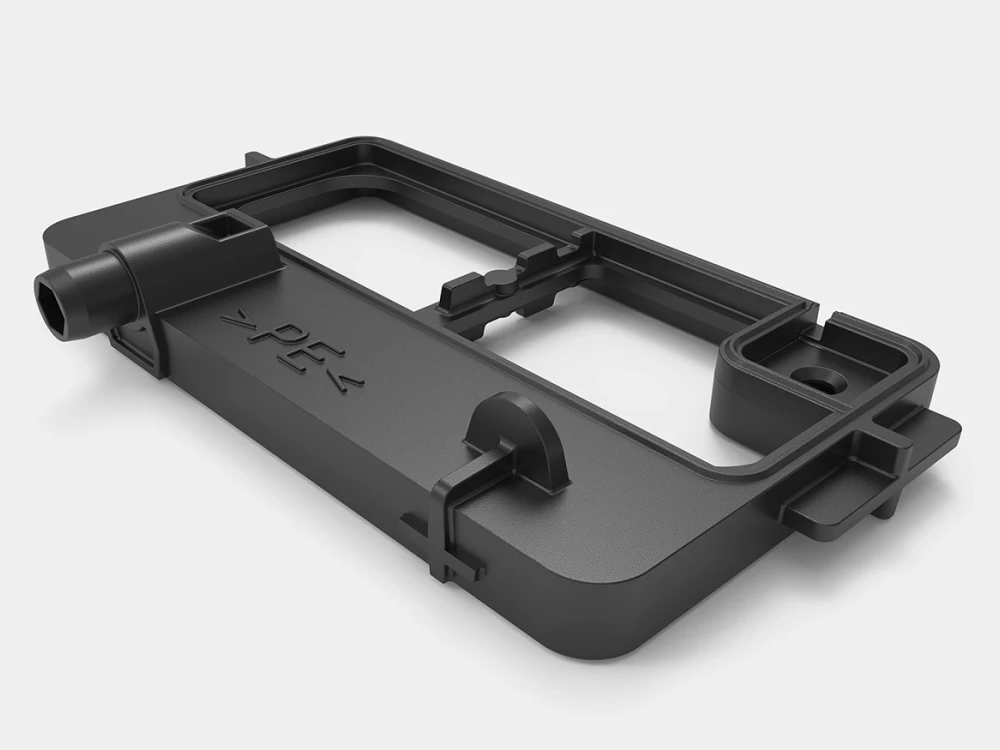






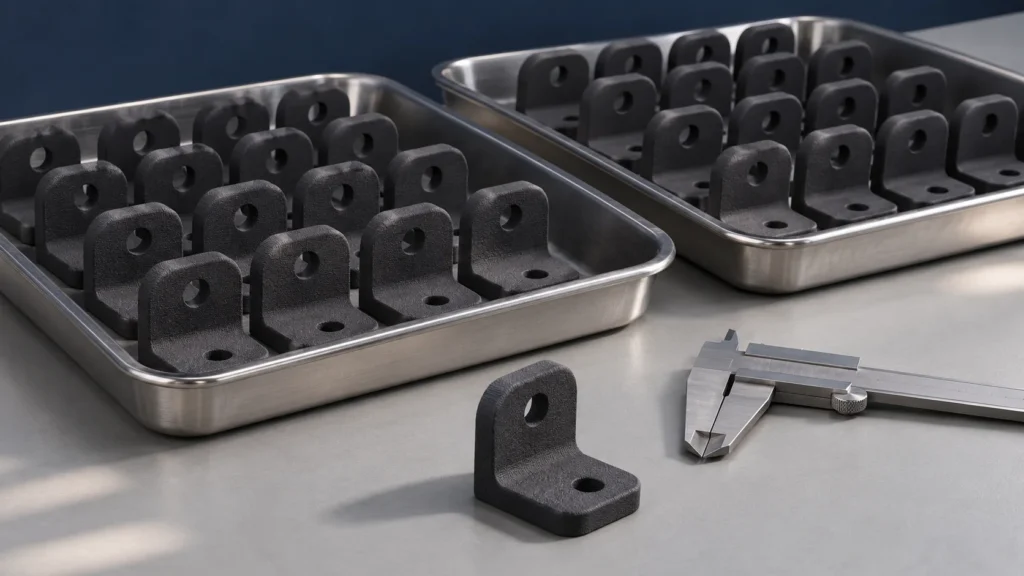
Hero image: illustrative visualization of repeat-batch PA12 brackets, not a production inspection record or customer part photograph.
A first batch can fit perfectly and still leave the next order open to interpretation. “Same as last time” does not identify which CAD file was approved, whether the sample was measured before or after finishing, or what should happen if a manufacturing step changes.
For MJF PA12 repeat orders, freeze the approved definition of the part, the agreed manufacturing route and the acceptance method before releasing the next batch. A retained sample helps, but it should support a revision-controlled drawing and inspection plan, not replace them. Agree these items with the supplier; the checklist below is a recommended workflow, not a mandatory standard.
With Formnext scheduled for 17–20 November 2026, it is a useful moment to look beyond an impressive display sample and ask what a repeat purchase should specify.
This is a purchasing and change-control checklist. It is not a universal MJF tolerance specification or a claim that every nylon part needs the same inspection.
1. Release a part definition, not a folder of attachments
Put the part number and revision on the purchase order, drawing and manufacturing file. Identify the approved CAD file unambiguously, and remove superseded files from the active release package. If the model and drawing disagree, resolve the discrepancy before production rather than asking the supplier to choose.
Include a short revision note. “Rev C replaces Rev B: mounting hole position changed; material and finish unchanged” is more useful than “latest version attached.” The buyer and supplier should also agree which document takes precedence and where an approved deviation is recorded.
A previous invoice is useful commercial history. It is not a complete manufacturing specification.
2. Name the material and the finished condition
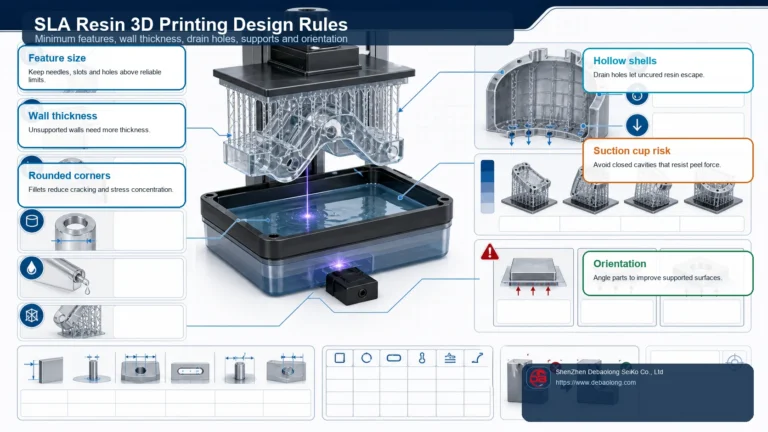
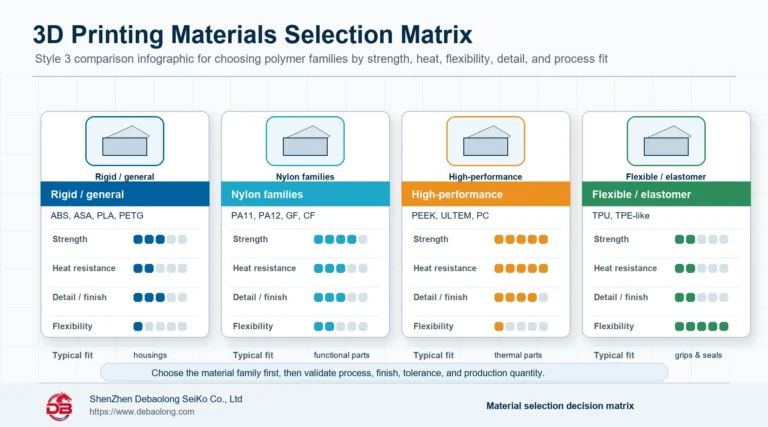
“Nylon,” “PA12” and “black nylon” leave different questions unanswered. HP’s current material portfolio lists several PA12 variants and printer-specific compatibility information. That makes the exact agreed material designation worth recording rather than treating all PA12 options as interchangeable. Check the relevant datasheet and its conditions, not just the family name. HP material portfolio and datasheets.
For the order, specify the approved material, process and delivered finish. Separate the base material from dye, coating, smoothing and any secondary machining. If inserts or other hardware are fitted, identify their specification and installation requirements too.
Ask the supplier to identify proposed substitutions before using them. A description such as “equivalent PA12” is a proposal for review, not an automatic approval.
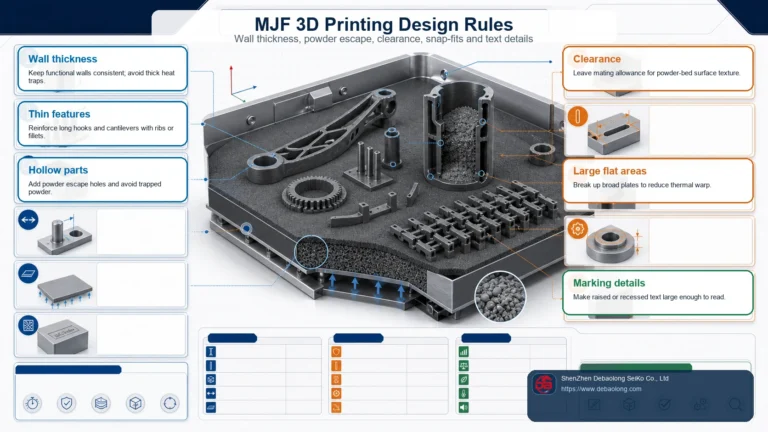
For process context, see Debaolong’s MJF manufacturing overview and 3D printing materials.
3. Decide what actually makes the part acceptable
Start with the interfaces that control assembly and function. On a housing, these might be mounting faces, connector openings and a cover fit. On a guide, they might be the locating surfaces and the passage that contacts another component. Mark those features on the drawing and agree how they will be checked.
Do not spread a demanding tolerance across every dimension simply because one interface is sensitive. Equally, do not let a general tolerance silently override a critical fit. Ask for a feasibility review where the requirement is uncertain.
A 2021 study examined twelve thin-walled spherical PA12 specimens across four build orientations and three wall thicknesses. Its findings link the tested geometry and orientation to dimensional and structural outcomes. It supports taking manufacturing conditions seriously; it does not establish a tolerance for your housing, fixture or production batch. Adach et al., Study on Geometry, Dimensional Accuracy and Structure of Parts Produced by Multi Jet Fusion.
4. Measure in an agreed state, using an agreed method
State whether dimensional acceptance applies after cleaning, dyeing, smoothing, machining or final assembly. When temperature, conditioning or storage could matter to the application, agree the relevant conditions and include them in the inspection record.
Define the measurement setup as well as the number: datum alignment, fixture, contact points and whether the part is measured free or constrained. A flexible wall forced flat in a fixture is not the same check as free-state flatness. If a mating component is used as a functional gauge, identify its revision and the pass/fail method.
Agree the inspection quantity and reporting scope before ordering. Requesting a detailed report after the batch is packed creates uncertainty about which parts were checked and how. There is no single sampling quantity that suits every application; choose it according to function, risk and the agreed quality plan.
5. Give the approved sample a defined job
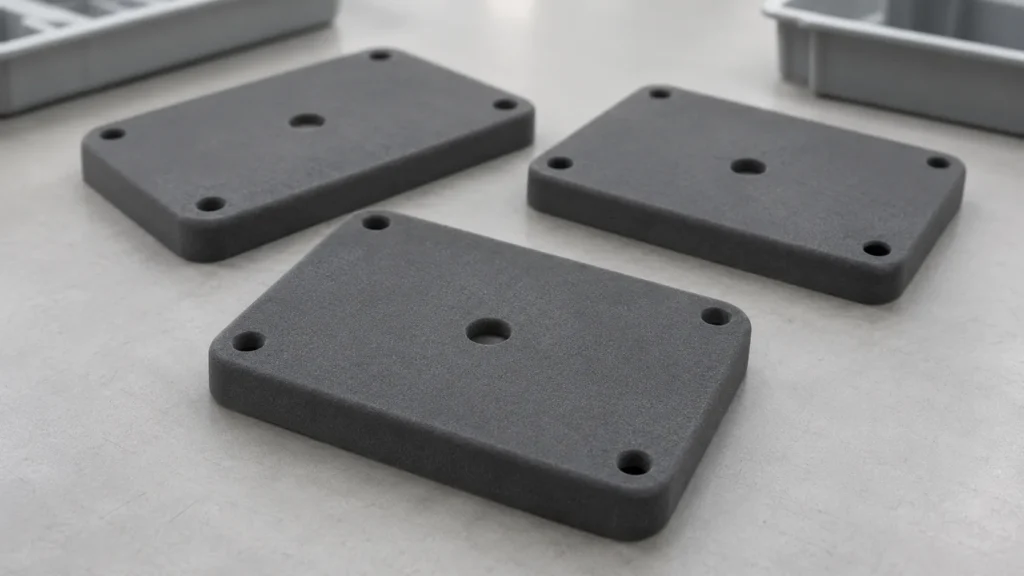
Keep a labelled reference sample when appearance or assembly feel is important. Record its part revision, finish and approval date, and define whether it is a visual reference, a fit reference or both.
For appearance, specify the surfaces that matter and the conditions for comparison. A photograph taken under different lighting is a poor basis for settling a colour disagreement. Do not use a sample to waive a written requirement accidentally; document any accepted exception.
Protect the reference during handling and storage. If it becomes damaged or its suitability is uncertain, replace it through an agreed approval step rather than quietly adopting a new master.
6. Agree what triggers another approval
A repeat order does not require freezing every machine setting forever. It means agreeing which changes require review and retaining enough traceability to investigate a difference.
Before the next order, ask the supplier to propose the notification and reapproval triggers. These may include a material substitution, a manufacturing site or platform change, a change to the qualified build strategy, or a different finishing or insert-installation route. The response can be a targeted check, a new first article or a wider requalification, depending on the actual change and the part’s use.
A larger order should not automatically inherit the approval of a handful of samples. Confirm that the agreed production and inspection plan still applies. Likewise, a successful MJF part is not automatically qualified for injection molding; a process change needs its own review.
A practical release checklist for the next purchase order
- Identity: part number, approved revision, controlled CAD and drawing.
- Configuration: material designation, process, finish, hardware and approved deviations.
- Acceptance: critical features, functional checks, visual reference and clear pass/fail criteria.
- Inspection: delivered condition, measurement setup, sampling and required records.
- Traceability: supplier lot reference and the records needed to connect delivered parts to the agreed route.
- Changes: what must be reported, who approves it and what evidence is needed before release.
Keep the checklist proportionate. A cosmetic cover and a load-bearing machine component should not receive identical inspection plans. The aim is to remove consequential ambiguity, not to add paperwork without a purpose.
Preparing an MJF repeat-order RFQ
Send the current CAD and drawing, intended quantity and repeat-order forecast, material and finish, and the features that govern fit or function. Include the previous inspection report or reference-sample details if available, plus a list of any changes since the approved batch.
Tell us whether the new order is an unchanged repeat, a revised part or a transfer from another manufacturing route. That distinction helps frame the engineering review and the evidence to agree before quoting.
Upload CAD for an engineering review. Include the acceptance requirements with the files so the discussion covers the delivered part, not just a unit price.