

An RFQ that says “plastic housing with M3 inserts” leaves several expensive decisions open. Which insert? Which resin grade? Who supplies the hardware? Are the inserts molded into the part or installed afterward? What will count as an acceptable first sample?
Resolve those questions before comparing quotations or releasing a mold. A thread designation describes the internal thread, not the complete metal-to-plastic interface. This guide is a practical drawing and purchasing checklist, not a substitute for the selected insert manufacturer’s application review.
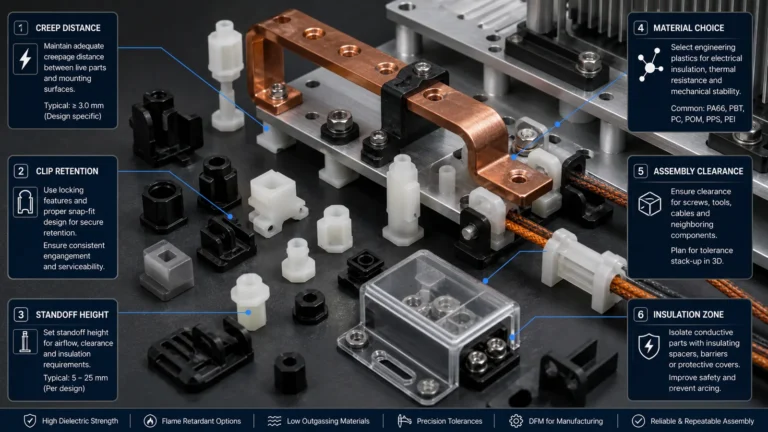
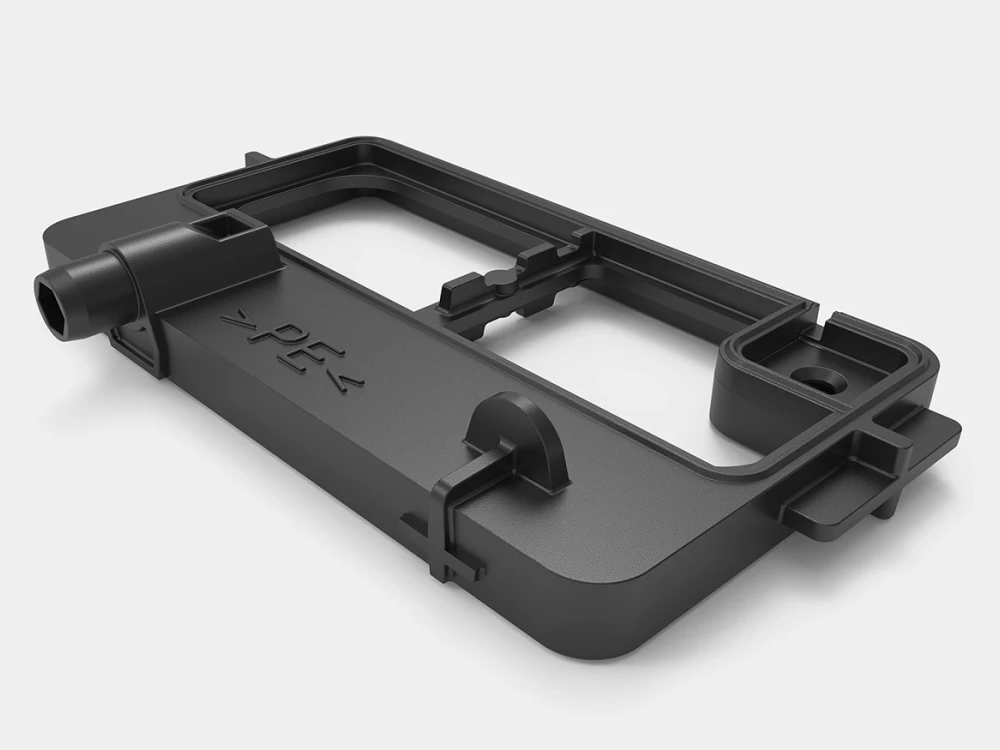
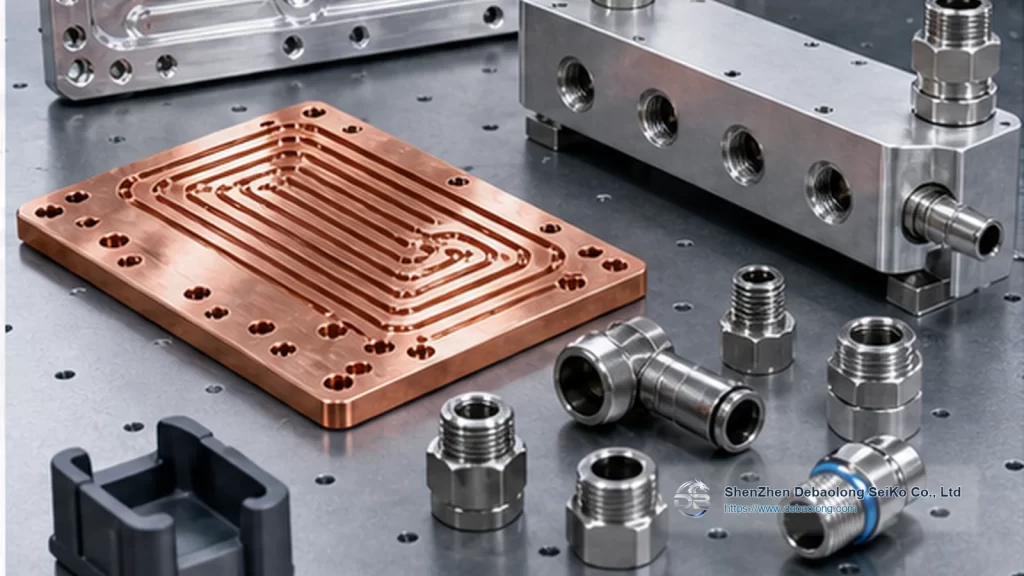
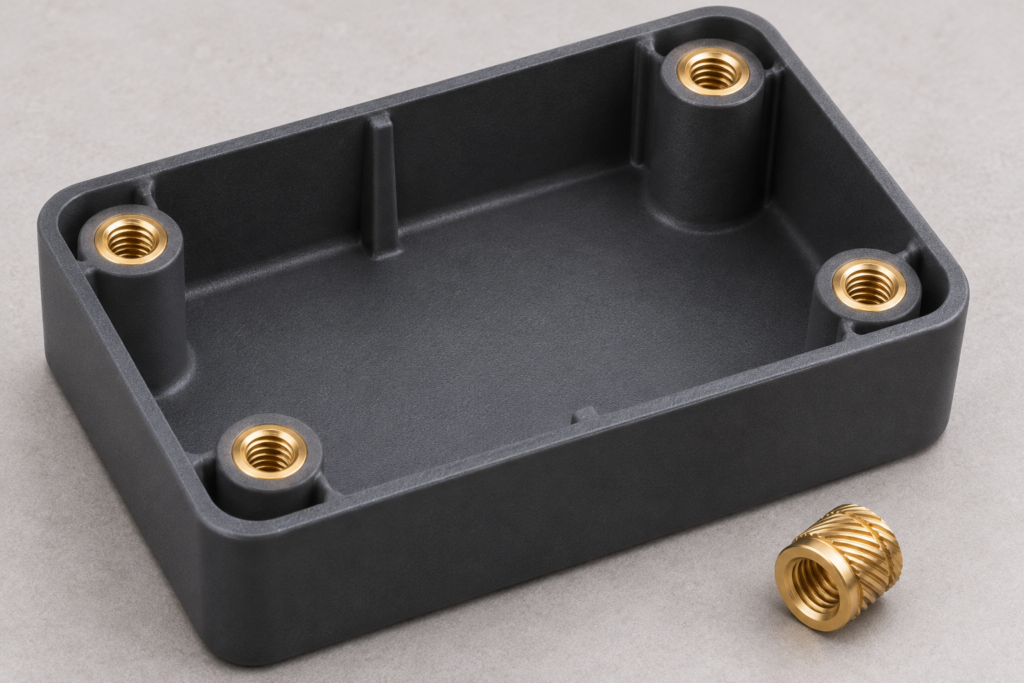
Featured image: concept illustration of a plastic housing with threaded inserts; not a production sample.
1. Name the insert, not just the thread
Put the insert manufacturer and complete part number on the bill of materials. Attach its current drawing and identify any approved alternatives. If the insert is custom, supply a controlled drawing covering its material, external geometry, thread specification and surface condition.
A proposed substitution deserves more than a thread-size check. Ask the supplier to identify what changes in the plastic part, tooling, assembly process and inspection plan. Record the approved decision against the part revision, rather than leaving it in an email that the toolmaker may never receive.
For a first quotation, an unresolved insert choice is manageable if it is clearly marked. Ask for a separate engineering-review assumption instead of treating an unspecified “equivalent” as a production-ready selection.
2. Agree when the insert enters the process
In insert molding, a preformed component is positioned in the mold before plastic is molded around it. Protolabs describes this route in its insert-molding design guidance. Its published equipment limits and accepted component ranges are supplier-specific, not universal manufacturing rules.
Post-mold installation is a different scope. SPIROL offers inserts designed for heat or ultrasonic installation; the selected hardware and process must be reviewed together. An insert intended for one installation route should not be substituted into another merely because the internal thread matches. See SPIROL’s heat and ultrasonic insert range.
State the intended route in the RFQ. If the route is undecided, request a review before freezing the surrounding geometry. Also identify who owns the installation step: the molding supplier, another assembler or your own production team. Otherwise, a lower piece price may simply exclude work that another quotation includes.
3. Review the complete joint
Do not approve an insert pocket in isolation. Include the mating component and assembly screw in the review. SPIROL’s hole-design guidance explains why hole dimensions, surrounding plastic, fillers and the mating component affect installed performance. It also warns against screw bottoming and unsuitable mating-hole geometry. Those checks are specific to the insert and application; a generic hole diameter or boss ratio is not a production drawing.
For purchasing, turn the review into named deliverables. Ask which dimensions are controlled on the molded part, which are checked after installation, and which require an assembled sample. This separates an insert that is present in the correct location from a joint that meets the product’s functional requirements.
4. Send one consistent drawing package
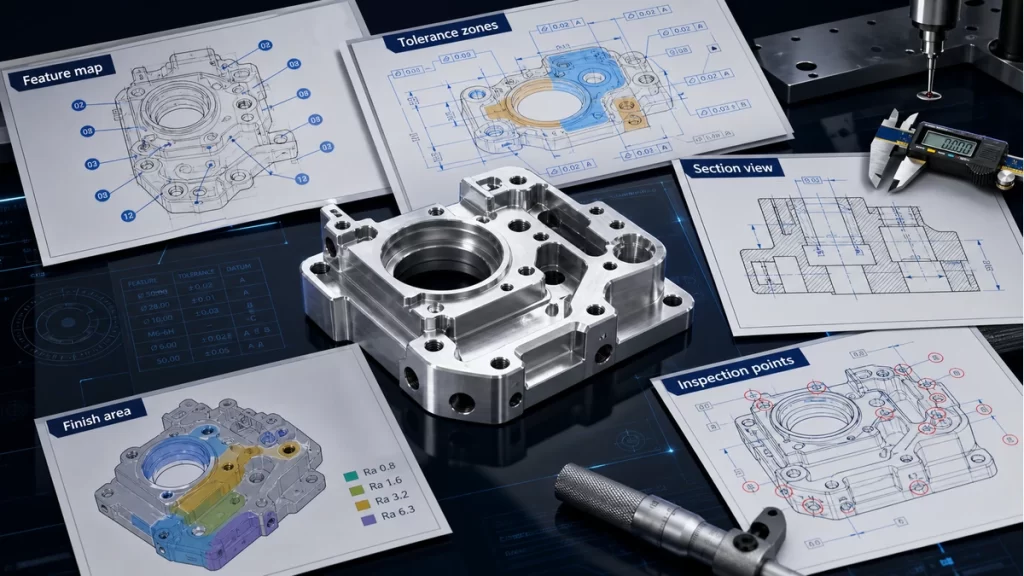
The CAD model, drawing and bill of materials should belong to the same approved release package, with compatible revision references. A useful package contains:
- Plastic part: 3D CAD, a 2D drawing and the specified resin grade, including any filler requirement.
- Insert: manufacturer’s drawing or controlled custom drawing, part number, quantity per assembly and orientation.
- Interfaces: insert position, installed height, exposed regions and the datums used to inspect them.
- Assembly: mating-part geometry, screw specification and any access or maintenance constraints.
- Release information: drawing revision, first-sample quantity, production quantity and required documentation.
Mark open questions explicitly. “Supplier to confirm” is useful only when it names the decision and says who must approve the answer. Avoid placing conflicting requirements in the CAD, drawing notes and purchase order.
5. Separate inspection from functional qualification
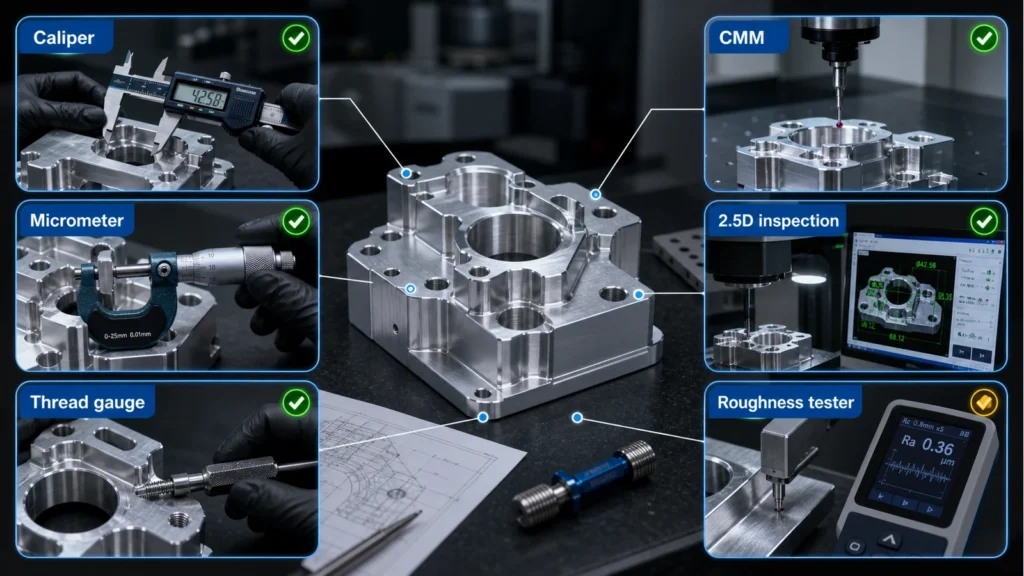
Before ordering samples, agree what evidence you need. A dimensional report might cover insert position and height. Thread inspection might establish compliance with the specified thread requirement. An assembly check might confirm access and engagement with the intended mating parts. None should silently stand in for every other requirement.
If the product needs torque, pull-out, repeated-assembly or environmental testing, define the method and acceptance criteria with the responsible design and test teams. The request should identify the specimen, loading arrangement, conditioning, sample quantity and reporting requirement. Confirm who will perform the test and whether its cost is included. A successful fit check on a prototype does not, by itself, establish the production joint’s load capacity or durability.
For example, “check insert strength” is not a sufficiently defined purchase requirement. “Provide a quotation for the attached test procedure, including sample preparation and a recorded result for each specimen” gives the supplier a scope to review without inventing a performance limit.
6. Compare quotations on the same scope
| RFQ item | Clarification to obtain |
|---|---|
| Insert supply | Who purchases the approved hardware, and are samples included? |
| Tooling and setup | Which costs are one-time, and which changes would require a new quotation? |
| Installation | Is the quoted part delivered with inserts installed or as a molded component only? |
| First samples | What quantity, revision and inspection records are included? |
| Functional tests | Which agreed procedures are included, excluded or supplied by the customer? |
| Production release | Who approves the samples, and how are later material or hardware changes controlled? |
Keep tooling, samples, recurring parts and optional testing on separate quotation lines where practical. This makes exclusions visible without assuming that the cheapest quoted item provides the same deliverable.
Bring the unresolved decisions into the engineering review
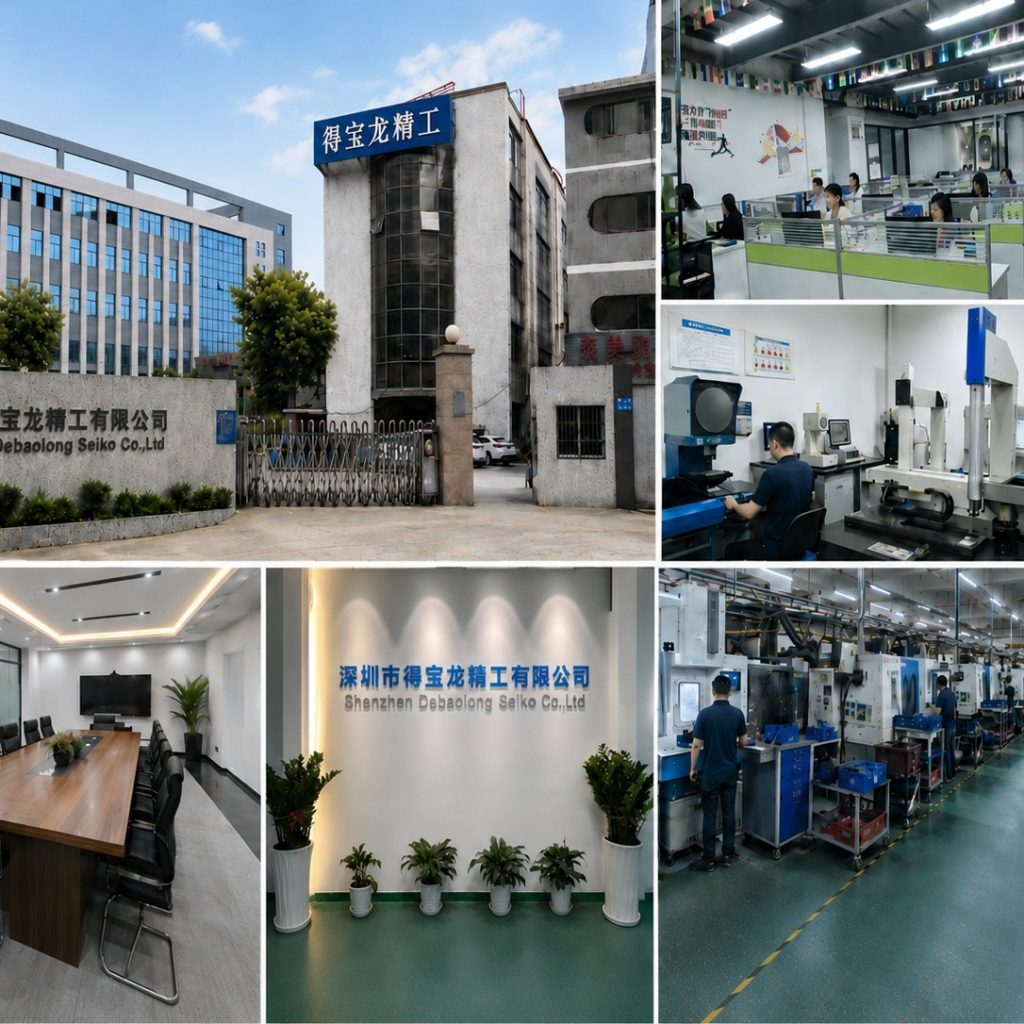
Debaolong’s insert-molding service overview connects insert identity, placement, resin flow and verification. For a project-specific review, send the plastic-part and insert drawings together, plus quantity, material and the requirements that remain open.
Upload CAD for engineering review requires signing in or registering. For an initial discussion before preparing files, contact Debaolong. The manufacturing route, inspection scope and any additional testing should be confirmed for the project before production is released.