

CNC machined brackets and mounting plates are small parts with large influence in battery packs, PCS modules, inverter cabinets and power electronics assemblies. They position components, support loads, control alignment and help the final equipment assemble correctly. A well-designed bracket is strong enough for the application but still practical to machine, finish and inspect.
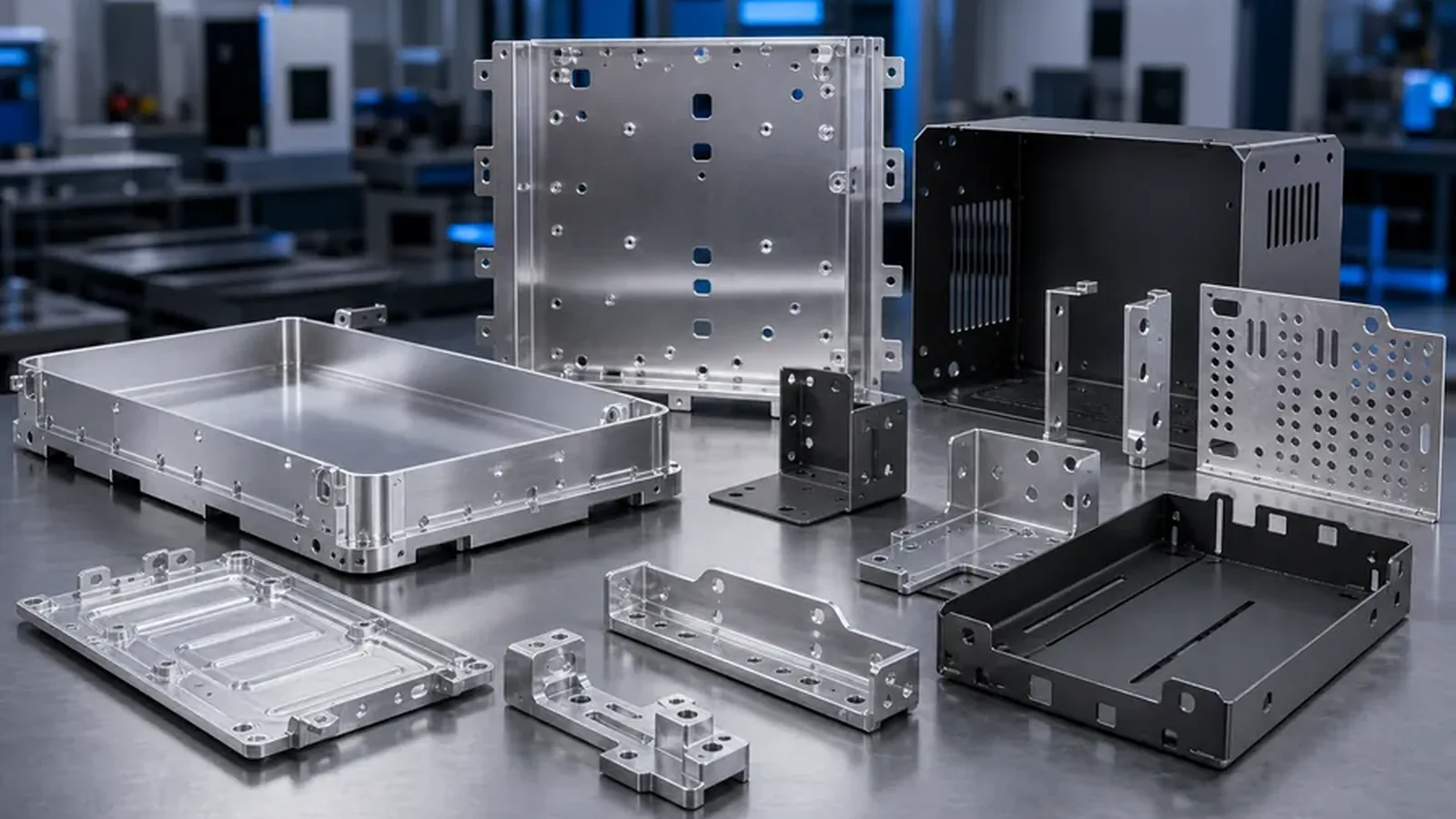
Common CNC Parts in Battery and Power Electronics Hardware
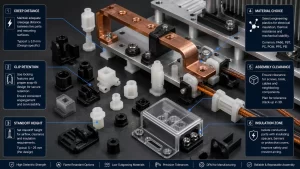
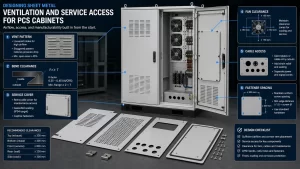
Typical parts include mounting plates, rails, support blocks, spacer plates, standoffs, sensor brackets, heat spreader supports and cabinet interface blocks. Debaolong supports these parts with CNC machining, surface finishing and inspection based on customer drawings.
Material Selection for Machined Brackets
Aluminum is useful for lightweight brackets and easy machining. Stainless steel can improve strength and corrosion resistance. Carbon steel may be selected for strong coated mounting hardware. Material choice should consider weight, fastening load, corrosion, surface finish, electrical isolation and production volume.
Hole Positions, Threads and Assembly Fit
Many bracket problems come from unclear hole positions, thread depth, counterbore size or assembly datum. Drawings should identify critical mounting faces, threaded features, insert requirements and hole tolerance. If all dimensions are over-tightened, machining cost may increase without improving function.
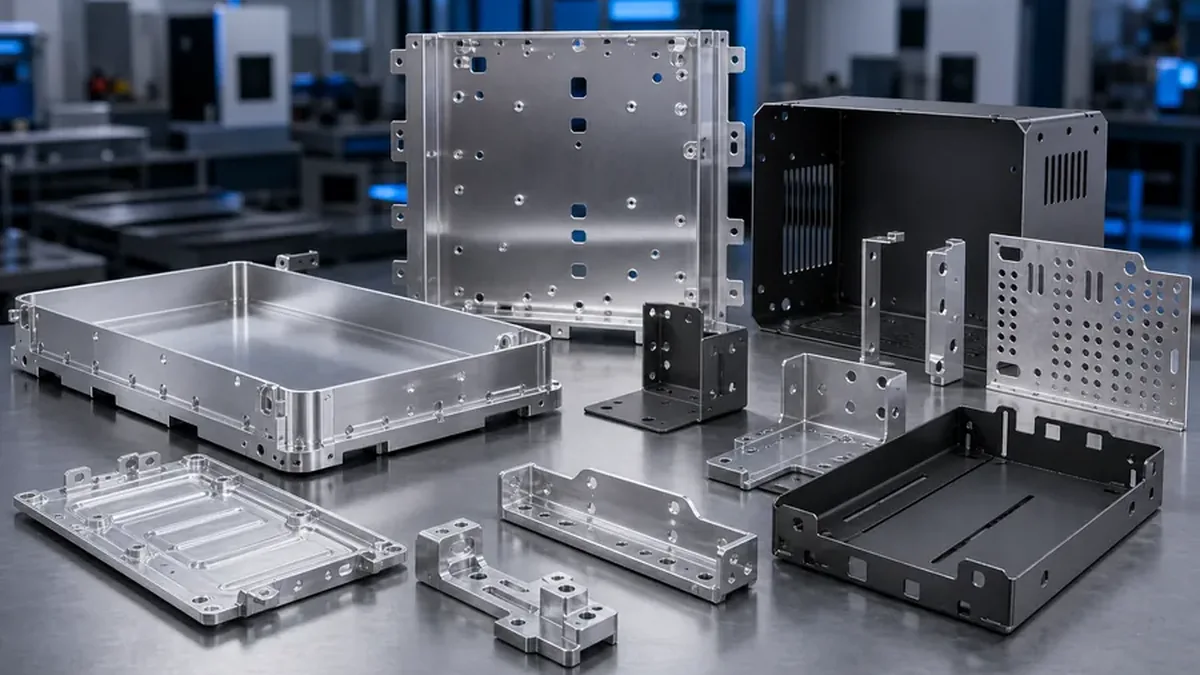
Flatness, Rigidity and Weight Reduction
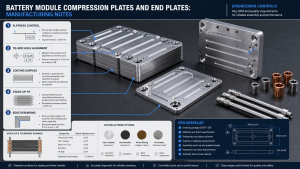
Flatness matters when the bracket supports a module, thermal part or aligned mechanical assembly. Pockets and relieved areas can reduce weight, but thin walls may vibrate or distort. Ribs, fillets and practical internal radii can improve rigidity while keeping machining reasonable.
Surface Finishing and Edge Quality
Anodizing, passivation, plating, polishing or coating may be selected depending on material and environment. Deburring is important around holes, pockets and assembly edges. Functional surfaces may need masking or controlled finish based on project requirements.
Inspection Points
Inspection may include hole spacing, threaded features, flatness, critical face dimensions, perpendicularity, surface finish and assembly fit checks. For complex parts, a drawing should identify which dimensions are most important to function.
Production Planning Notes
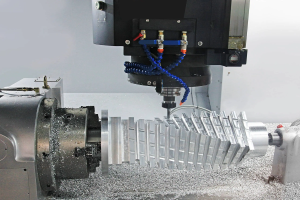
For battery and power electronics hardware, prototype brackets may be machined one at a time, while production parts may need more stable fixtures and repeatable inspection methods. If the part has many similar holes, deep pockets or multiple setups, the drawing should separate functional tolerances from general dimensions. This helps the supplier quote a practical manufacturing route instead of treating every surface as equally critical.
Packaging should also be considered for finished brackets. Anodized or plated surfaces, contact faces and threaded holes may need separation or protective wrapping during shipping, especially when the parts will be installed directly into cabinet assemblies.
RFQ Checklist
- 2D drawing with tolerances and datum references
- 3D CAD file
- Material and finish requirements
- Thread standard, insert or hardware notes
- Critical flatness and alignment surfaces
- Quantity, prototype stage and production plan
How Debaolong Supports CNC Bracket Projects
Debaolong can manufacture CNC brackets, mounting plates, fixture blocks and structural hardware from prototype to production. For tolerance planning, see the CNC machining tolerance guide.
FAQ
Are aluminum brackets suitable for energy storage systems?
Yes, aluminum brackets are often suitable when lower weight, good machinability and corrosion-resistant finishing are useful.
When should stainless steel be selected?
Stainless steel may be selected for stronger fastening areas, corrosion resistance or more demanding service environments.
Do all mounting plates require tight flatness?
No. Tight flatness should be reserved for functional contact surfaces, alignment faces or thermal contact areas.
Can Debaolong support prototypes before production?
Yes. Debaolong can support CNC prototypes, small batches and production-ready parts according to customer drawings.
Need machined brackets or mounting plates? Send drawings through the Energy Storage & Power Electronics Components page for review.
Related Engineering Resources