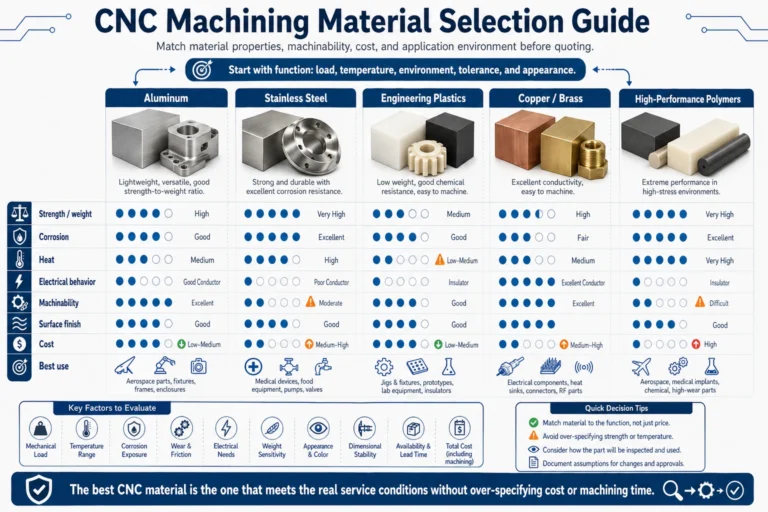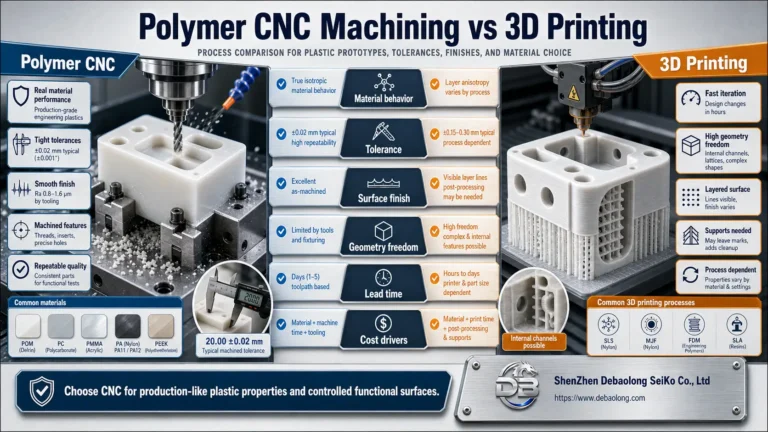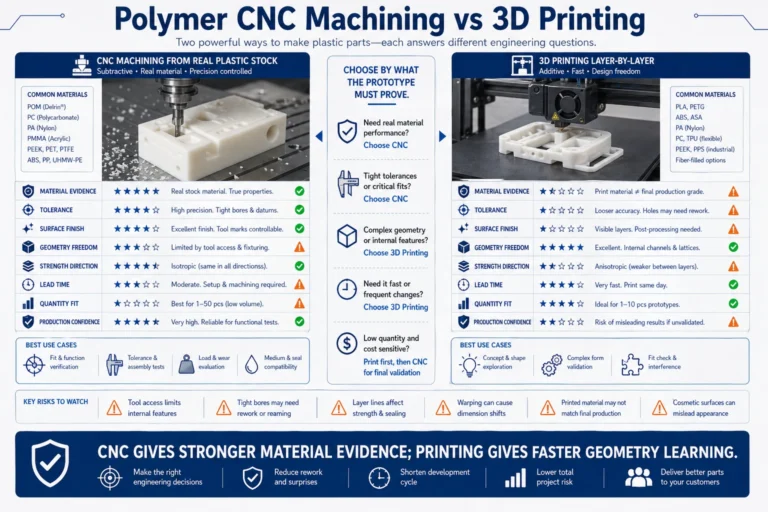
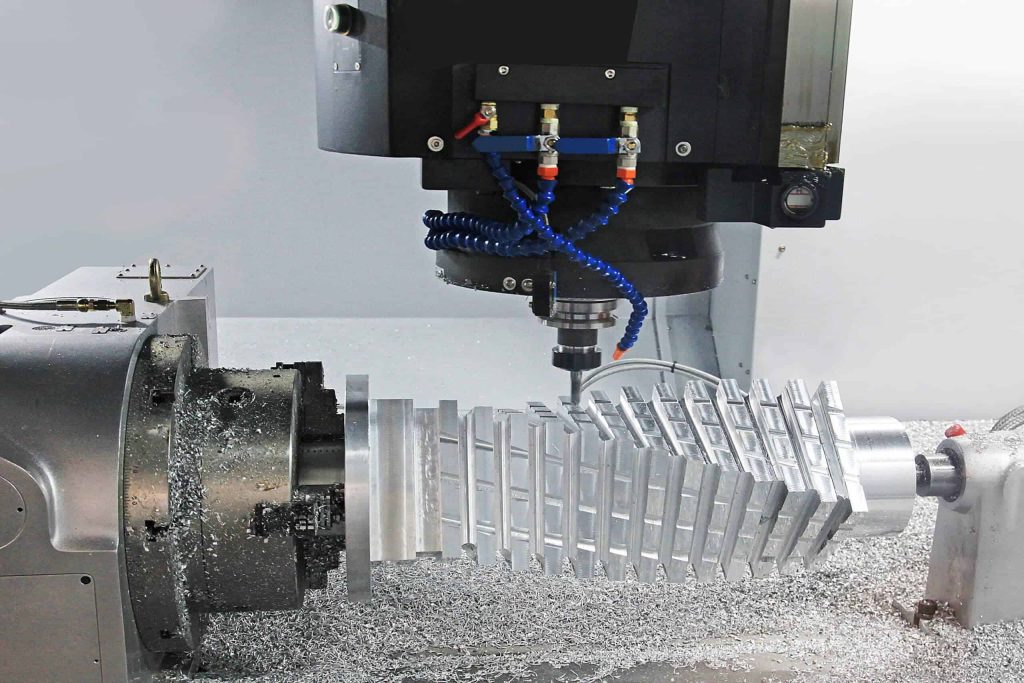
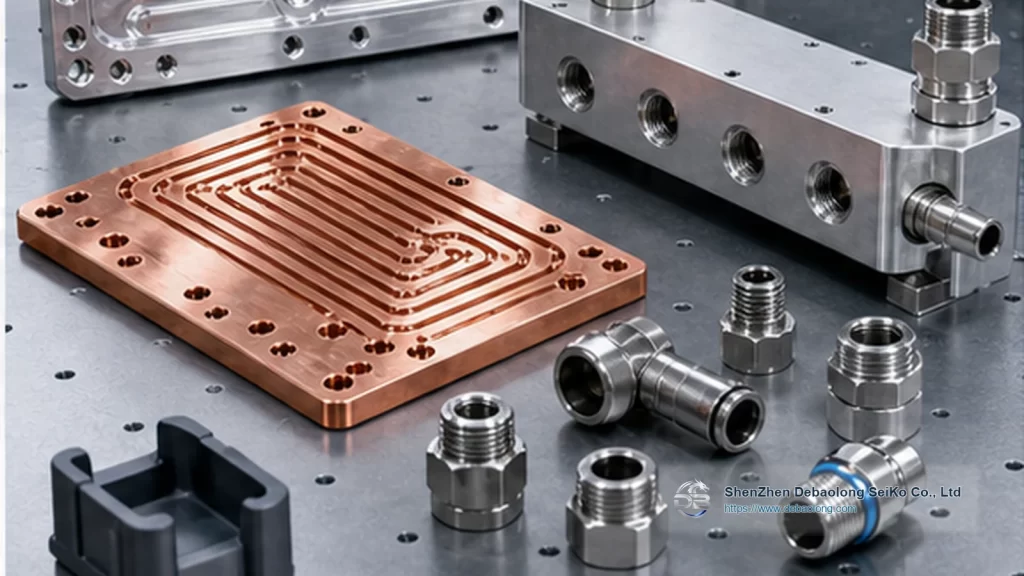
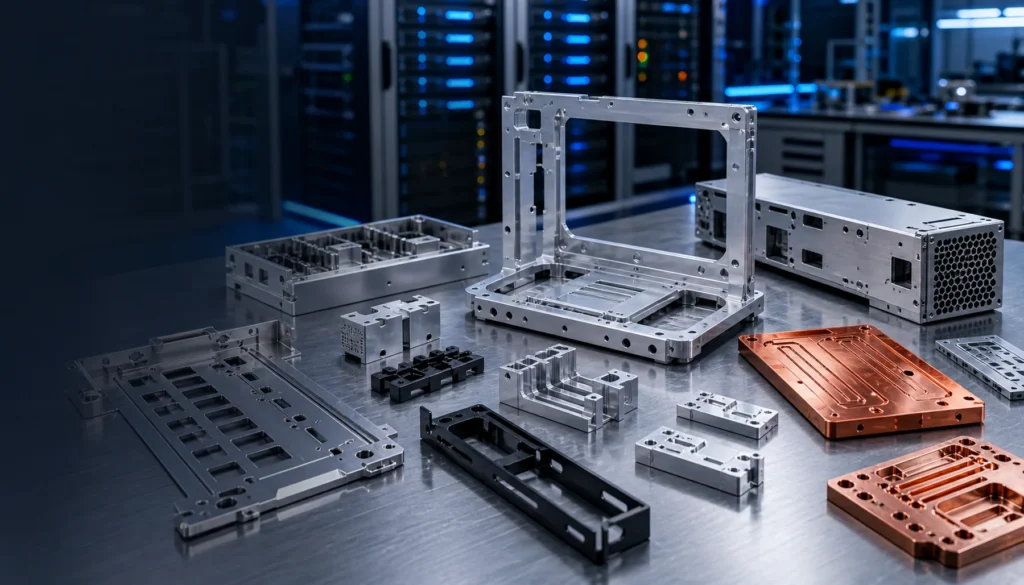


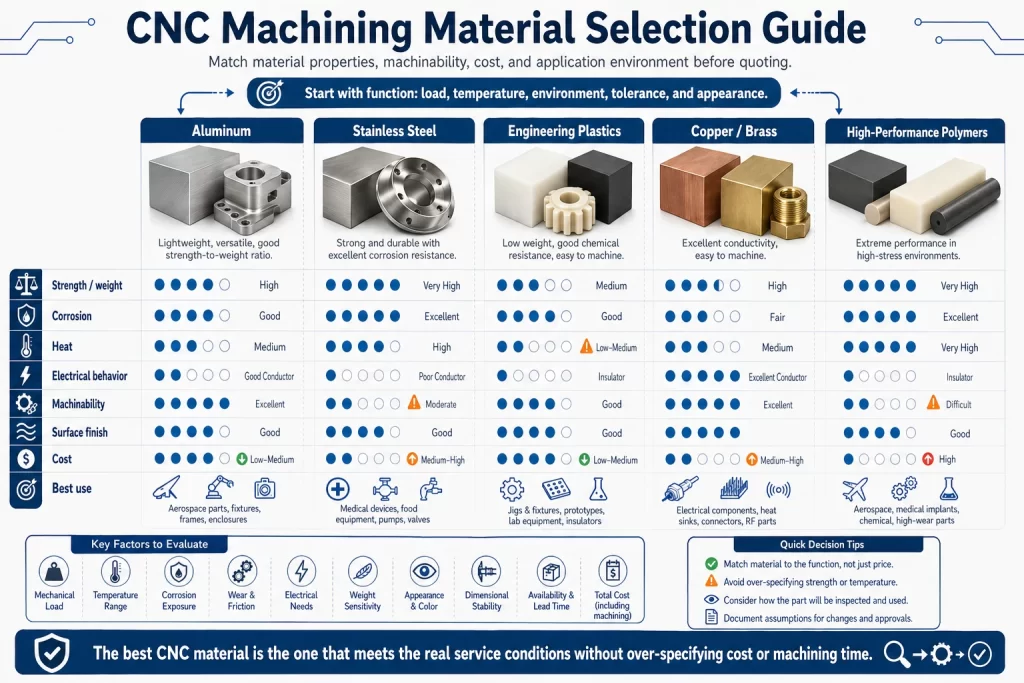
CNC machining material selection should begin with the part’s job, not with the cheapest stock on the shelf. Strength, corrosion exposure, weight, heat, conductivity, dimensional stability, cosmetic finish, tolerance and lead time all change the best material choice. Aluminum is efficient for many prototypes and housings, stainless steel can suit corrosive service when the grade matches the exposure, brass and copper support conductivity, titanium offers high strength-to-weight performance, and plastics solve weight, friction or insulation problems. A good selection also considers the real machining route on DEBAOLONG’s CNC machining equipment and the available material forms listed in all materials. This keeps the quote tied to real stock, tooling, inspection and finish constraints.
CNC Material Choice Starts With Function
A CNC shortlist should compare specific grades rather than assume one universal material answer. The useful engineering lesson is that each alloy grade changes machinability, finish, cost and application fit. The final decision should balance performance with stock availability and inspection risk.
Aluminum Grades for Fast Machining and Light Parts
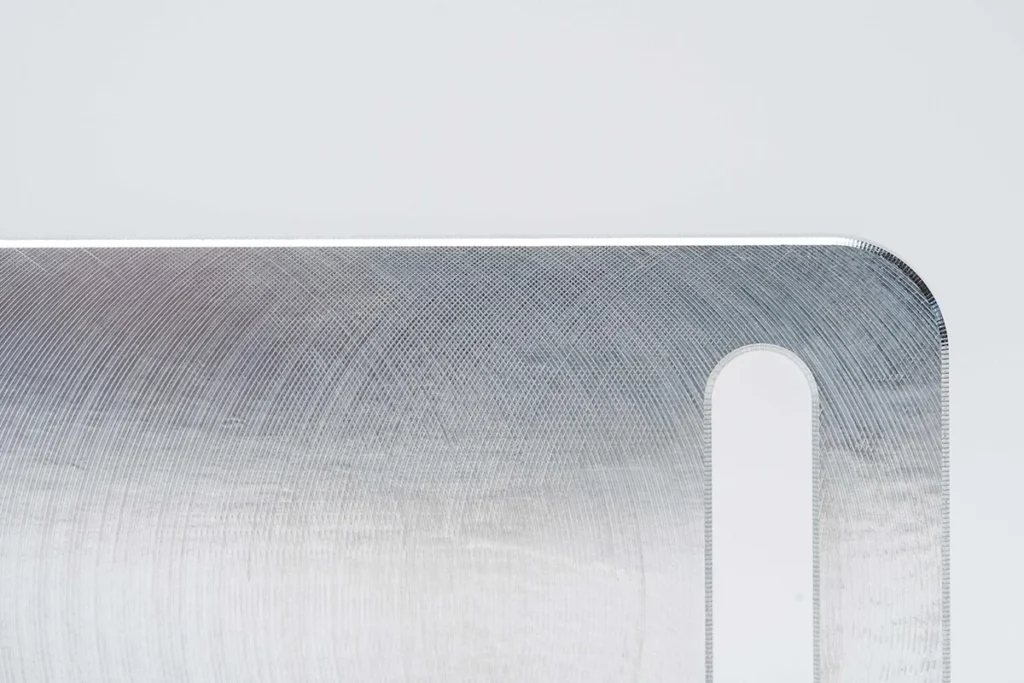
Aluminum EN AW-6060 is a lower-strength, heat-treatable alloy with good corrosion resistance, weldability and cold forming behavior. It suits lighting, furniture, structural covers and general engineering parts where extreme strength is not required. EN AW-6061 is a common all-round CNC alloy because it combines good machinability, corrosion resistance and moderate strength.
EN AW-6082 is often chosen when higher strength is needed in plate or structural components. EN AW-7075 provides much higher strength and is common in aerospace-style brackets, fixtures, tooling plates and performance components, but it costs more and needs careful corrosion and finishing review.
Steel and Stainless Steel Options
Carbon and structural steels such as C45 and S355-style grades are useful for shafts, machine parts, tooling details and welded structures. They can provide strength and economy, but corrosion protection, heat treatment and final surface finish must be planned early.
Stainless steels such as 1.4301, 1.4404 and 1.4571 support corrosion resistance for chemical, food, marine and medical-adjacent applications. 1.4404 improves chloride resistance compared with basic austenitic stainless steel, while titanium-stabilized grades can help in higher-temperature welded service. These materials machine more slowly than aluminum, so cost and tolerance expectations should be realistic.
Copper, Brass, Titanium and Engineering Plastics
Copper and brass are selected for electrical conductivity, thermal behavior, bearing surfaces, fittings and decorative or precision components. They may require special tool control because copper can be gummy and brass grades vary in machinability.
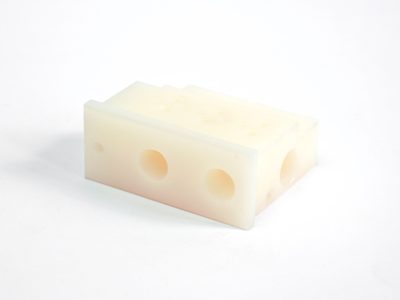
Titanium Grade 2 and Grade 5 may enter a shortlist when corrosion resistance, weight and strength requirements justify a detailed machining review. Material family names alone do not establish medical or implant suitability: those applications require grade-specific documentation and application validation. Plastics such as ABS, acrylic, POM, nylon, PEEK, PTFE, PC and UHMW PE address different requirements, including impact, clarity, friction, chemical exposure, temperature and insulation. Review clamping, heat and moisture condition for the actual plastic grade.
Grade-specific questions before quotation
| Material group | What to specify | What to resolve before release |
|---|---|---|
| Aluminum alloys | Exact alloy, temper, stock form and cosmetic faces | Fit after finishing, thin-section stability and any proposed grade substitution |
| Carbon and structural steels | Grade, supplied condition, heat treatment and coating intent | Which dimensions apply after heat treatment, joining or finishing |
| Stainless steels | Grade, exposure conditions, joining and required surface condition | Corrosion expectations, crevice details, cleaning and material documentation |
| Copper and brass | Alloy, electrical or thermal function, mating faces and finish | Contact requirements, burr-sensitive features and the effect of coatings on interfaces |
| Titanium | Grade, product specification, loading and inspection requirements | Machining and finishing feasibility; separate approval for any regulated application |
| Engineering polymers | Exact grade, moisture or conditioning state, temperature and mating material | Dimensional checks, clamping sensitivity, service movement and documentation for the intended use |
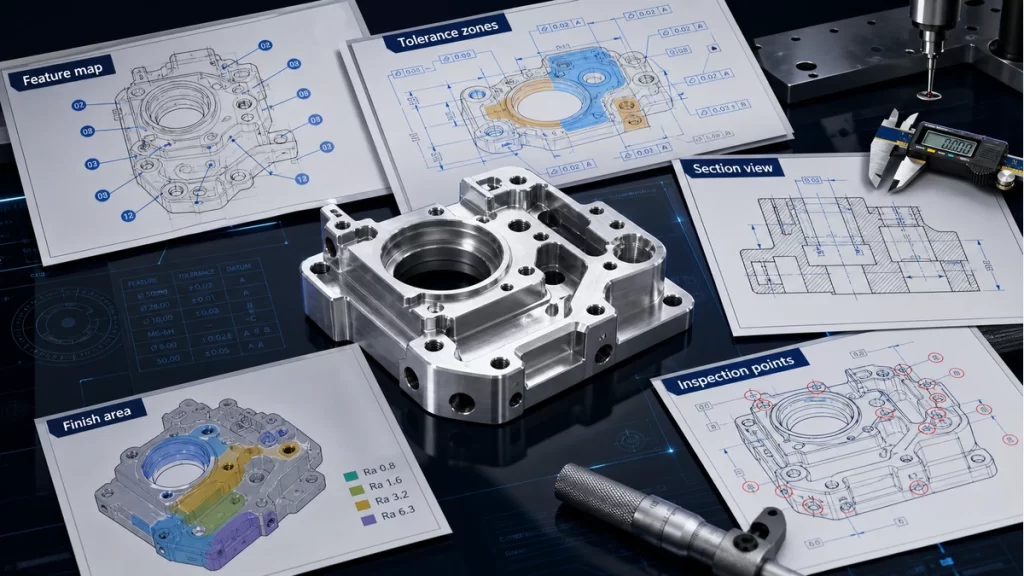
A family name does not establish one tolerance, roughness, cost or lead-time value. Review the supplier’s grade data, the actual CAD model and the drawing’s acceptance requirements together.
How DEBAOLONG Reviews CNC Materials
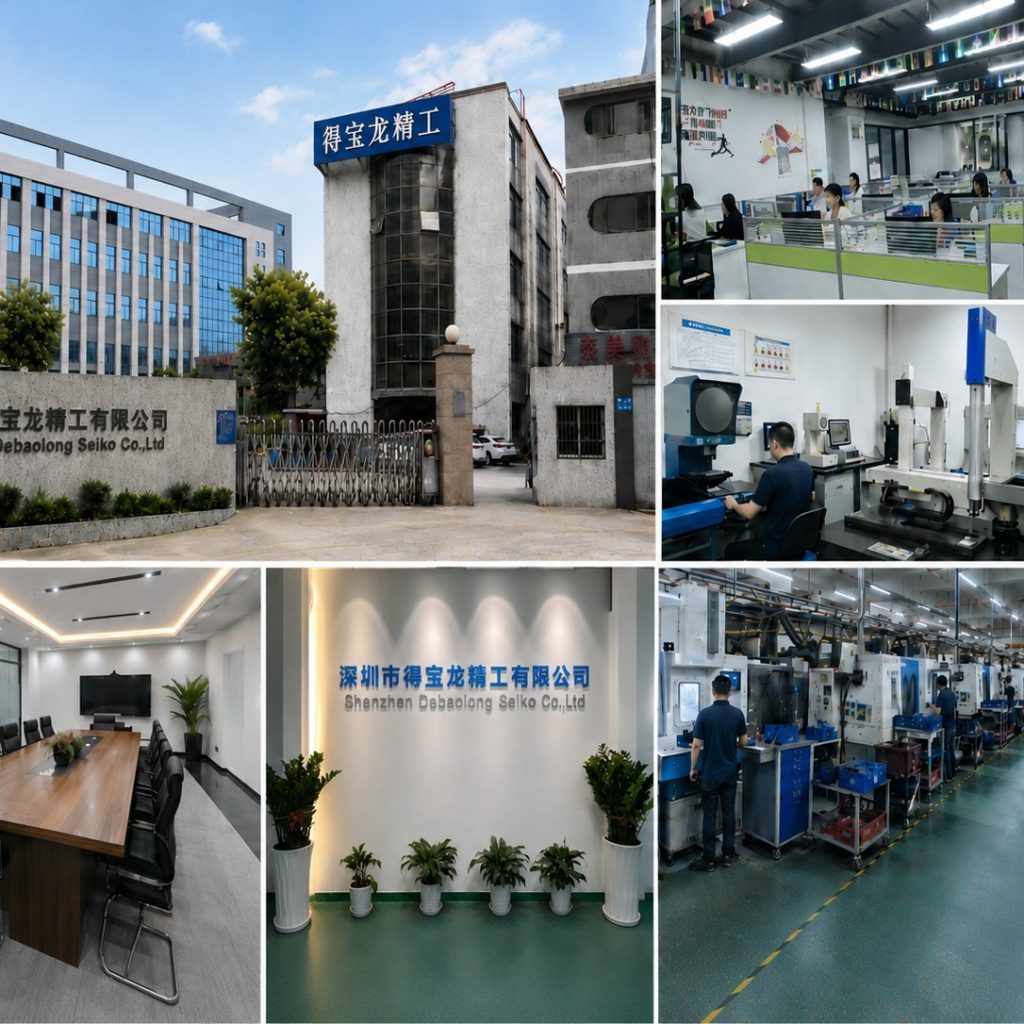
DEBAOLONG reviews CNC material choice against application loads, tolerance, surface finish, post-processing and sourcing. If the project is still early, the Knowledge Center can help teams compare process routes before locking the material. The strongest choice is not always the most expensive one; it is the material that meets the requirement and can still be machined, inspected and delivered reliably.
Related Services
For related manufacturing support, review CNC machining, sheet metal fabrication, and 3D printing services, with injection molding support available for plastic production programs.