
PolyJet 3D printing is valued for fine detail, smooth surfaces and the ability to produce visually realistic prototypes. The process can also support complex geometry and multi-material concepts, making it attractive for product development, ergonomic review and appearance models.
To get the best results, the design must respect PolyJet’s process constraints. Thin walls, tight moving clearances, trapped resin and overly delicate text can all reduce print reliability. Good design rules help turn a visually impressive technology into a predictable engineering tool.
What makes PolyJet different
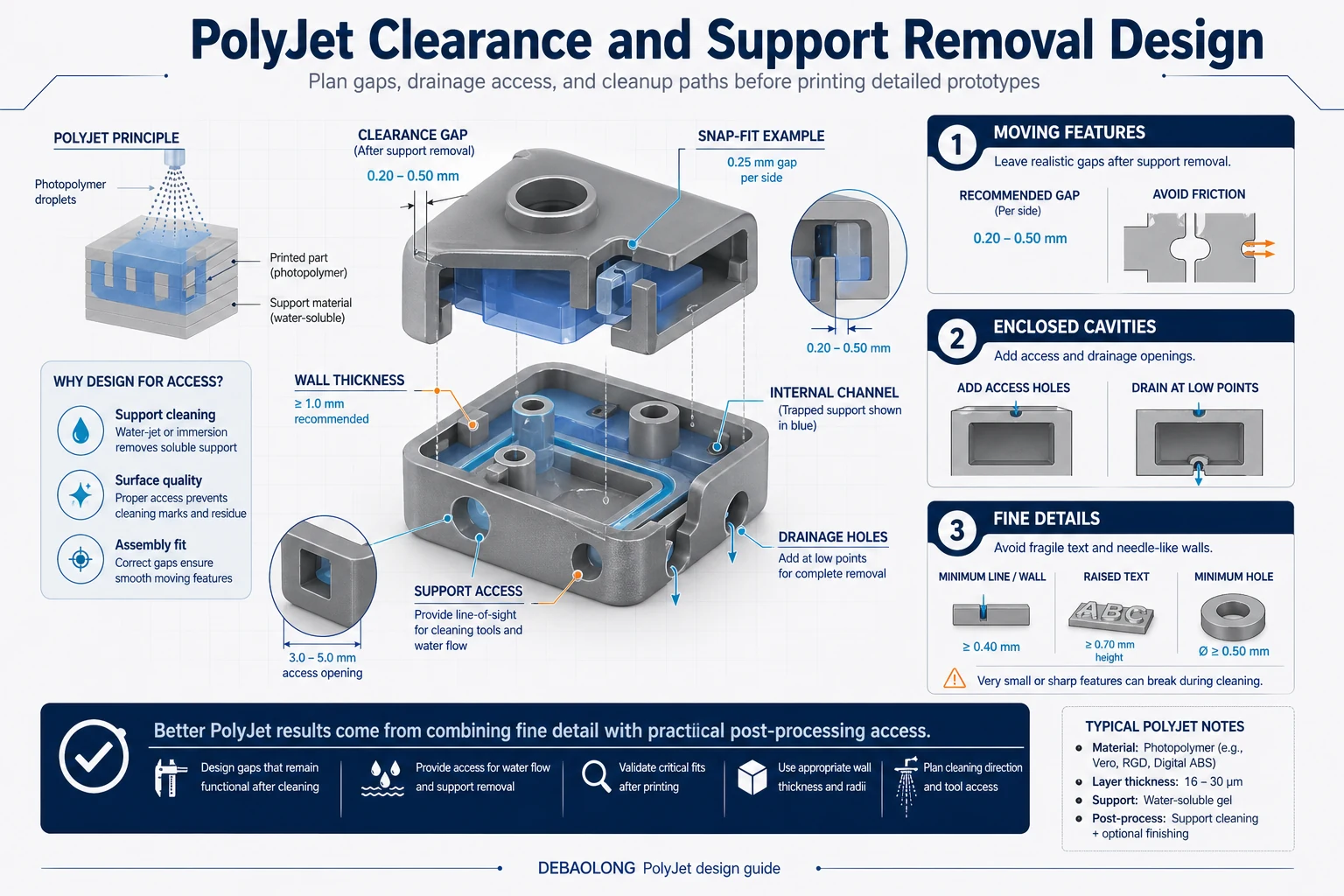
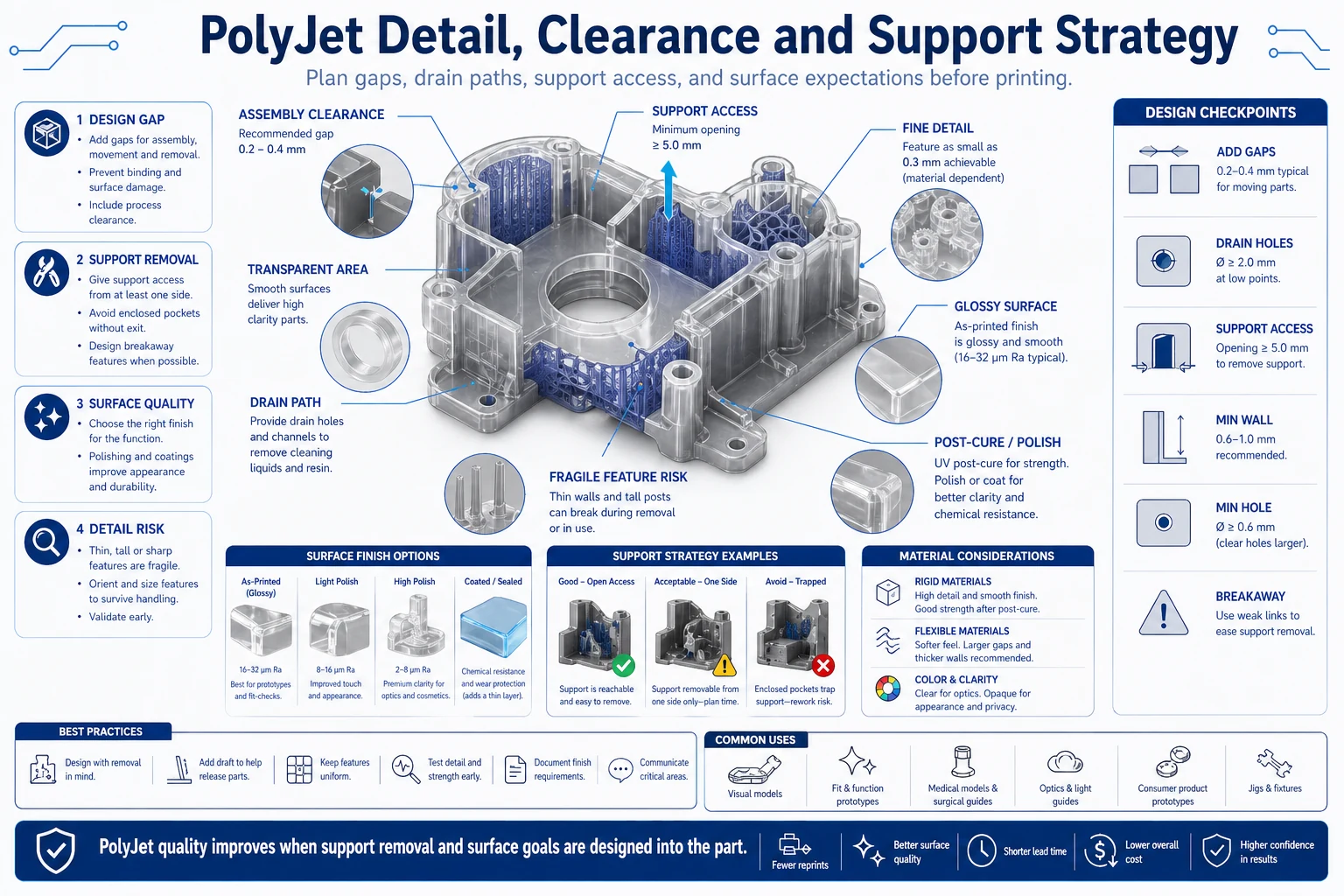
PolyJet uses photopolymer droplets that are jetted and cured layer by layer. This makes it suitable for smooth surfaces, fine features and visual prototypes, but it also means uncured material and support removal must be considered during design.
Compared with many other additive processes, PolyJet can produce excellent detail but is more sensitive to small gaps, enclosed cavities and fragile features. That is why designers should treat it as a precision prototyping method rather than a universal production process.
Key PolyJet design rules
- Use sufficient wall thickness for supported and unsupported features.
- Maintain practical clearance between moving parts.
- Add drain holes for hollow or enclosed volumes.
- Split oversized parts into clean assembly sections.
- Add fillets to protect thin walls and sharp intersections.
- Size raised or engraved text for post-processing durability.
When PolyJet is the right choice
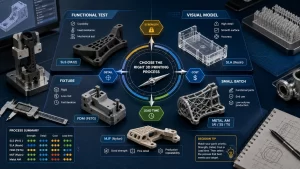
PolyJet is a strong option for appearance models, medical visualization, ergonomic studies, fit checks and prototypes where surface quality matters. It can help design teams communicate form, texture and assembly intent more clearly than rougher prototype methods.
However, if the goal is high mechanical strength, heat resistance or production-grade durability, other processes may be better. Comparing PolyJet with SLA, SLS, MJF and CNC machining helps teams choose the right path earlier.
Improving prototype quality
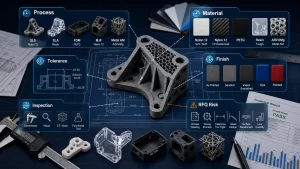
For best results, DEBAOLONG recommends reviewing feature size, wall thickness, clearances and post-processing needs before printing. A design that accounts for process behavior will usually produce a cleaner, more functional prototype.
For related manufacturing support, explore DEBAOLONG CNC machining, sheet metal fabrication, and injection molding services.
For neutral additive manufacturing standards context, the ASTM F42 Additive Manufacturing Technologies committee is a useful non-competitor reference.
Moving Features, Split Parts and Assembly Clearance
PolyJet is excellent for fine surface quality and multi-part visual prototypes, but design teams still need realistic clearance planning for snap features, assembled sections and moving elements. Parts that look perfect in CAD can become difficult to clean or too tight after support removal if tolerances and gap strategy are ignored. The strongest PolyJet results come from combining detail quality with practical assembly thinking.
This is also why large prototypes are often better when split into manageable sections. Breaking the model into purposeful subassemblies can improve print reliability, simplify finishing and protect visible surfaces.
Support Removal and Drainage Should Be Designed, Not Assumed
Support strategy is not only a post-processing concern. Enclosed cavities, narrow channels and fine visual features can all become harder to clean if the model does not provide access and drainage. When the design includes those needs early, the final part is more likely to keep the intended detail quality and fit after cleanup.
FAQ
What is PolyJet best used for?
PolyJet is best for detailed visual prototypes, ergonomic models and parts that need smooth surfaces or fine features.
Is PolyJet suitable for functional parts?
It can support fit and form testing, but it is not always the best choice for high-load functional parts.
Why are drain holes important?
Drain holes help remove trapped resin or support material from hollow volumes, reducing defects and cleaning problems.
Related Engineering Resources