Engineering review for every RFQ
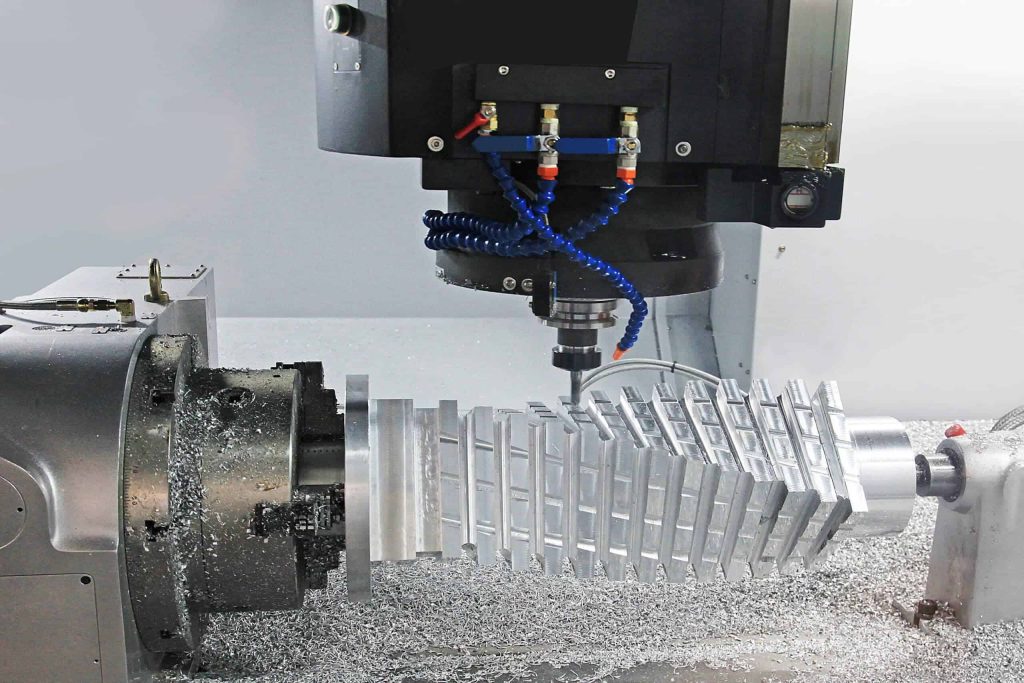
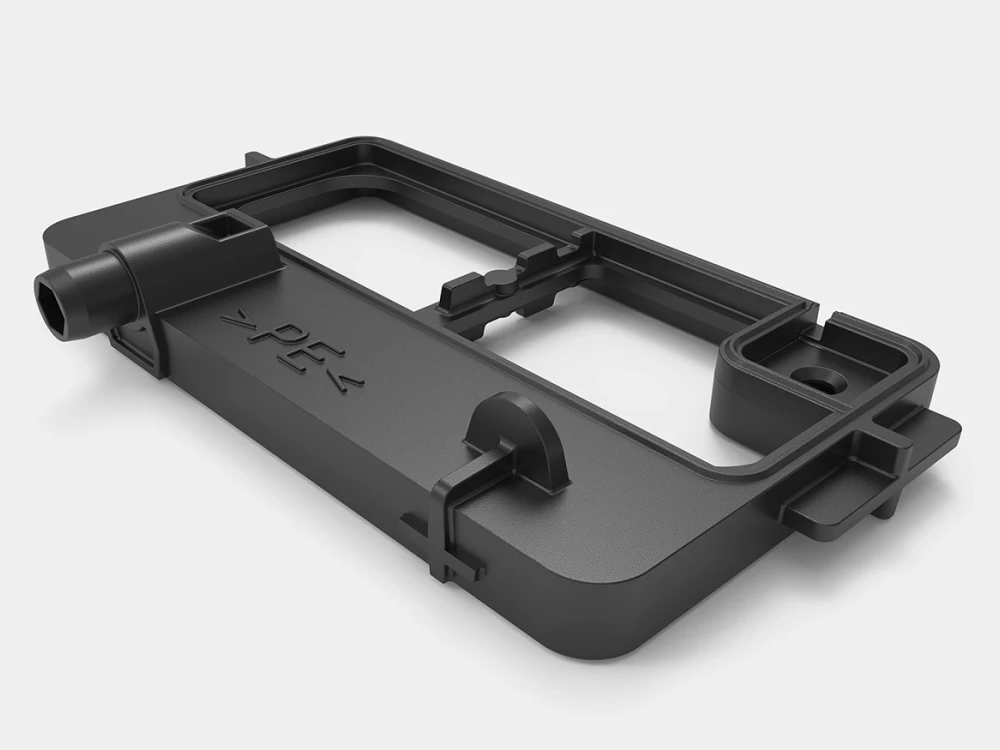
CNC · 3D Printing · Sheet Metal · Injection Molding
Prototype · Low Volume · Production
Process, material, finish and inspection decisions connected

Shenzhen, China

Search
Menu

A practical manufacturing partner connecting process, materials, applications and review.

The factory collage shows building, workshop and manufacturing context.

An illustrative planning graphic connects critical features, manufacturing decisions and engineering review. It is not a production inspection record.


Use Contact for general conversation or Engineering Review for a project-specific brief.

COATING

Black oxide

A dark conversion finish used on compatible ferrous material contexts.
Debaolong surface (9)
ENGINEERING DOSSIER

Coordinate ferrous substrate, black conversion, post-treatment and service context

Black oxide supports a specific ferrous-material context

State material, appearance, post-treatment handling and service environment rather than assuming universal corrosion protection.

Sequence and substrate evidence

Record the base material, preparation, operation order and any approved appearance reference so the visible result remains explainable.

Acceptance belongs to named surfaces

Use a surface map for cosmetic zones, contacts, threads, fits, masking and geometry-dependent variation.

Release inputs for Black oxide

Specify material, appearance, protected surfaces, handling and service environment.
Debaolong surface (9)
APPEARANCE AND FUNCTION

Appearance, function and substrate boundary for Black oxide

Black oxide produces a dark conversion finish primarily used on ferrous parts. Appearance and corrosion performance depend on substrate, preparation and post-treatment.
Minimal dimensional build compared with applied coatings, but not a substitute for a project-specific corrosion system. Confirm oil, wax or sealant and the service environment.
DECISION CONTROLS

Protected interfaces and acceptance controls for Black oxide

Sequence and substrate evidence

Confirm substrate alloy/grade, condition and any preparation specific to Black oxide. Compatibility must be checked against the named base material, not a generic family.

Acceptance belongs to named surfaces

Map cosmetic zones, datums, fits, threads, electrical contacts, seal lands and areas that must remain uncoated or require controlled build for Black oxide.

Release inputs for Black oxide

Specify Black oxide by process/standard where applicable, appearance reference, coverage, masking map, thickness or build requirement if relevant, and protected critical dimensions.
PROJECT-SPECIFIC DECISION DATA

Finish map before Black oxide release

Confirm substrate, preparation, appearance/function, protected zones and inspection evidence; do not infer acceptance from the finish name alone.
Decision itemWhat must be resolvedEvidence at release
Black oxide supports a specific ferrous-material contextState material, appearance, post-treatment handling and service environment rather than assuming universal corrosion protection.Reference, texture, color or toolpath
Sequence and substrate evidenceRecord the base material, preparation, operation order and any approved appearance reference so the visible result remains explainable.Protection, contact, wear or interface role
Acceptance belongs to named surfacesUse a surface map for cosmetic zones, contacts, threads, fits, masking and geometry-dependent variation.Coverage, masking and critical features
Release inputs for Black oxideSpecify material, appearance, protected surfaces, handling and service environment.Coverage, masking and critical features
INSPECTION AND ACCEPTANCE

Inspect Black oxide against the named reference and functional interfaces

Inspect Black oxide against the agreed sample/reference, coverage and surface zones; verify masked interfaces, thread function, fit-sensitive dimensions and any required adhesion/corrosion evidence.
Geometry, access, edges, recesses and part-to-part variation can affect the result; use a named reference and surface map.
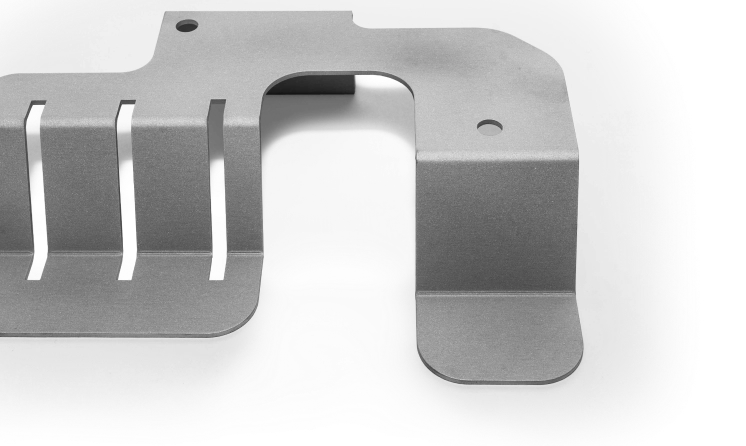
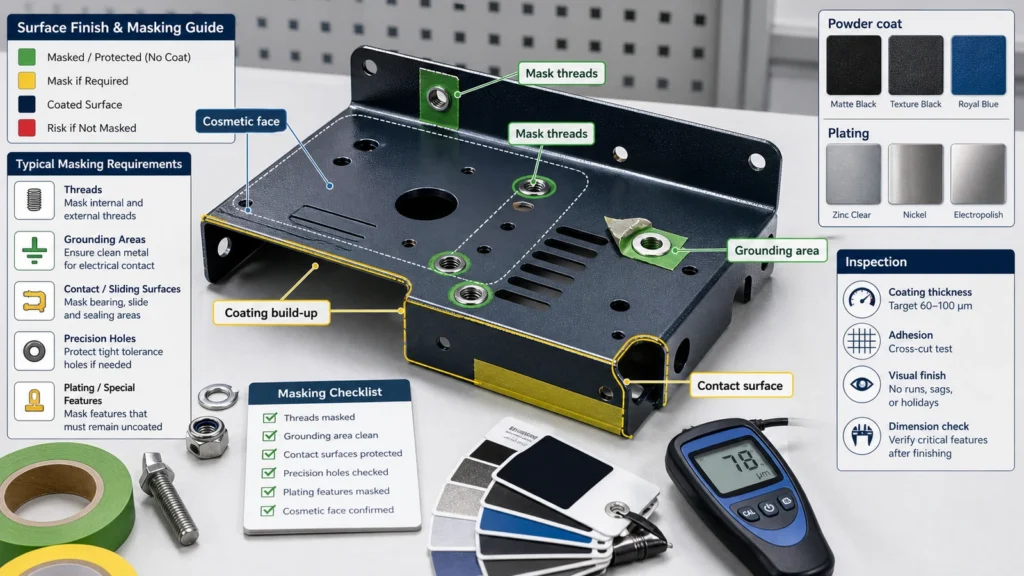
Surface finish masking diagram for sheet metal parts showing powder coating, plating, masked threads and grounding areas
PART AND PROCESS EVIDENCE

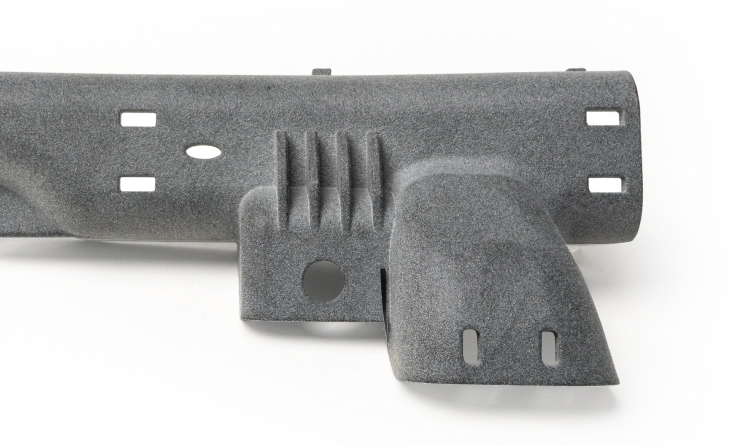
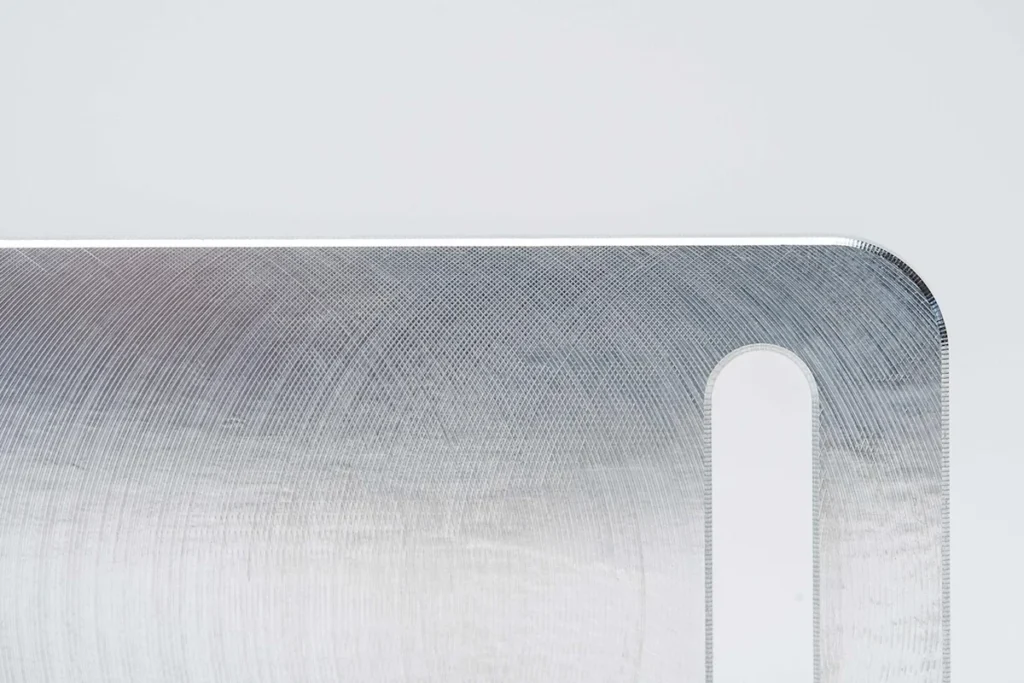
Black oxide close-up, process and acceptance evidence

Debaolong surface (9)
Surface finish masking diagram for sheet metal parts showing powder coating, plating, masked threads and grounding areas
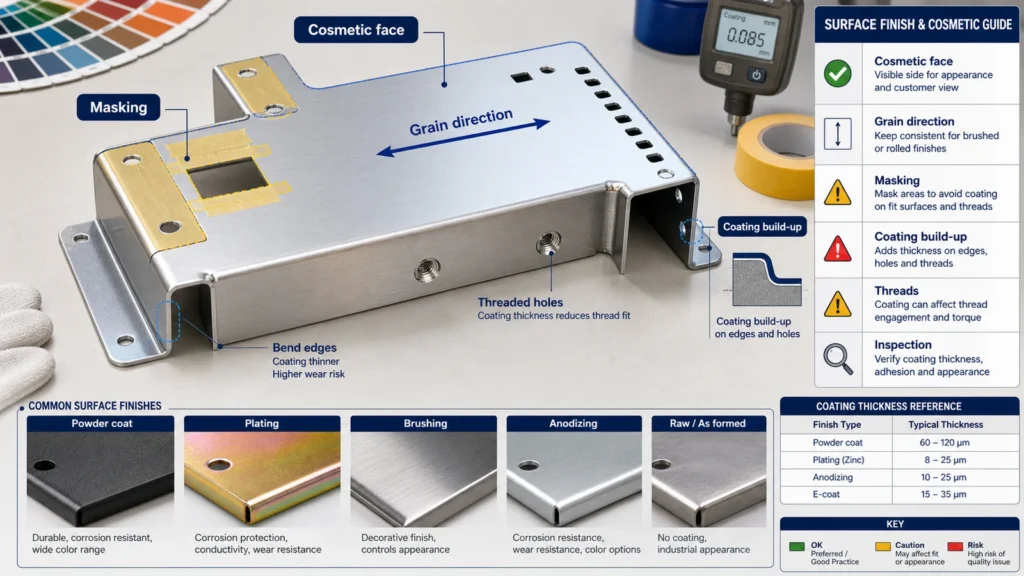
Surface finish diagram for sheet metal parts showing cosmetic face, grain direction, masking, brushed finish, plating and powder coating
DECISION QUESTIONS

Black oxide specification and inspection questions

What must be defined before reviewing Black oxide?

State material, appearance, post-treatment handling and service environment rather than assuming universal corrosion protection. Record the base material, preparation, operation order and any approved appearance reference so the visible result remains explainable.

Which interfaces need project-specific confirmation?

Use a surface map for cosmetic zones, contacts, threads, fits, masking and geometry-dependent variation. Geometry, access, edges, recesses and part-to-part variation can affect the result; use a named reference and surface map.

What should accompany release?

Specify material, appearance, protected surfaces, handling and service environment. Coverage, masking and critical features
PROJECT BRIEF

Black oxide finish map and acceptance checklist

Use these page-specific checks to define substrate, preparation, appearance or function, protected zones and acceptance evidence for Black oxide. Do not release from the finish name alone.

Pretreatment and substrate — Black oxide supports a specific ferrous-material context

State material, appearance, post-treatment handling and service environment rather than assuming universal corrosion protection. Record substrate and pretreatment on a controlled surface map.

Appearance or function — Sequence and substrate evidence

Record the base material, preparation, operation order and any approved appearance reference so the visible result remains explainable. Attach the named appearance or functional reference used for acceptance.

Masking and acceptance — Acceptance belongs to named surfaces

Use a surface map for cosmetic zones, contacts, threads, fits, masking and geometry-dependent variation. Mark masking, fit-sensitive zones and the inspection record required at release.
CONTINUE THE ENGINEERING REVIEW

Continue the engineering review for Black oxide

Connect this decision to the related manufacturing route, material, finish and file-review workflow.