
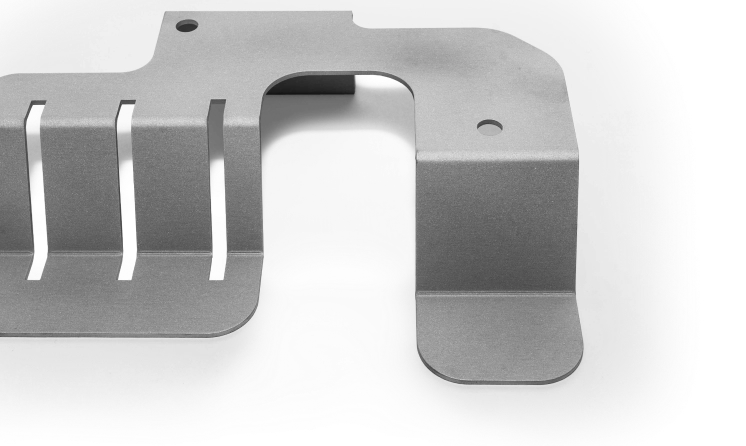
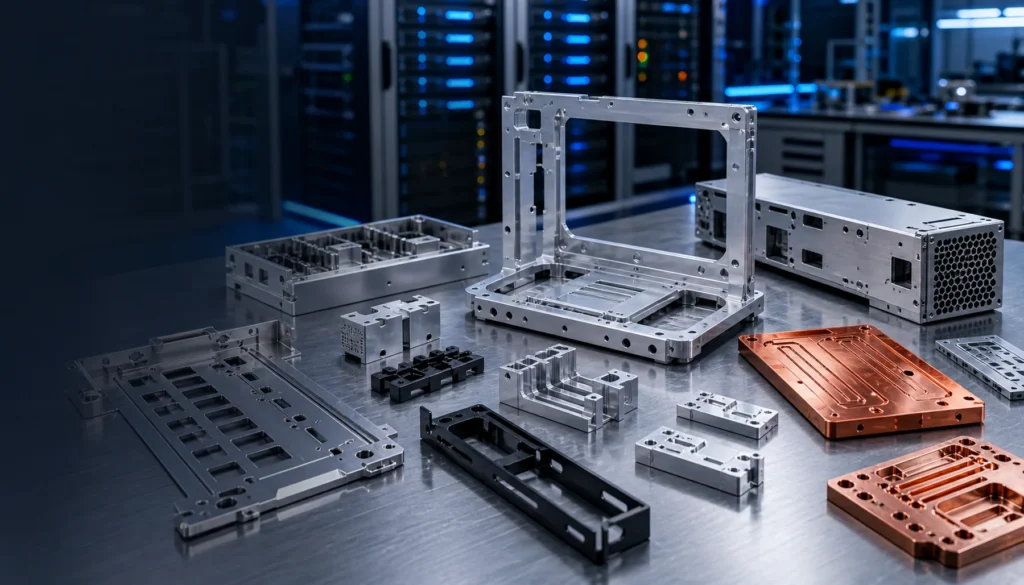

Sheet metal fabrication covers a wide range of manufacturing methods, from cutting and bending to forming, finishing and assembly. It is widely used for enclosures, brackets, panels, frames, cabinets, chassis and many other industrial components.
The best fabrication result depends on choosing the right material thickness, cutting method, bend design and finishing strategy. Small decisions in CAD can affect cost, tolerance, edge quality and whether the final part is easy to produce.
What sheet metal fabrication includes
Most sheet metal projects start with flat material in sheet or coil form. The material is cut, bent or formed into the required geometry, then finished or assembled depending on the application.
Common cutting methods include laser cutting, punching, plasma cutting and waterjet cutting. Forming operations may include press brake bending, stamping, rolling, deep drawing or hardware insertion.
Key design basics for sheet metal parts
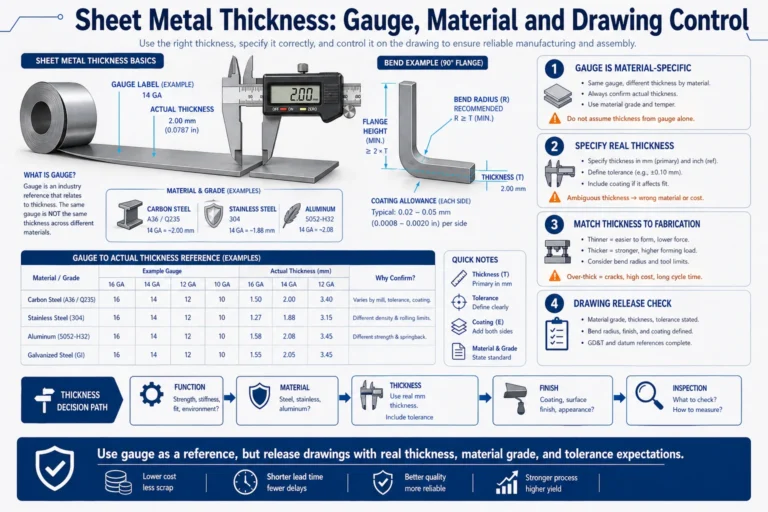
- Specify material thickness in millimeters or inches, not only gauge.
- Use bend radii that match the material and tooling.
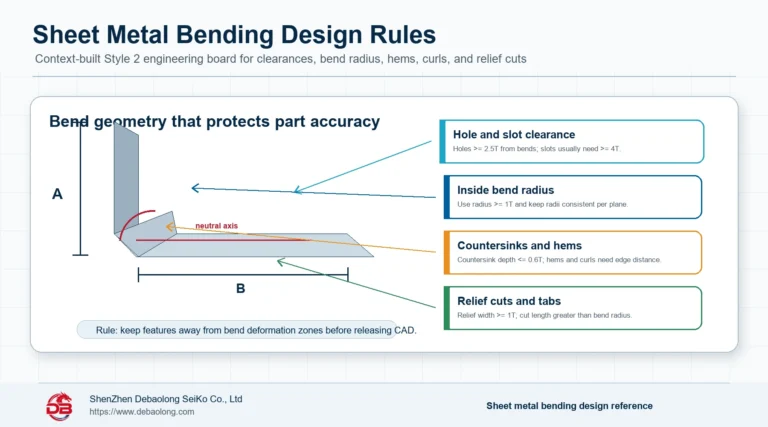
- Keep holes away from bend lines where possible.
- Plan flat patterns with standard sheet sizes in mind.
- Consider grain direction, finishing and cosmetic surfaces.
- Use tolerances that match the process and part function.
Choosing cutting and bending methods
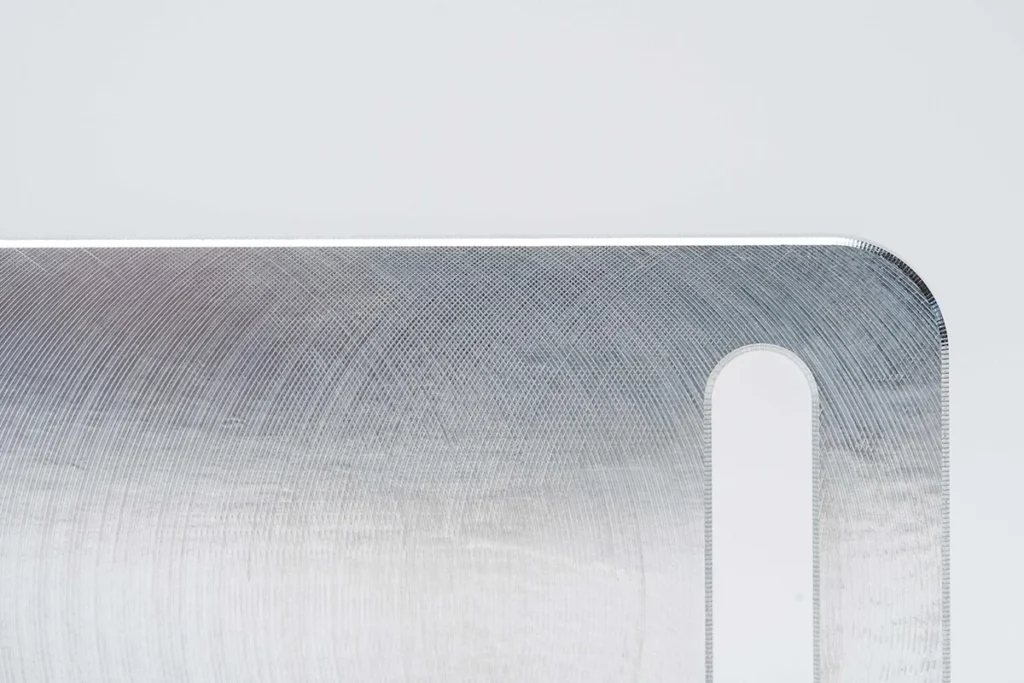
Laser cutting is often chosen for precision, speed and clean edges on thin to medium sheet metal. Punching can be efficient for repeated hole patterns. Waterjet cutting avoids heat-affected zones and can work well for thicker or heat-sensitive materials.
For bending, part geometry must be designed around tooling access, bend allowance, inside radius and flange length. A part that looks simple in 3D may require changes if the bend sequence is not practical.
Designing sheet metal parts for production
DEBAOLONG supports sheet metal fabrication projects by helping customers align material, process, tolerance and finish expectations. Early review helps reduce scrap, rework and unnecessary cost during production.
For related manufacturing support, explore DEBAOLONG CNC machining, sheet metal fabrication, and injection molding services.
For general terminology, The Fabricator provides useful industry background on metal fabrication processes.
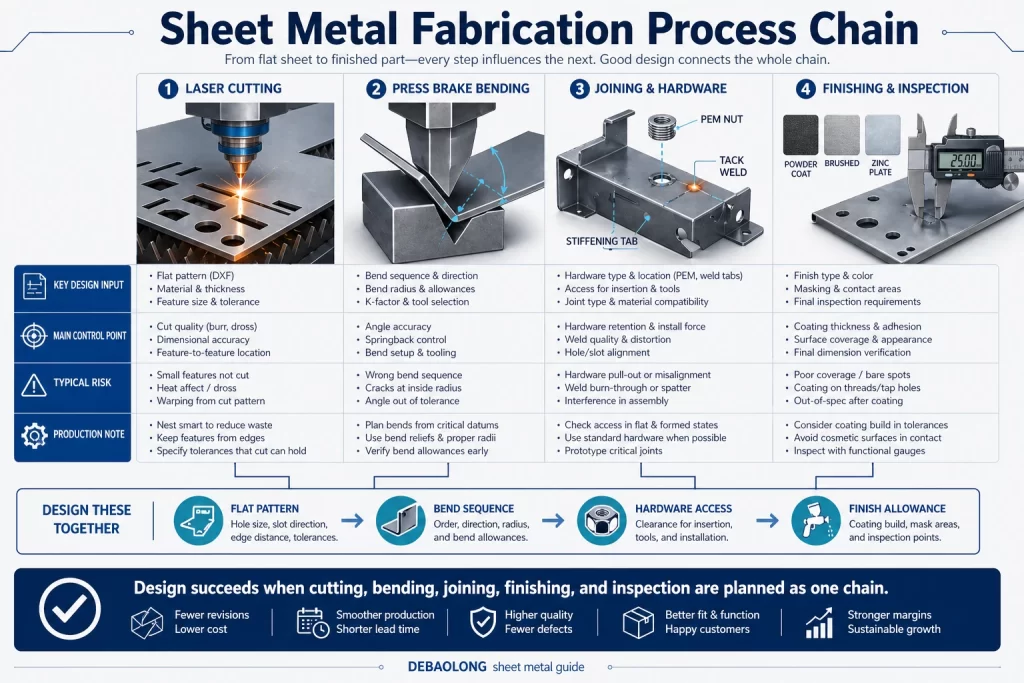
Sheet Metal Design Should Reflect the Real Process Chain
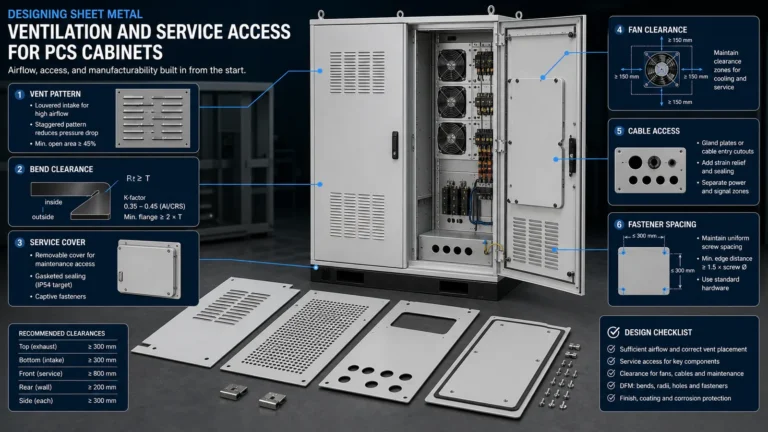
Good sheet metal design is not only about the flat pattern. It must account for the whole process chain: cutting, bending, joining, inspection and finishing. Features that look simple in a 2D drawing can become difficult after forming if bend sequence, tool access and downstream joining steps were not considered together.
Process flow should therefore be reviewed together with geometry. The part only succeeds when design and operations logic remain connected.
Design Constraints Are Often Set by Forming Logic, Not Just Shape
Hole-to-bend distance, flange size, bend radius and tab placement all change whether a part forms cleanly and remains dimensionally stable after bending. Engineers who understand these constraints early can create parts that are both cheaper to fabricate and easier to repeat in production.
Joining, Hardware and Finish Must Be Considered Before Release
Many sheet metal problems only appear after forming, when weld access, hardware insertion or final finish requirements collide with the original geometry. That is why sheet metal design should include joining and finishing logic from the start. The part is not fully manufacturable if it can be cut and bent but still creates difficulty at the assembly or cosmetic stage.
FAQ
What is sheet metal fabrication?
It is the process of cutting, bending, forming and finishing flat metal sheets into functional parts or assemblies.
Why should gauge not be the only thickness specification?
Gauge values vary by material, so millimeter or inch thickness avoids confusion during manufacturing.
What affects sheet metal fabrication cost?
Material, thickness, cutting method, bend complexity, tolerance, finishing and production quantity all affect cost.