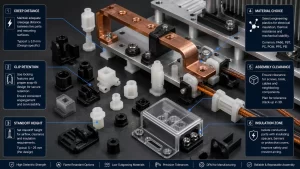


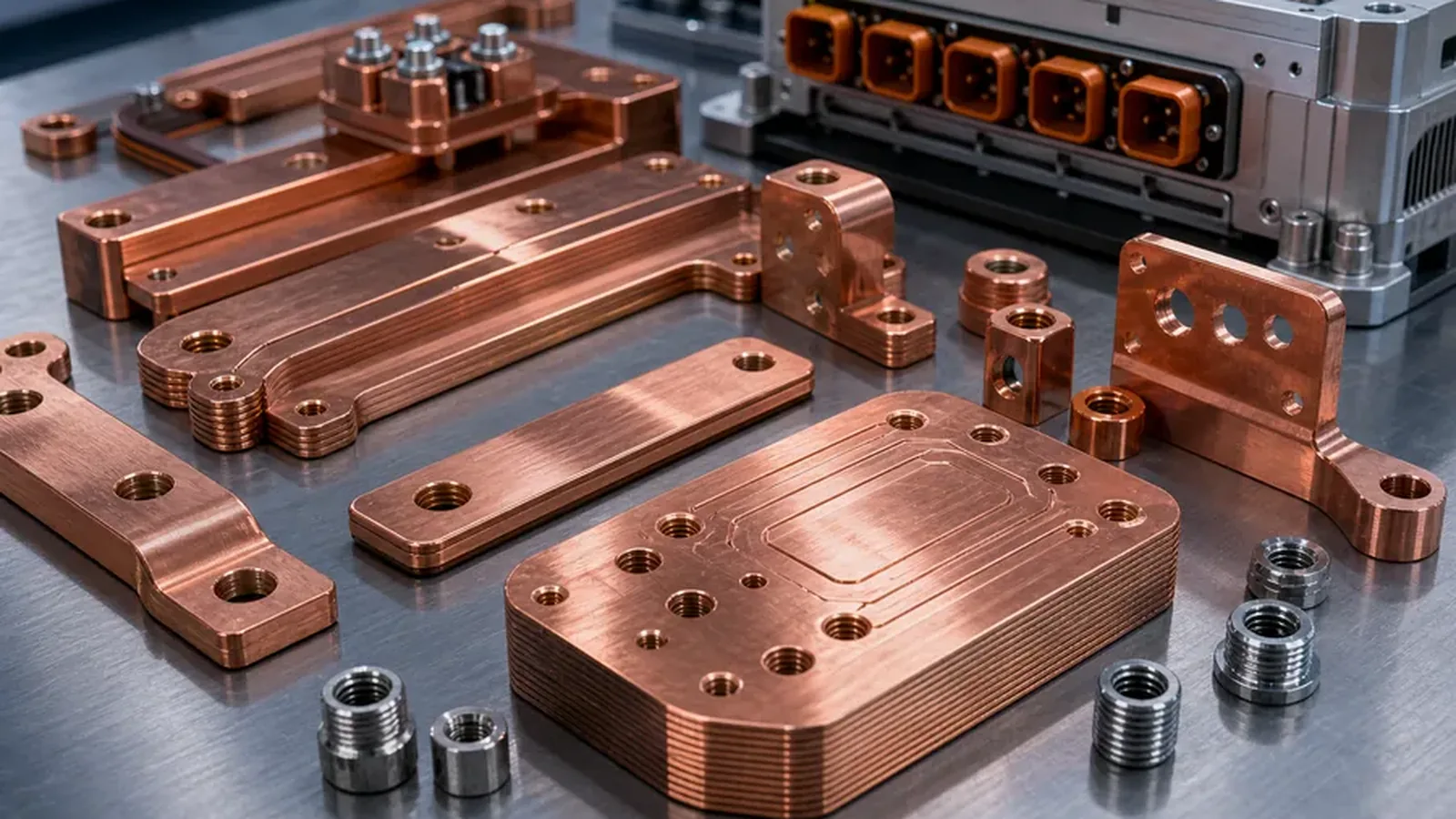
Copper and aluminum conductive parts are used in energy storage and power electronics assemblies to support electrical connection, heat transfer, mounting and mechanical integration. These parts may include connection blocks, busbar-related interfaces, spacers, mounting supports and machined contact features. Manufacturing quality is important because burrs, poor contact surfaces or inaccurate holes can affect assembly reliability.
Where Conductive Parts Are Used
Conductive support parts can appear around battery modules, PCS hardware, inverter assemblies, charging equipment and cabinet power distribution areas. Some parts carry current, while others provide mechanical support for conductive assemblies. Drawings should clearly identify functional contact areas and non-critical surfaces.
Copper vs Aluminum Considerations
Copper provides high electrical and thermal conductivity, but it is heavier and can be more demanding to machine cleanly. Aluminum is lighter, easier to machine and suitable for many structural or thermal support functions. Selection should consider current path, thermal behavior, weight, corrosion and finishing requirements.
CNC Machining Notes
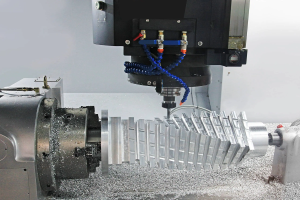
Conductive parts often require accurate holes, slots, pockets, counterbores, threads and flat contact areas. CNC machining can support these features, but tool choice, clamping and chip control should match the material. Copper may need careful cutting parameters to reduce smearing and burr formation.
Burr Control and Edge Finishing
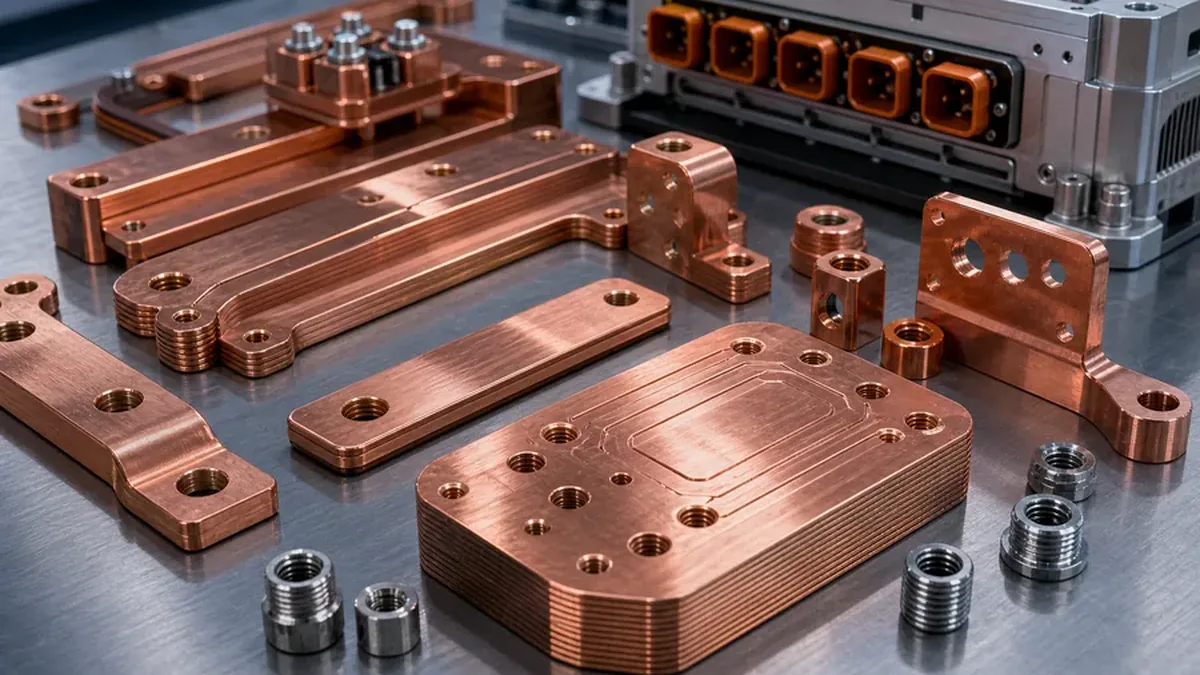
Burrs around connection holes, slots and cut edges can interfere with assembly or contact performance. Critical edges should be called out on drawings. Deburring methods should preserve contact surfaces and avoid rounding areas that must remain dimensionally controlled.
Contact Surfaces and Assembly Interfaces
Contact faces may need controlled flatness, surface roughness or plating. Mounting interfaces should be designed with enough area for fastening pressure and assembly repeatability. If insulation parts, spacers or plastic covers are used nearby, their fit should be reviewed together with the conductive component.
Surface Protection and Inspection
Depending on the project, copper and aluminum parts may require plating, oxidation control, polishing, cleaning or protective packaging. Inspection can include hole position, thread quality, flatness, contact surface review and visual burr checks.
Handling and Packaging Notes
Conductive surfaces can be sensitive to scratches, oxidation, oil or contamination. If the part has a functional contact area, the drawing or purchase notes should explain whether the surface must be protected during production and shipping. For copper parts, packaging and storage conditions can matter more than they do for ordinary structural brackets.
Assembly teams should also confirm whether washers, insulating sheets, plastic spacers or plated fasteners will be used with the conductive part. These details can change hole sizes, edge requirements and finish selection.
RFQ Checklist
- Material grade and conductivity requirements
- 2D drawing and 3D file
- Critical contact surfaces
- Hole, slot and thread requirements
- Deburring and edge requirements
- Plating, cleaning or packaging notes
How Debaolong Supports Conductive Part Projects
Debaolong can manufacture copper and aluminum machined support parts, interfaces and related energy hardware according to customer drawings. For broader material guidance, see the material and surface finishing guide.
FAQ
Can copper parts be CNC machined for energy storage hardware?
Yes. Copper can be CNC machined, but burr control, tool choice and surface handling should be considered early.
When is aluminum preferred over copper?
Aluminum may be preferred when weight, machinability and cost are more important than maximum conductivity.
Should contact areas be marked on drawings?
Yes. Marking contact faces helps control finishing, deburring, flatness and inspection priorities.
Can Debaolong support finishing for conductive parts?
Debaolong can support finishing review and selected finishing processes based on material, drawing and project requirements.
Need copper or aluminum conductive parts? Send drawings through the Energy Storage & Power Electronics Components page.
Related Engineering Resources