

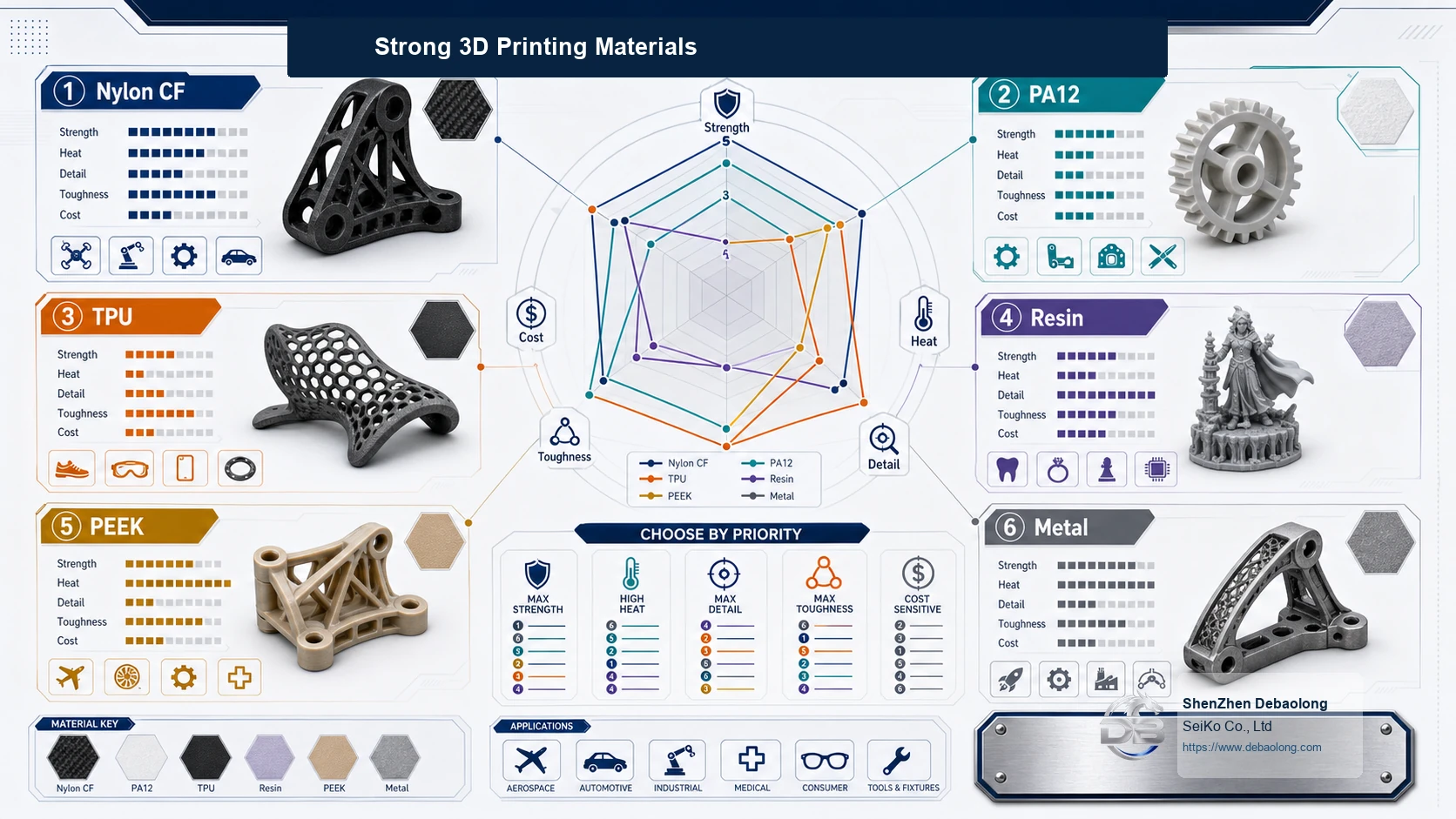
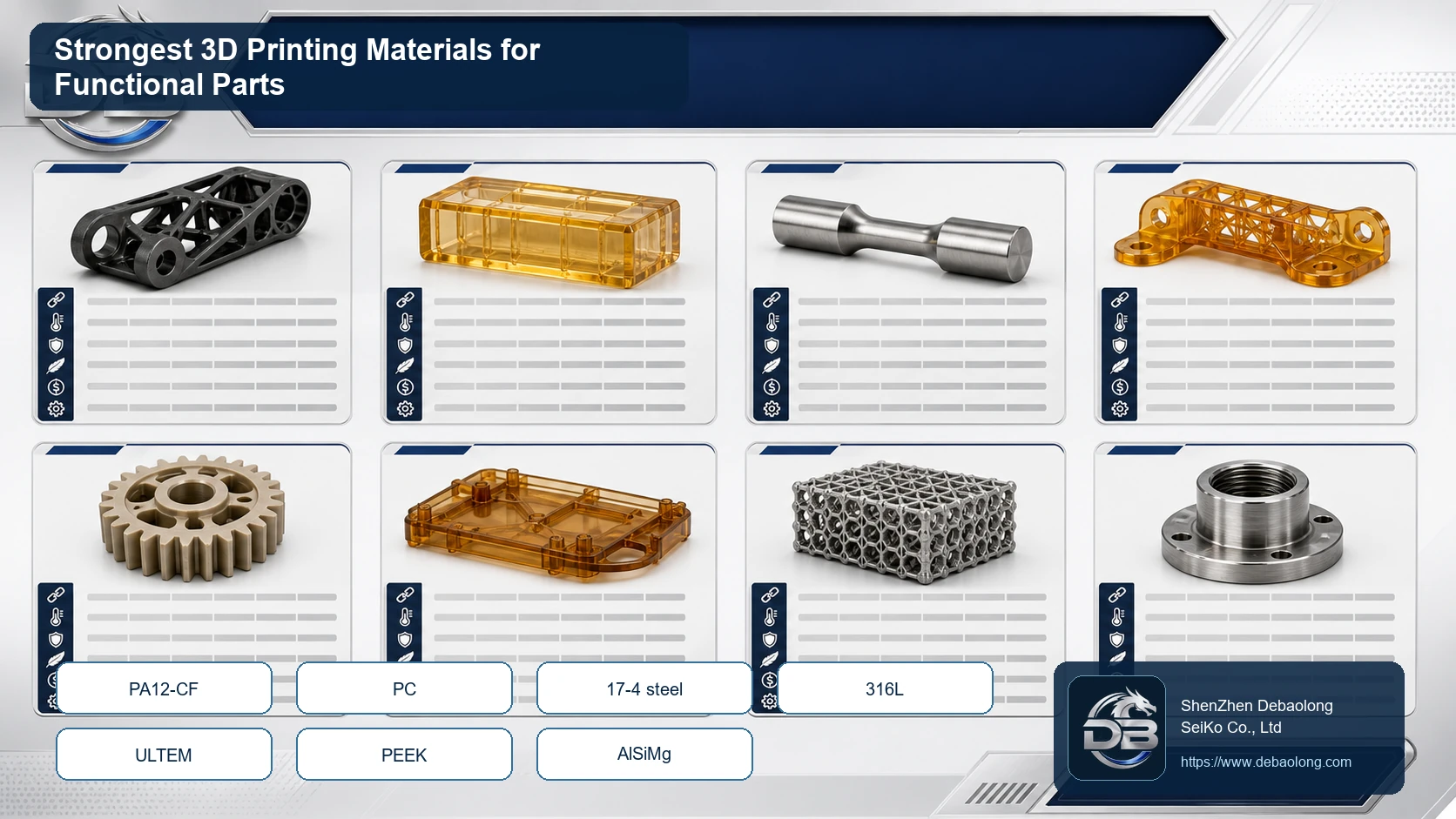
The strongest 3D printing material is not a single universal grade. Strength depends on tensile, compressive and shear performance, but also on impact resistance, chemical resistance, weather exposure, print orientation, post-processing and part geometry. The source article compares carbon-filled PA12, PC, stainless steels, ULTEM grades, PEEK, AlSiMg aluminum and 316L stainless steel. A reliable choice begins with the application load and then checks the available materials and 3D printing process. Engineers should also define heat, wear, fatigue, chemical exposure and inspection needs before assuming the highest-strength datasheet value is enough. Build direction and local stress features can change real strength dramatically.
Strength Depends on Material, Design and Process
A printed part can be weak even in a strong material if layer direction, wall thickness or stress concentration is wrong. Conversely, a moderate material can perform well when geometry distributes load cleanly.
Strong Polymer Options
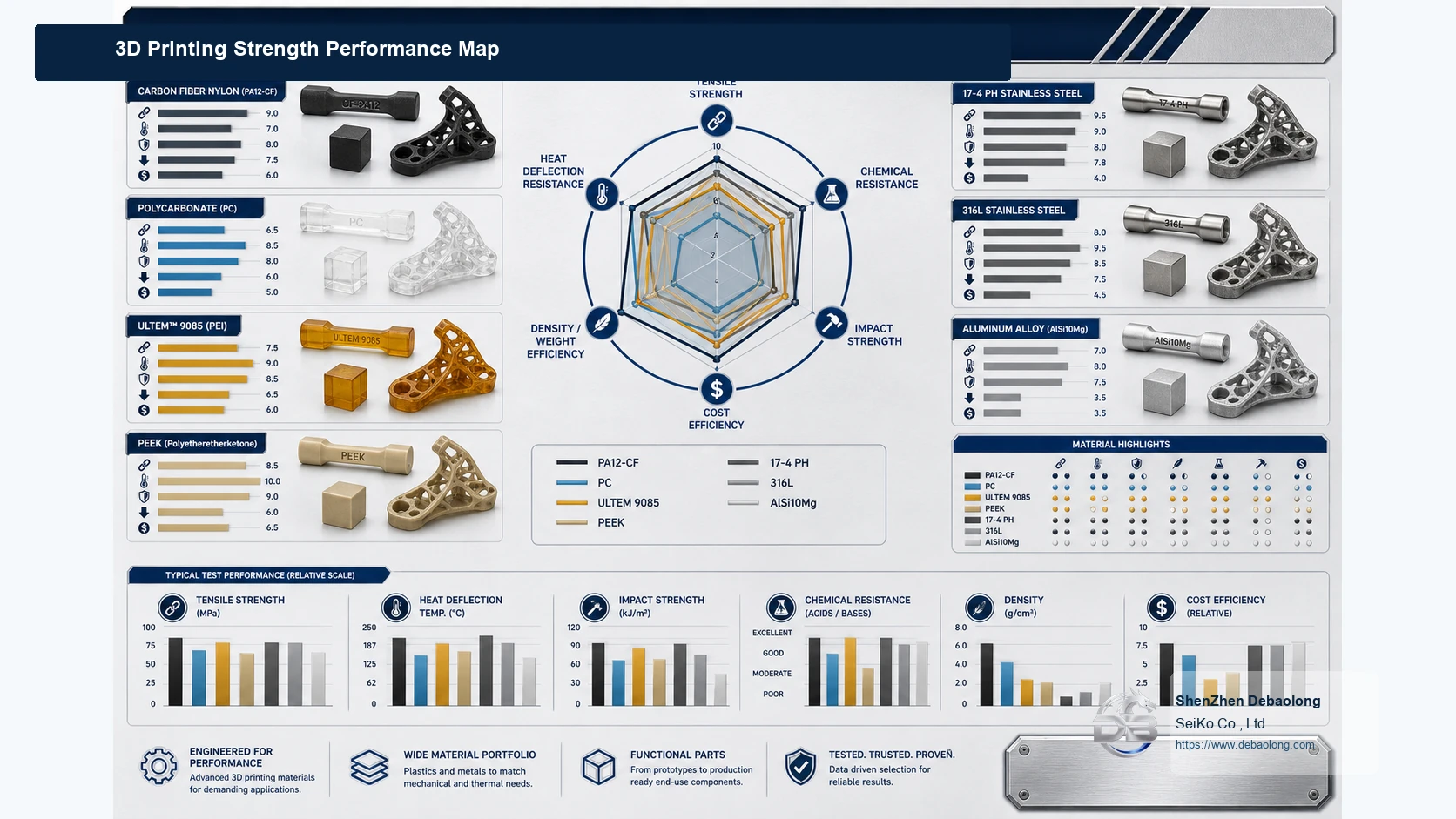
Carbon-filled PA12 nylon combines low weight with high stiffness and is useful for jigs, fixtures, structural prototypes and metal-replacement trials. Its chopped carbon fiber improves rigidity but can reduce ductility in certain directions.
Polycarbonate offers good toughness, heat resistance and impact performance. ULTEM 1010 and ULTEM 9085 are used when high temperature, flame behavior or demanding industrial requirements matter. PEEK sits higher in heat and chemical performance but requires specialized processing and careful cost review.
Metal Printing Options
17-4 stainless steel provides high strength and hardness potential after heat treatment. 316L stainless steel is valued for corrosion resistance and ductility. AlSiMg aluminum supports lightweight metal parts, while titanium and superalloys may be considered for more demanding environments.
Printed metals may still need machining, heat treatment or surface finishing. Strength also depends on density, build orientation and process validation.
How to Compare Materials
Use tensile strength for pulling loads, compressive strength for bearing or crushing loads, shear strength for pins and joints, impact resistance for shock, and heat resistance for operating environment. Do not compare materials only by one headline number.
Cost, availability, lead time and finishing can outweigh a small strength difference. A very strong material may be the wrong choice if it adds unnecessary lead time or cannot meet the surface requirement.
DEBAOLONG Strength Review
DEBAOLONG reviews load direction, geometry, process, material and post-processing together. For more selection support, use the manufacturing engineering knowledge center before committing to a high-performance material.
Related Services
For related manufacturing support, review CNC machining, sheet metal fabrication, and 3D printing services, with injection molding support available for plastic production programs.