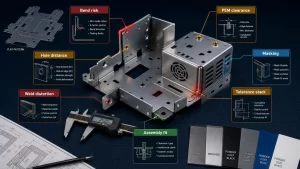


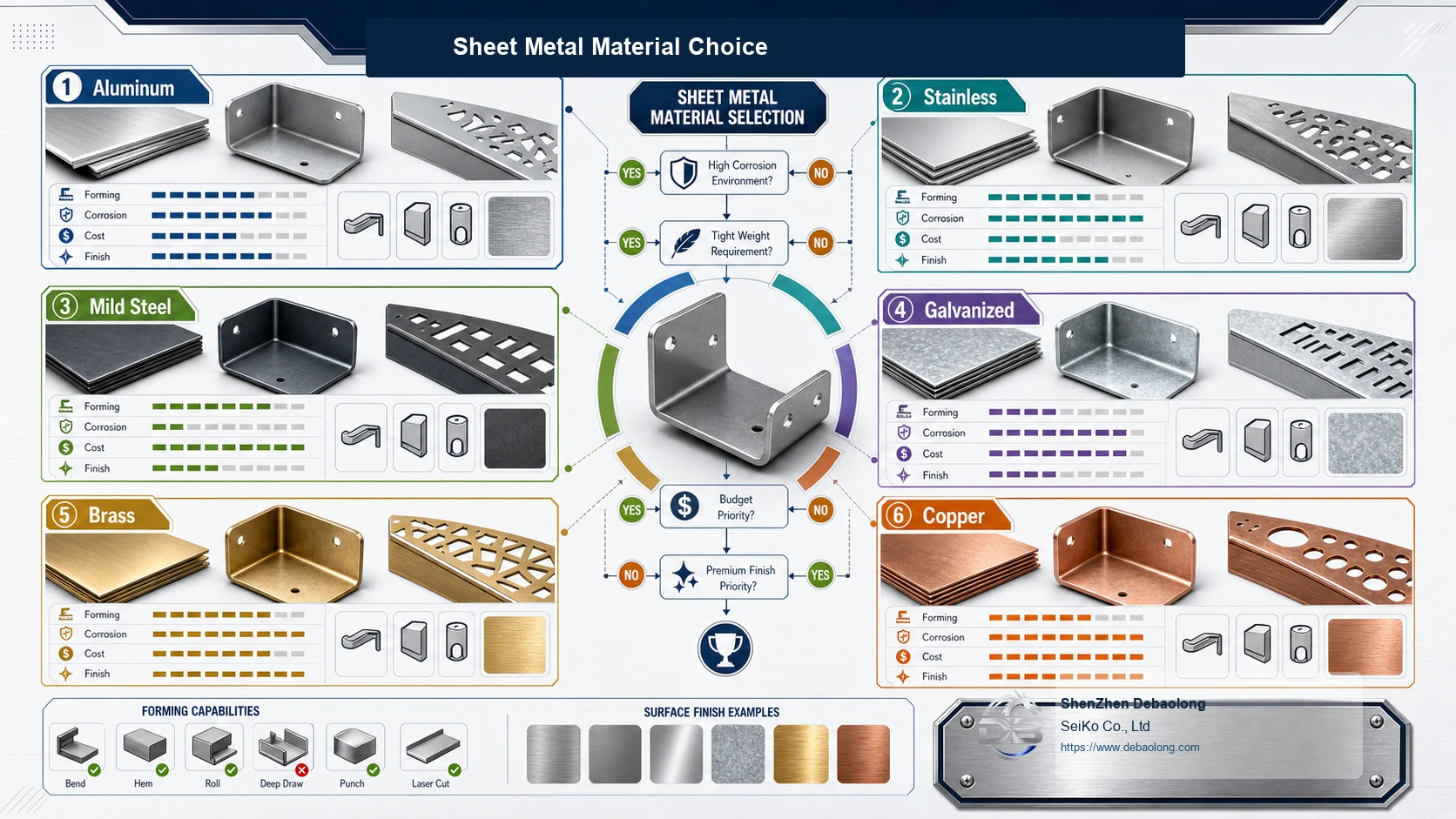
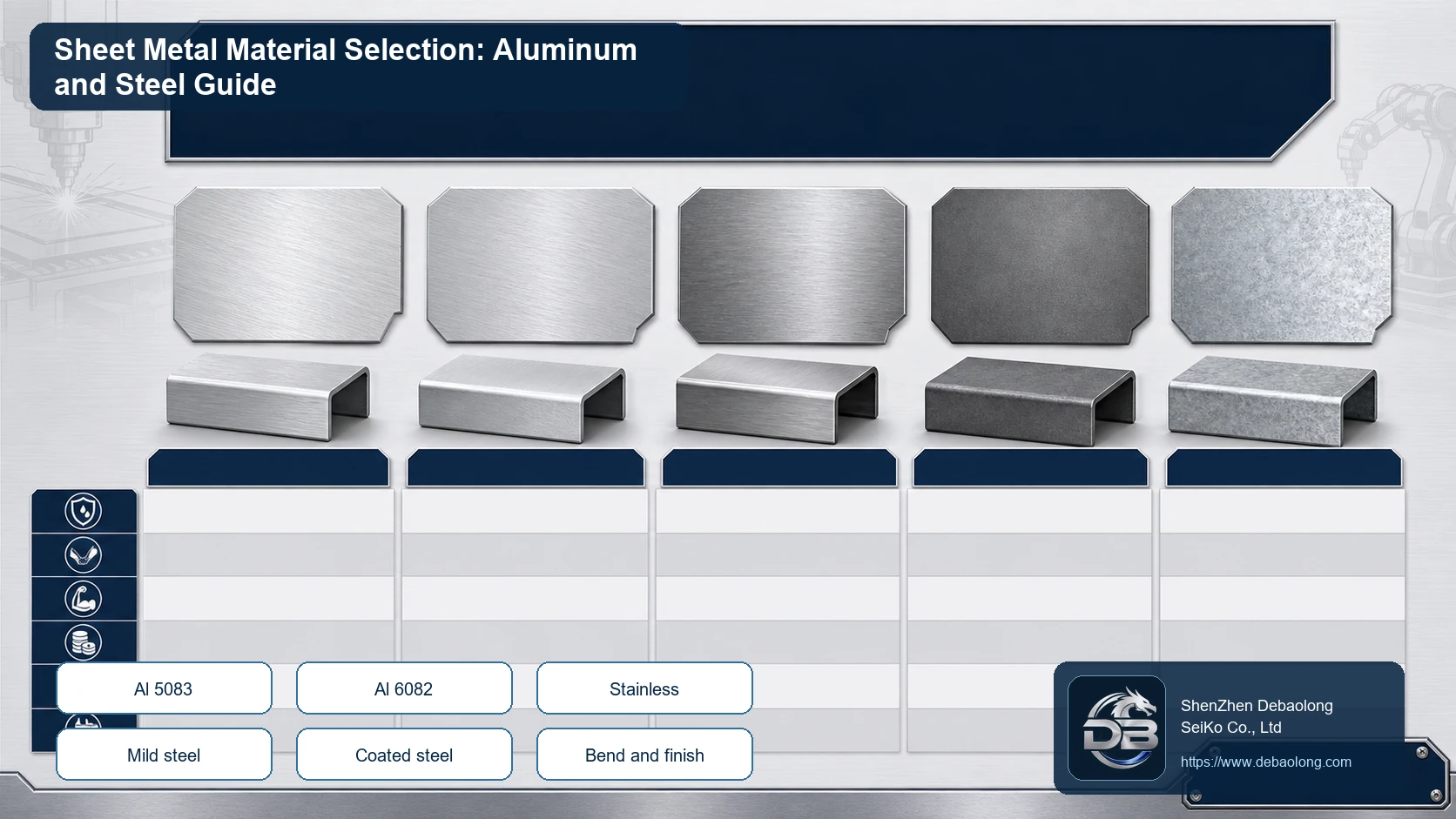
Sheet metal material selection affects cutting speed, bend radius, springback, corrosion resistance, welding, surface finish, weight, cost and lead time. The source article is short, but its material focus is useful: aluminum 5083 and aluminum 6082 are common sheet choices with different strength and forming behavior. A production-ready selection should also compare stainless steel, mild steel and coated steel against the actual fabrication route on DEBAOLONG’s sheet metal fabrication service. The right material must survive cutting, bending, joining, finishing, handling and service exposure without forcing avoidable rework. It should also match the expected enclosure stiffness, cosmetic quality, fastener strategy and operating environment.
Sheet Metal Material Selection Controls the Whole Process
The correct sheet material is the one that can be cut, bent, joined, finished and inspected without fighting the part’s function. A low-cost sheet can become expensive if it cracks in bending, rusts in service or needs heavy finishing to meet appearance requirements.
Aluminum 5083 and Aluminum 6082
Aluminum 5083 is valued for corrosion resistance, weldability and marine-style service. It is useful for panels, brackets, covers and outdoor components where weight reduction and corrosion resistance matter. Its forming behavior should be reviewed before tight bends are specified.
Aluminum 6082 is a stronger heat-treatable aluminum alloy often used for structural parts, plates and machined-fabricated components. It can be a good choice when stiffness and strength matter more than deep forming.
Steel, Stainless Steel and Coated Sheet
Mild steel is economical, strong and easy to fabricate, but it normally needs painting, plating, powder coating or another corrosion-protection strategy. Stainless steel costs more but protects parts in wet, food, chemical or cosmetic environments.
Galvanized or coated sheet can be practical when corrosion resistance is needed at lower cost, but cut edges, weld zones and coating damage must be considered. Coated material can also affect welding and cosmetic finishing.
Bending, Tolerance and Finish
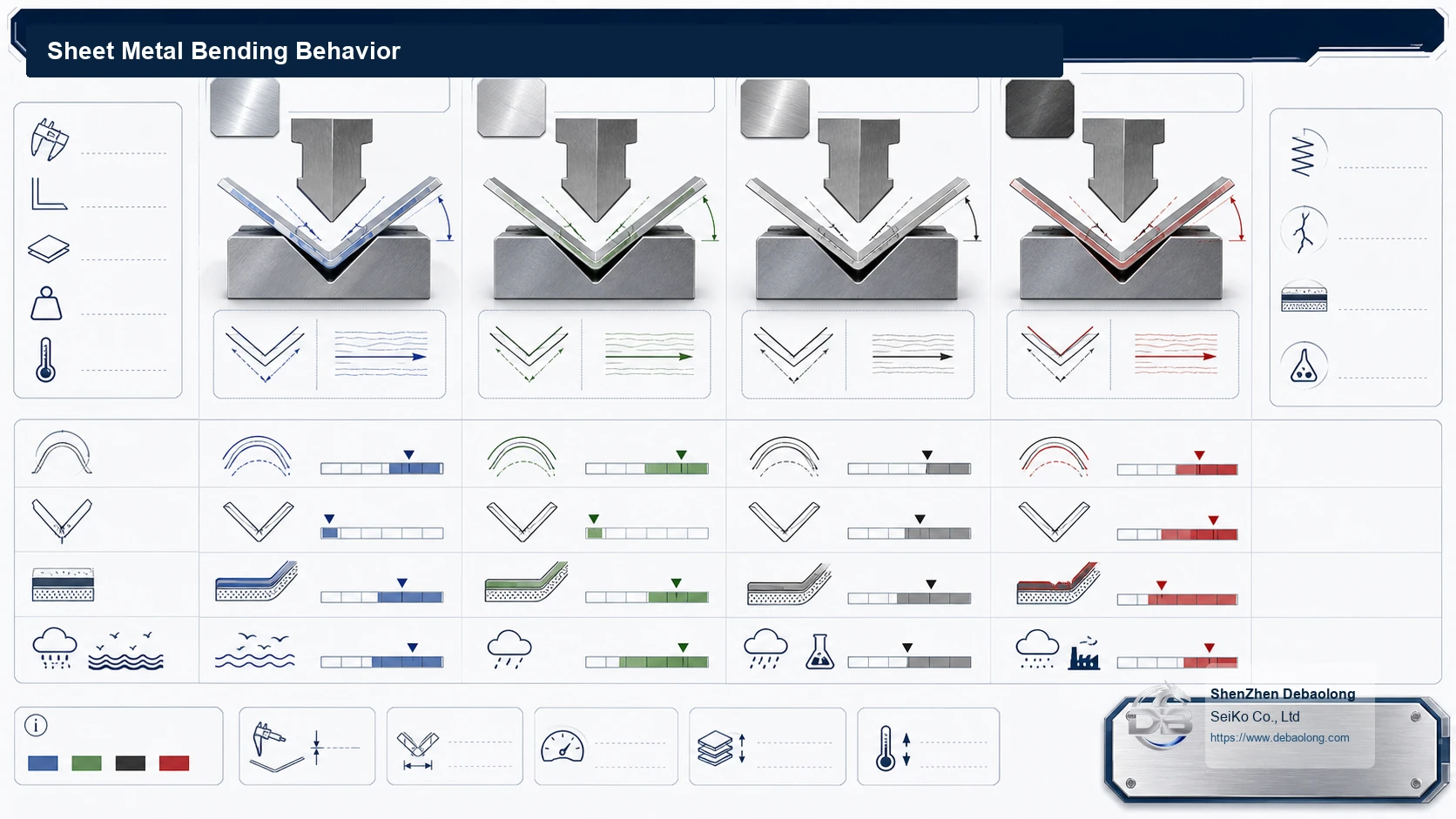
Bending behavior depends on thickness, grain direction, bend radius, tooling and alloy temper. A material that cuts cleanly may still crack if the inside radius is too small. Springback also changes by material, which affects flange angles and formed dimensions.
Surface finish should be selected with material in mind. Brushed stainless, anodized aluminum, powder-coated steel and painted sheet all create different tolerance and handling requirements. Check material availability in all materials before finalizing drawings.
DEBAOLONG Sheet Metal Review
DEBAOLONG reviews sheet material together with thickness, bend radius, fasteners, welding, cosmetic faces and inspection needs. For broader design guidance, the manufacturing engineering knowledge center helps buyers connect material choice with downstream fabrication risk.
Related Services
For related manufacturing support, review CNC machining, sheet metal fabrication, and 3D printing services, with injection molding support available for plastic production programs.
Related Engineering Resources