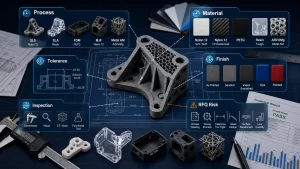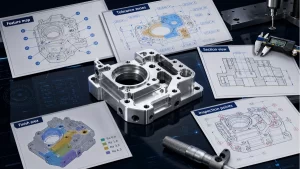


A practical cost guide for 3D printing projects, covering geometry, material choice, process selection, supports, post-processing, batch planning, lead time and quality checks.
Cost Is Designed Into the Part
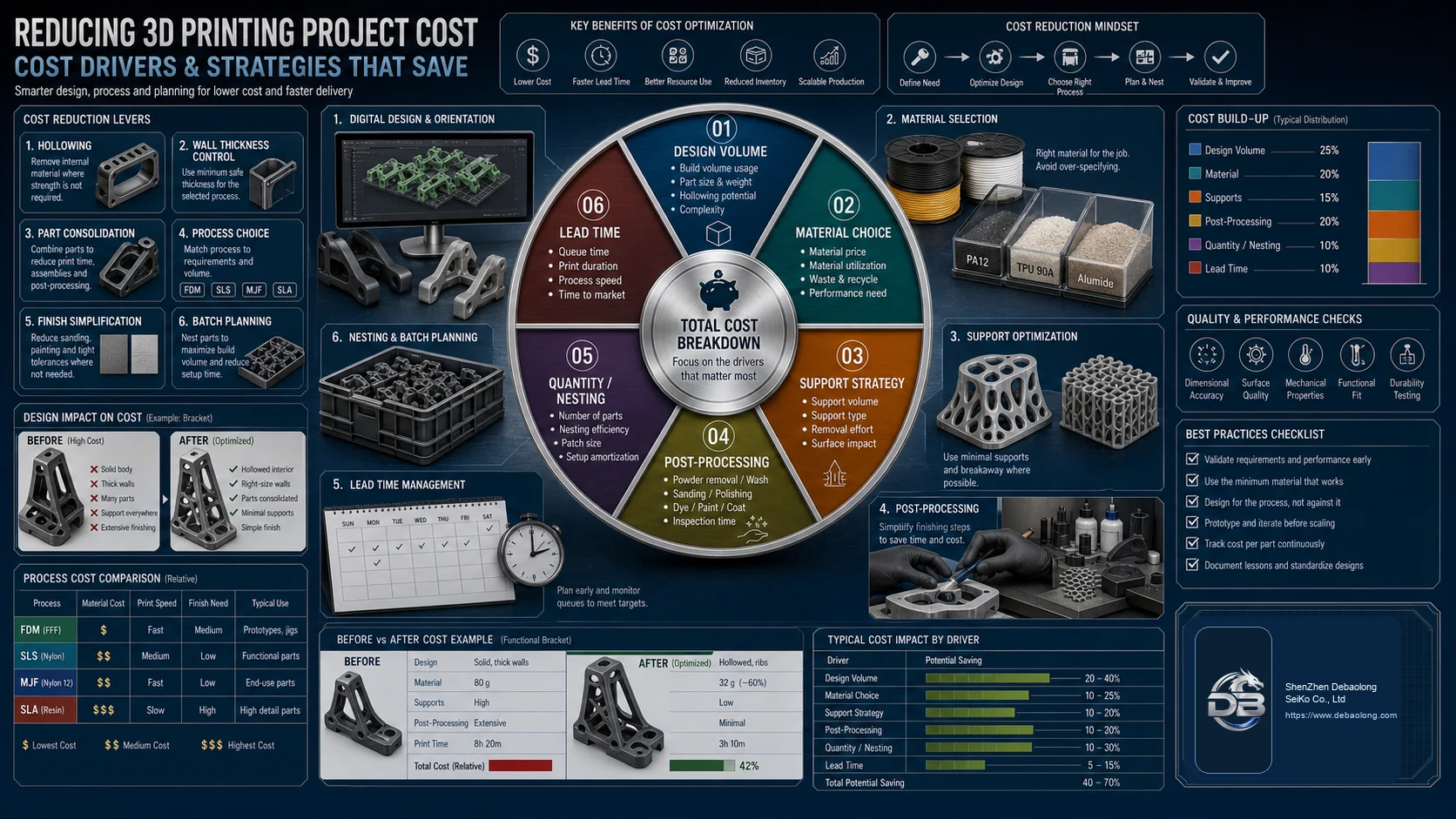
3D printing cost is not controlled only by the quote page. It is built into the part geometry, material, process choice, support strategy, finish requirement and delivery target. A small design change can remove support material, shorten print time or reduce post-processing labor.
The best cost reductions preserve function. Removing material from a structural bracket without checking load paths is not optimization; it is risk. A good review separates unnecessary volume from features that carry real load, fit or durability requirements.
Geometry, Material and Process
Hollowing, wall thickness control, part consolidation and orientation can reduce cost. Material choice is equally important: an over-specified high-performance polymer can dominate cost, while a standard nylon or resin may be sufficient for the application.
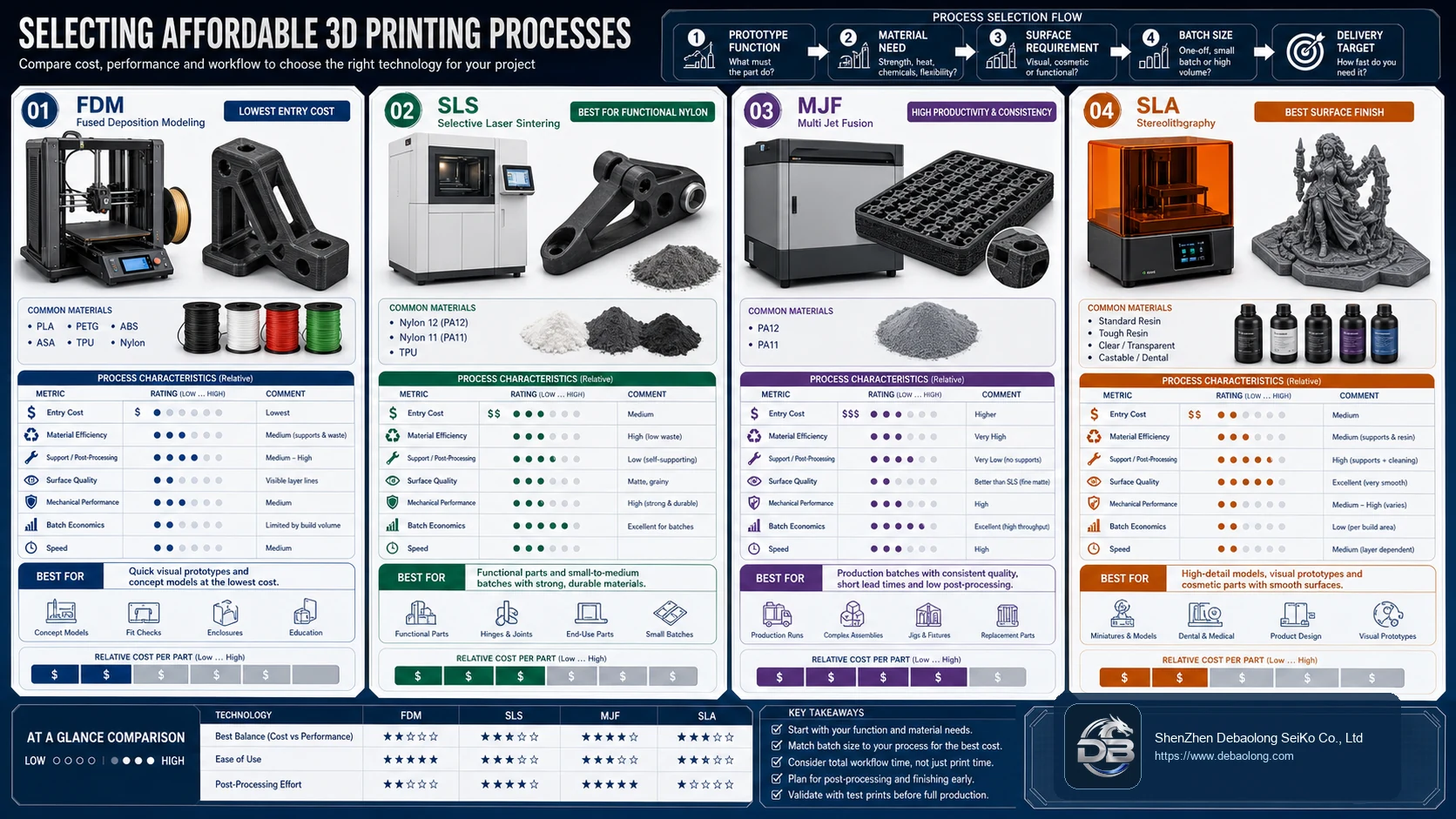
Process selection should be made with both material and geometry in mind. FDM may be economical for simple prototypes, SLA for detailed cosmetic models, and MJF for functional nylon batches. DEBAOLONG’s MJF design guide and SLA design guide show how process rules change the real economics.
Supports and Post-Processing
Support volume, support contact location and post-processing requirements can make a visually simple part expensive. Painting, sanding, dyeing, smoothing, inserts and inspection all add time. If a cosmetic finish is not required, avoid specifying it out of habit.
For powder-bed processes, nesting and batch utilization matter. A tray with many compatible parts can be more economical than isolated urgent builds. Lead time also affects price when expedited scheduling disrupts normal production planning.
Quantity and Timing
One-off parts carry setup and handling overhead. Small batches can reduce the per-part impact of setup and post-processing. Very high volumes may eventually favor molding or machining, depending on geometry and material needs.
Material behavior should still lead the decision. Review strength, heat resistance, flexibility and finish using DEBAOLONG’s 3D printing materials selection guide before choosing the cheapest process.
Practical Checklist
Define the part function, remove nonfunctional mass, choose the simplest acceptable finish, select a material that meets the requirement without overkill, batch compatible parts when possible and validate performance before scaling up.
Related Engineering Resources