

A practical comparison of color 3D printing routes, including direct full-color printing, colored filament or resin, dyed MJF nylon, painting, coating and design preparation.
Two Ways to Add Color
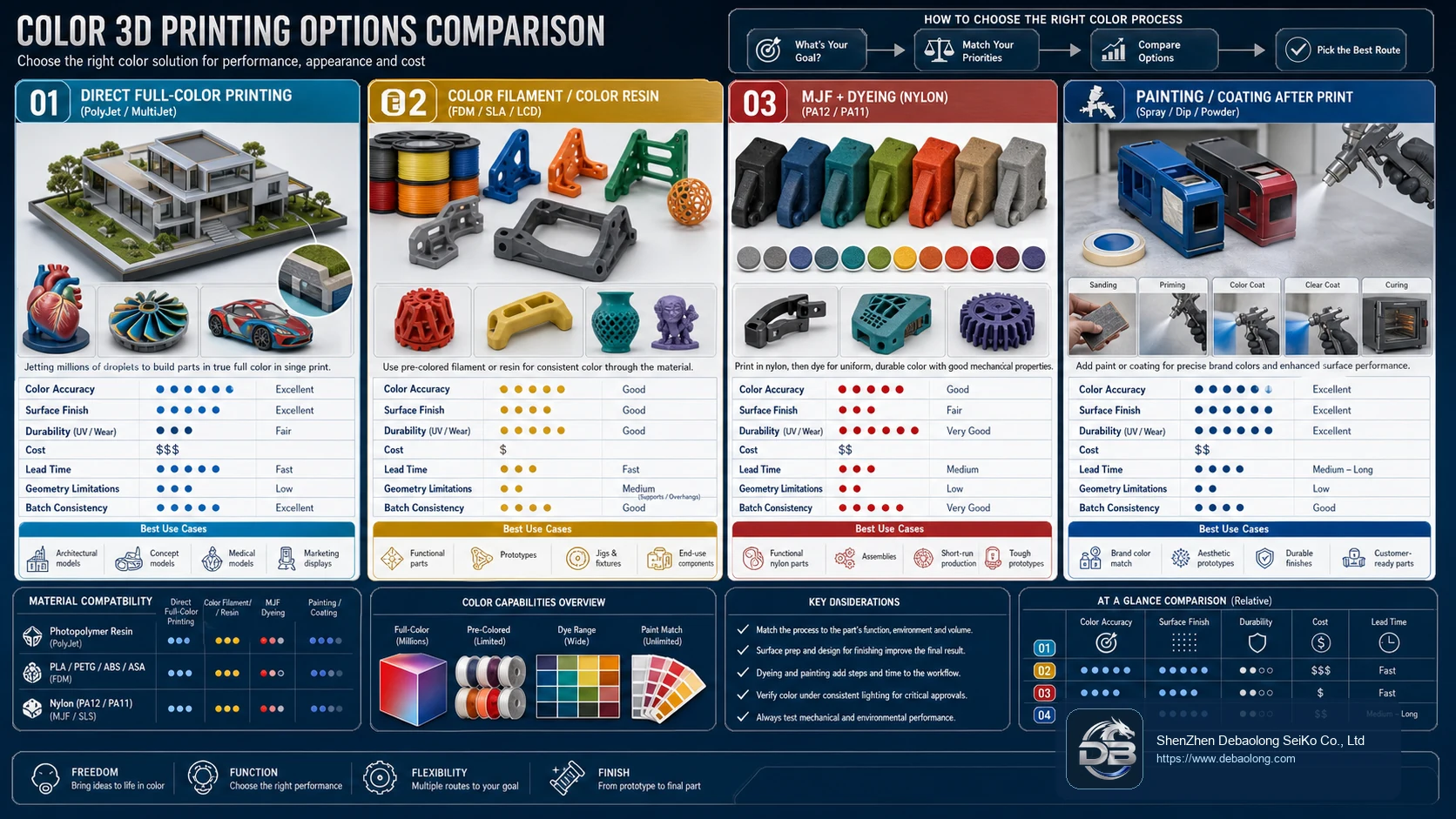
Color can be created during printing or added after printing. Direct color printing and colored filament or resin build color into the part from the beginning. Dyeing, painting and coating add color after the geometry is produced. Each route changes cost, durability, surface feel and lead time.
The best method depends on whether the part is a visual model, a functional nylon component, a brand-color prototype or an end-use enclosure that needs a durable finish.
Direct Color and Colored Materials
Direct full-color printing is useful for visual models, display prototypes, architectural models and presentation parts. It can show complex graphics and many colors, but the mechanical requirements and surface durability must be reviewed before using it for functional components.
Colored filament or colored resin is simpler and often economical. The color is limited by available material grades, but the workflow is direct and repeatable. Designers should remember that a color material is still first a material: strength, heat resistance, flexibility and finish quality remain the main engineering constraints.
Dyed Nylon, Painting and Coating
MJF nylon parts can often be dyed for a uniform color while preserving functional geometry. This works especially well for black or dark functional parts, covers, brackets and assemblies. Design rules such as wall thickness, clearance and powder removal still follow the MJF process constraints.
Painting or coating offers the broadest cosmetic range and can improve UV resistance or surface feel, but it adds labor. Surface preparation, masking, primer, coating thickness and curing all affect cost and tolerance-sensitive features.
Preparing the Design
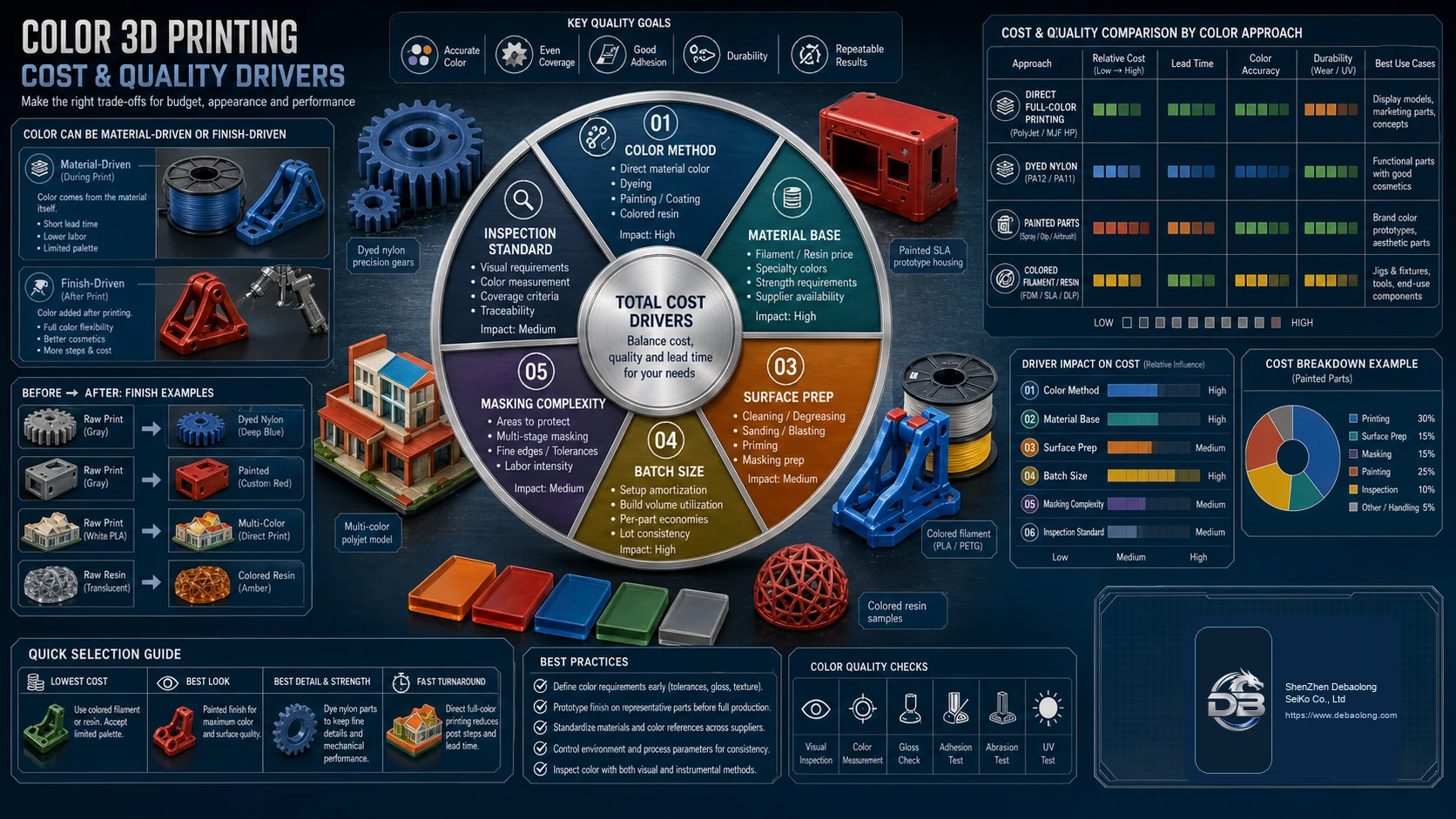
Color should be specified early. Cosmetic faces, masked features, threaded holes, mating surfaces and flexible areas may need different finishing decisions. If a part will be painted, avoid tiny crevices and inaccessible corners that trap dust or prevent uniform coverage.
For resin parts, color choices interact with translucency, post-cure and surface preparation. Compare those details with DEBAOLONG’s SLA design guide when a smooth cosmetic prototype is the goal.
Cost and Quality Tradeoffs
The lowest-cost option is usually a standard colored material with minimal finishing. The highest cosmetic control often requires painting, masking and inspection. A good selection balances appearance with the material and process behavior described in the 3D printing materials guide.
Related Engineering Resources