

A practical guide to heat-resistant 3D printing materials, covering ABS, PC, ULTEM, PEEK, aluminum, stainless steel, Inconel, titanium and material selection tradeoffs.
Heat Resistance Needs a Temperature Definition
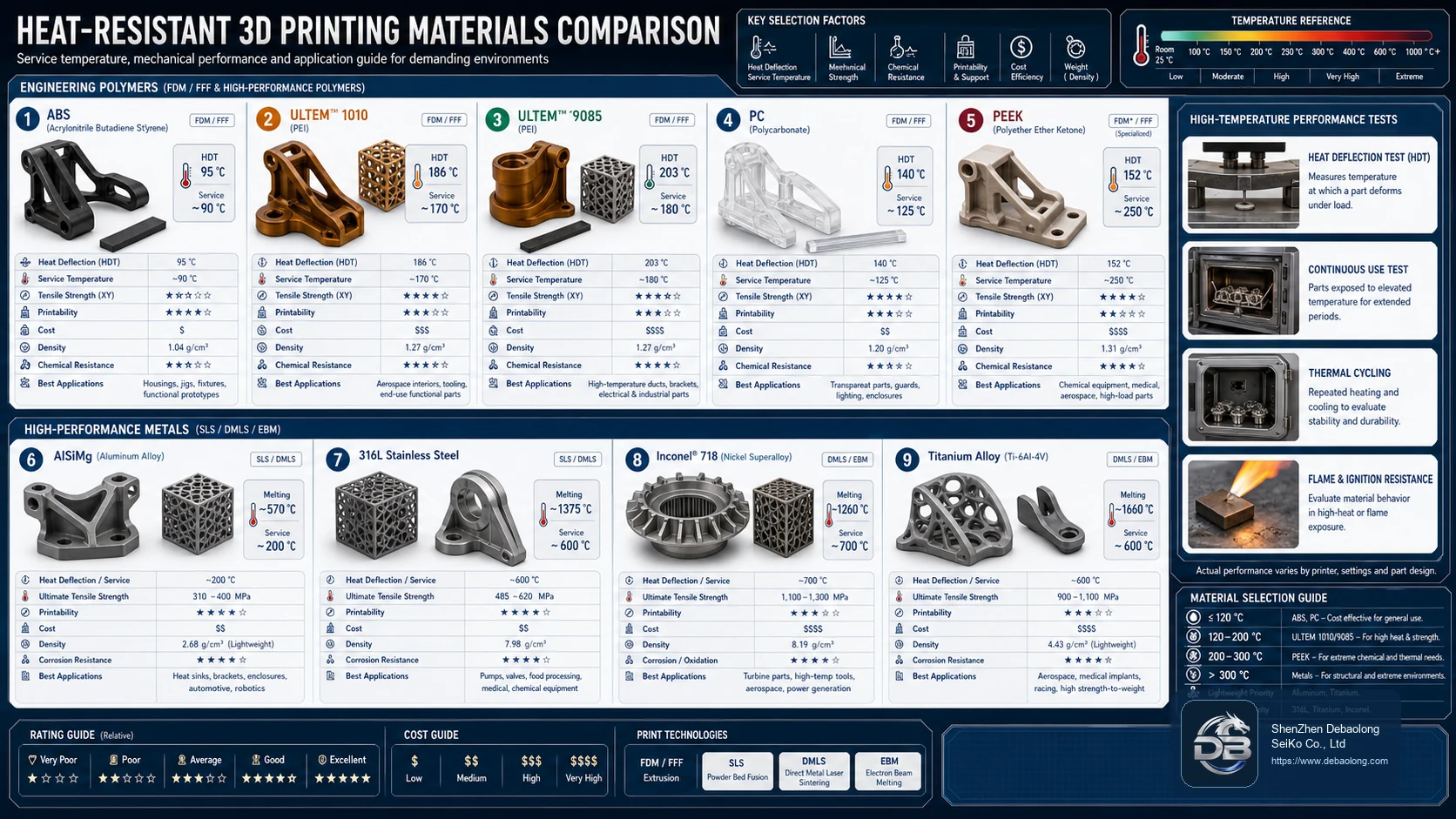
Heat resistance can mean several things: heat deflection under load, continuous service temperature, short exposure to high heat, flame behavior, thermal cycling or dimensional stability after printing. A material list is not enough without the service condition.
Start by defining temperature, load, chemical exposure and required life. Then compare the material with strength, weight, finish and cost using DEBAOLONG’s 3D printing materials selection guide.
Engineering and High-Performance Polymers
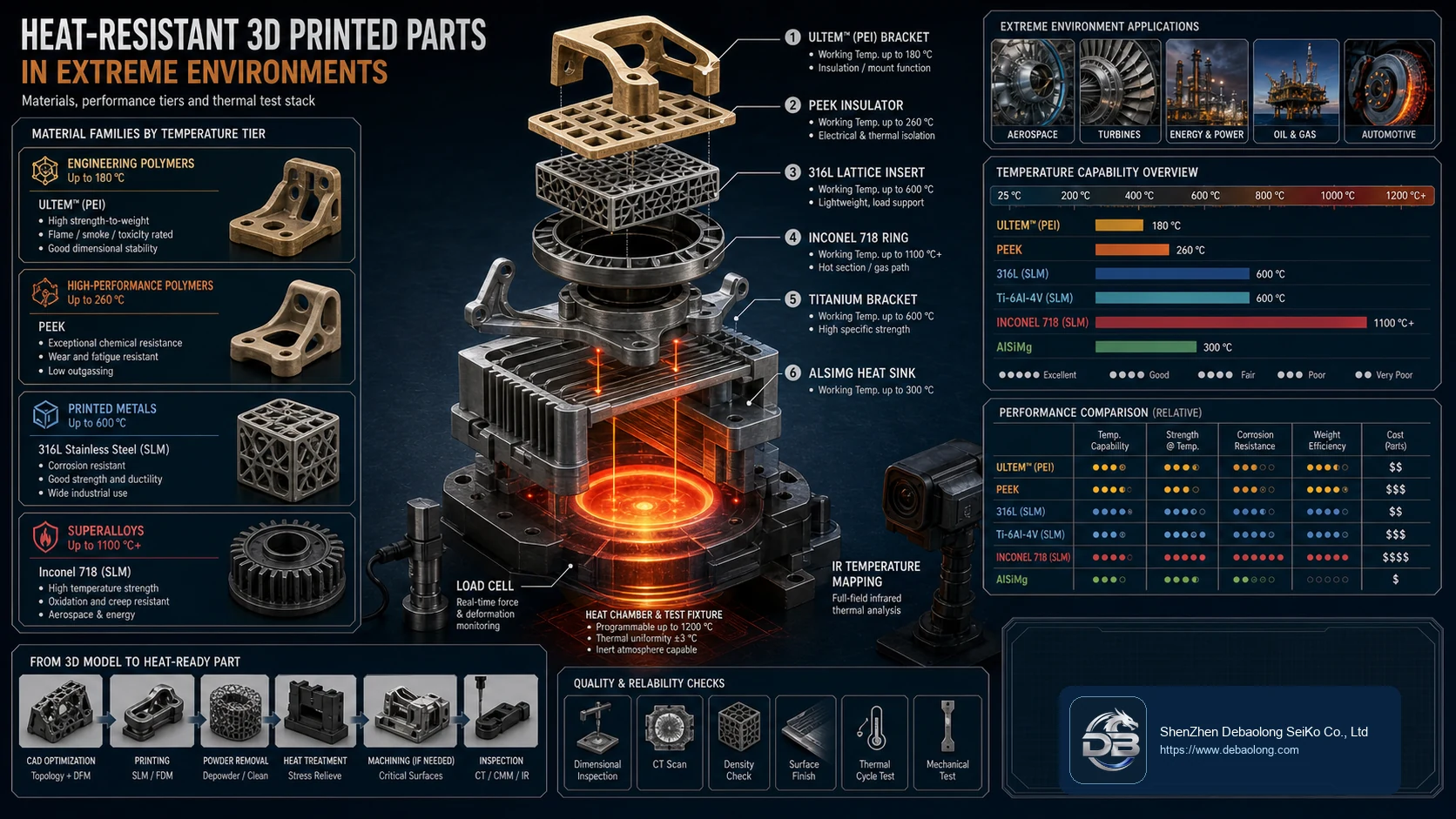
ABS and PC can serve moderate heat applications when cost and printability matter. ULTEM and PEEK move into higher-temperature engineering use, but they require capable machines, controlled processing and realistic expectations for cost and lead time.
High-performance polymers are often chosen for electrical insulation, chemical resistance, low weight or aerospace-style requirements. They should be validated in the actual geometry because print orientation and annealing can affect final behavior.
Printed Metals and Superalloys
AlSiMg, 316L stainless steel, titanium and Inconel 718 support much higher temperatures than most polymers. They are useful for heat sinks, brackets, manifolds, tooling inserts, turbine-related parts and demanding industrial components.
Corrosion and oxidation may matter as much as temperature. For metal choices, review surface and environment requirements with DEBAOLONG’s corrosion-resistant metal parts guide.
Process and Post-Processing
Heat-ready parts may need stress relief, machining of critical surfaces, inspection, density checks or surface finishing. Printed metal is not automatically finished metal; qualification and post-processing are part of the manufacturing plan.
A DFM review should confirm build orientation, support removal, thermal distortion risk and inspection access before production, following the same principles in the DFM workflow guide.
Selection Framework
Use moderate engineering polymers when temperature is controlled, high-performance polymers when weight and insulation matter, printed metals when structural heat exposure is severe, and superalloys when high temperature combines with oxidation, strength or extreme environments.
Related Engineering Resources