

CNC machining cost is one of the most important considerations in product development and manufacturing.
Understanding how machining cost is calculated helps engineers optimize design decisions, reduce expenses, and improve production efficiency.
What Determines CNC Machining Cost?
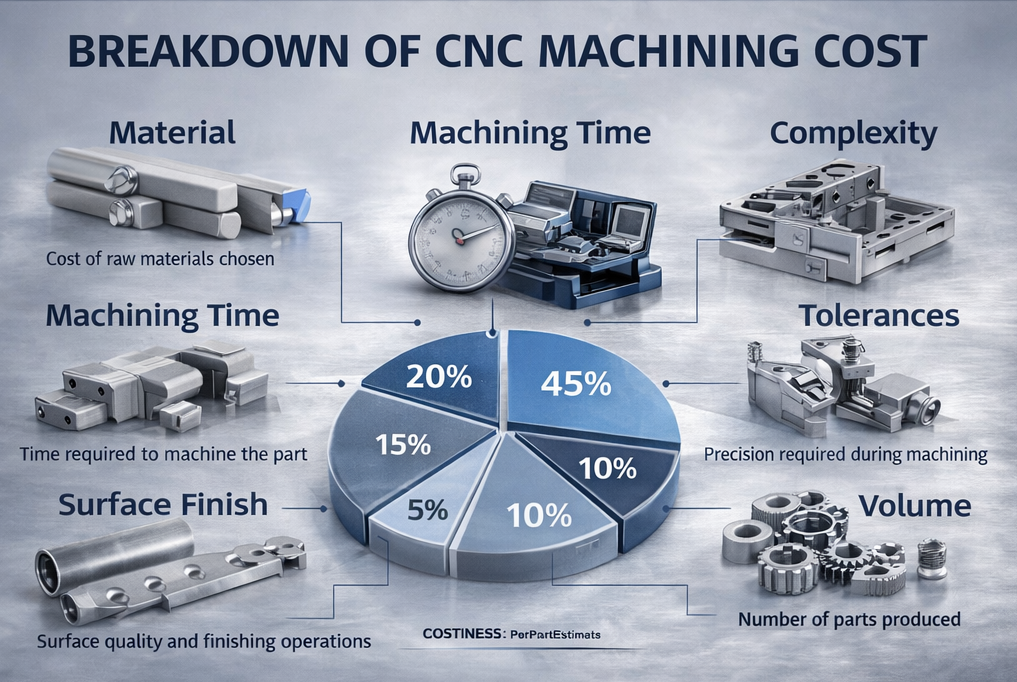
CNC machining cost is influenced by several key factors:
• material selection
• machining time
• part complexity
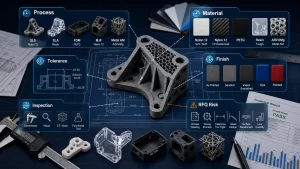
• tolerance requirements
• surface finish
• production volume
Each of these factors contributes to the final price of a machined part.
Material Cost
Material is one of the primary cost drivers.
Different materials vary significantly in price and machinability.
For example:
• Aluminum → lower cost, easy to machine
• Stainless steel → moderate cost, slower machining
• Titanium → high cost, difficult to machine
Material choice affects both raw material cost and machining efficiency.
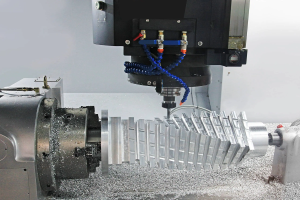
Machining Time
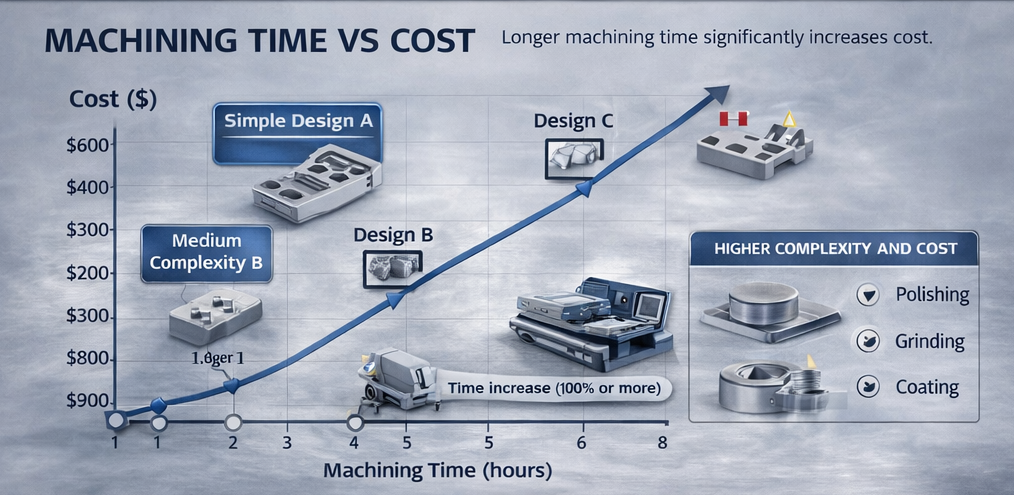
Machining time is often the largest contributor to total cost.
It depends on:
• cutting speed
• toolpath complexity
• number of operations
• setup time
More complex parts require longer machining time, increasing cost.
Part Complexity
Complex geometries increase cost due to:
• multiple setups
• specialized tooling
• longer machining cycles
Features that increase cost include:
• deep cavities
• thin walls
• undercuts
• tight internal corners
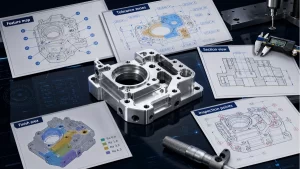
Tolerances and Precision
Tighter tolerances require:
• slower machining
• higher precision tools
• more inspection
For example:
Standard tolerance → lower cost
High precision → significantly higher cost
Learn more:
https://www.debaolong.com/cnc-machining-tolerance-standards-iso2768/
Surface Finish Requirements
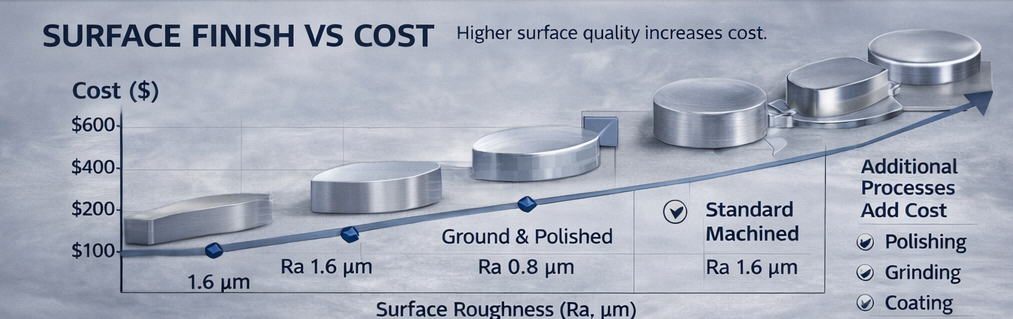
Better surface finish requires additional processes such as:
• polishing
• grinding
• coating
This increases both time and cost.
Learn more:
https://www.debaolong.com/cnc-machining-surface-finish-ra-roughness/
Production Volume
Production quantity affects unit cost.
• low volume → higher cost per part
• higher volume → lower cost per part
Batch production improves efficiency and reduces setup cost.
Practical Ways to Reduce CNC Machining Cost
Engineers can reduce cost by optimizing design:
• avoid unnecessary tight tolerances
• simplify geometry
• reduce setups
• use standard tools
• choose machinable materials
Early design decisions have the biggest impact on cost.
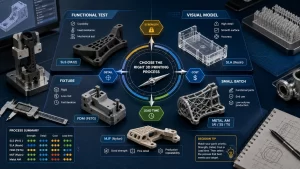
CNC Machining vs 3D Printing Cost
In some cases:
• 3D printing → lower cost for prototypes
• CNC machining → better for production
Using both processes strategically can reduce total development cost.
Learn more:
https://www.debaolong.com/2026/03/20/cnc-machining-vs-3d-printing/
Conclusion
CNC machining cost depends on multiple factors, including materials, machining time, and design complexity.
By understanding these factors, engineers can make better decisions and optimize both performance and cost.
Explore More Engineering Guides
Knowledge Center
https://www.debaolong.com/manufacturing-engineering-knowledge-center/
CNC Materials Guide
https://www.debaolong.com/cnc-machining-materials-guide-aluminum-steel-titanium-and-plastics/
Related Engineering Resources