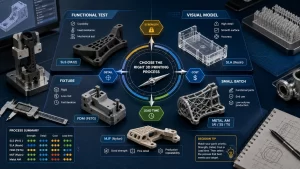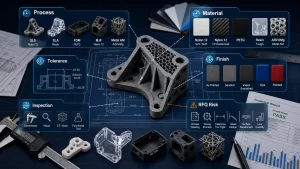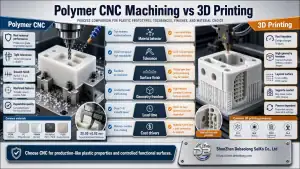
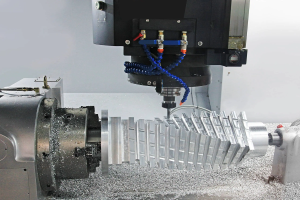


SLS 3D printing uses a laser to sinter polymer powder layer by layer inside a heated powder bed. The source article explains the process through preheating, high-temperature laser printing, cooling and post-processing. It also covers materials, advantages and limits. For DEBAOLONG’s 3D printing customers, SLS is often useful for functional nylon prototypes, small batches, complex shapes and parts that would be difficult to support in other printing processes. In practice, the best choice is the process route that meets the real engineering requirement while keeping tolerance, finish, inspection, application risk and lead time under control before production begins.
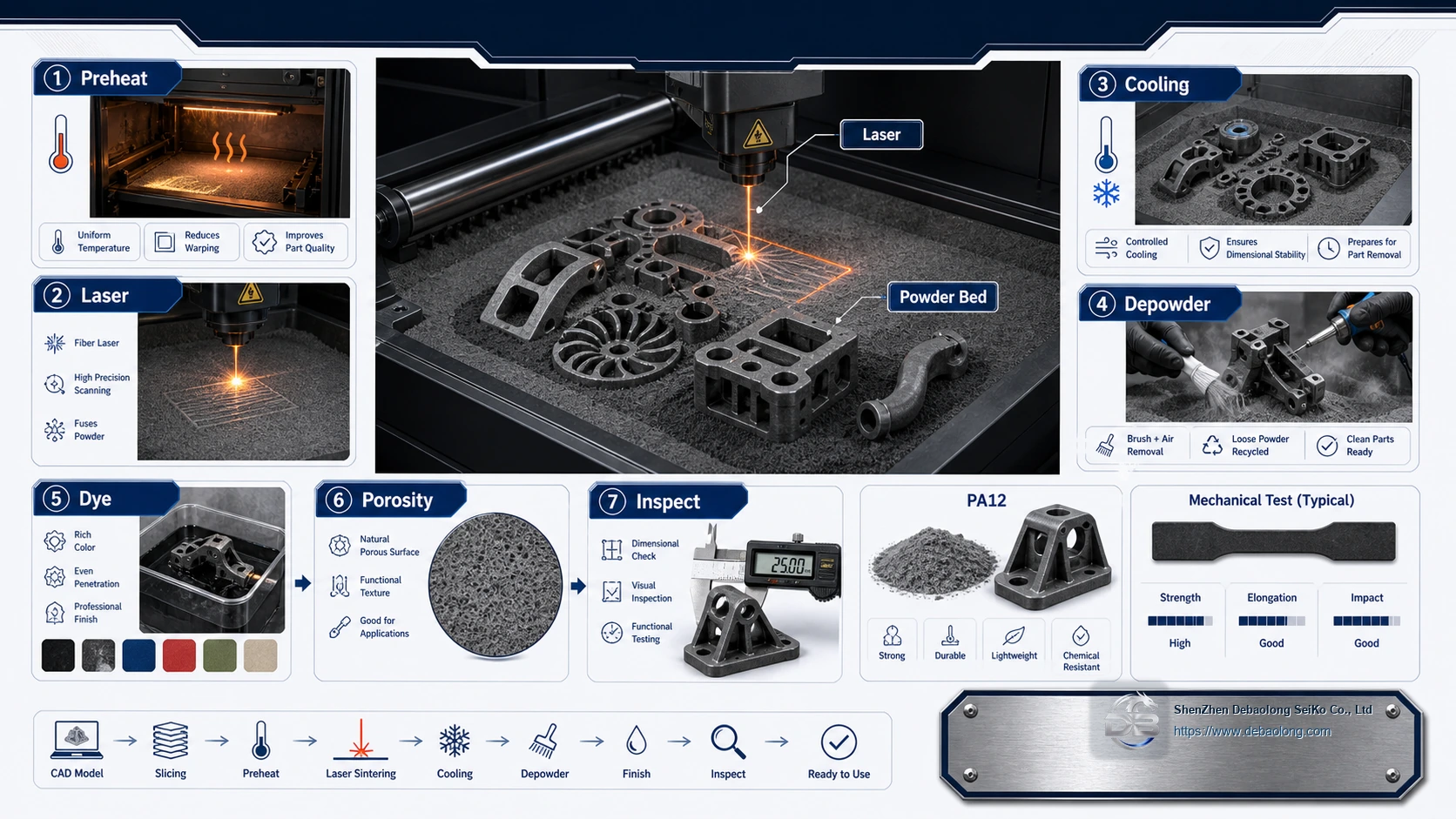
SLS Builds Nylon Parts in a Heated Powder Bed
The surrounding powder supports the part during printing, so SLS can build complex geometry without separate support structures. That is one of its strongest practical advantages.
Process Steps
First, the powder bed is preheated close to the sintering temperature. Then a laser scans each layer and fuses selected powder areas. After printing, the build cools gradually to reduce distortion.
Post-processing includes removing the printed parts from powder, depowdering, cleaning, bead blasting, dyeing or other finishing. Cooling and powder removal time can be a major part of the real lead time.
Materials and Advantages
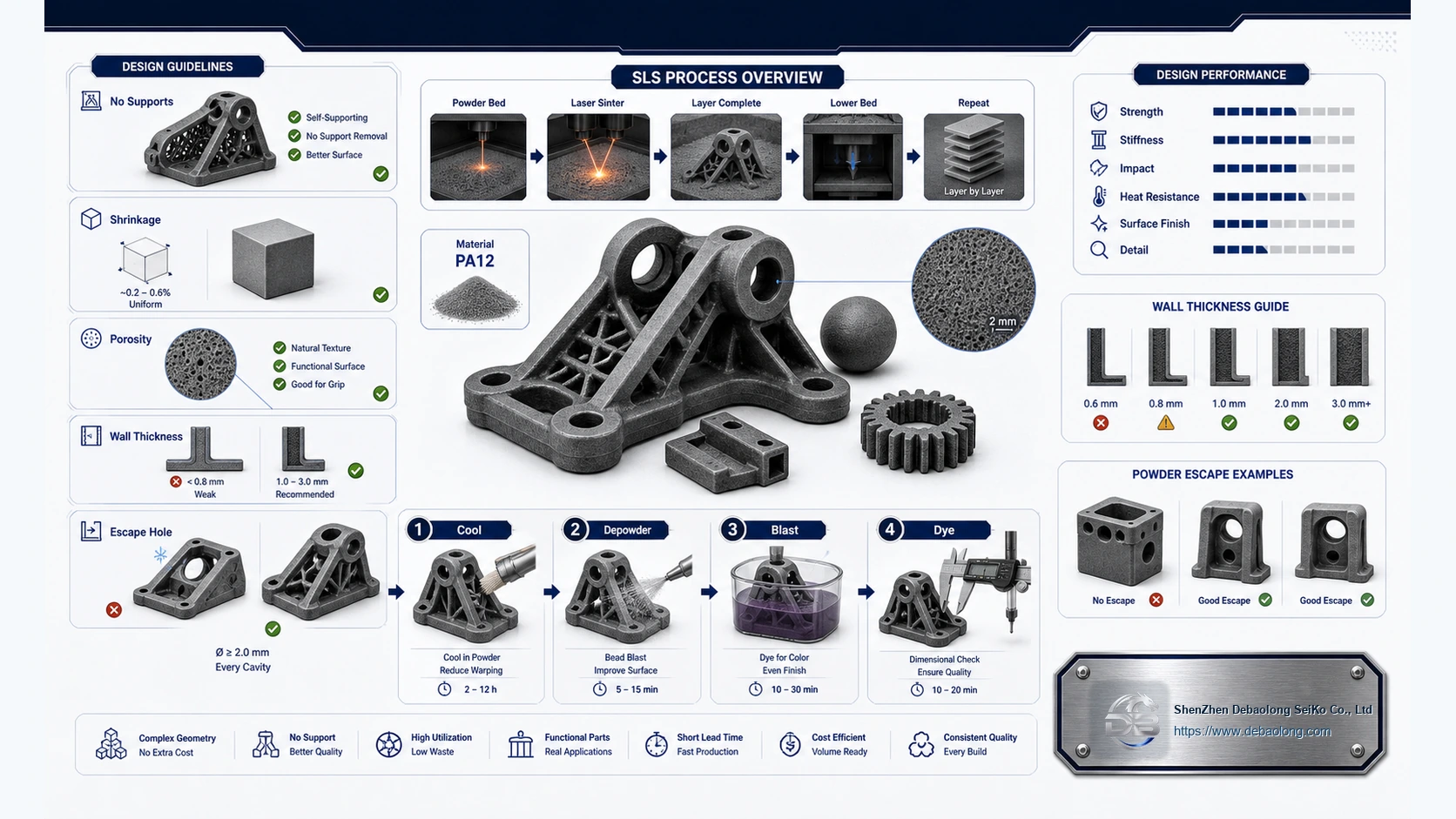
SLS is commonly associated with PA12 nylon, PA11 and filled nylon variants. Material selection affects toughness, flexibility, heat behavior, surface finish and cost; compare options through all materials.
SLS is fast for batches, supports nested builds, accepts complex geometry and can produce parts with useful mechanical properties. It is strong for brackets, housings, ducts, fixtures and production-style prototypes.
Limitations and Design Risks
SLS parts can have a slightly porous or grainy surface. Shrinkage, powder aging, wall thickness and escape holes must be considered. Very thin features may be fragile, and color/finish options depend on material and post-processing.
Powder waste and powder refresh ratios also affect cost. Designers should avoid trapped powder and design cleaning access for enclosed cavities.
DEBAOLONG SLS Review
DEBAOLONG reviews SLS parts for material, wall thickness, clearance, powder removal, finish, quantity and inspection. The knowledge center helps teams compare SLS with MJF, SLA, FDM and CNC machining.
Related Services
Related DEBAOLONG capabilities include 3D printing, CNC machining, sheet metal fabrication, injection molding, material selection support and manufacturing engineering review.