

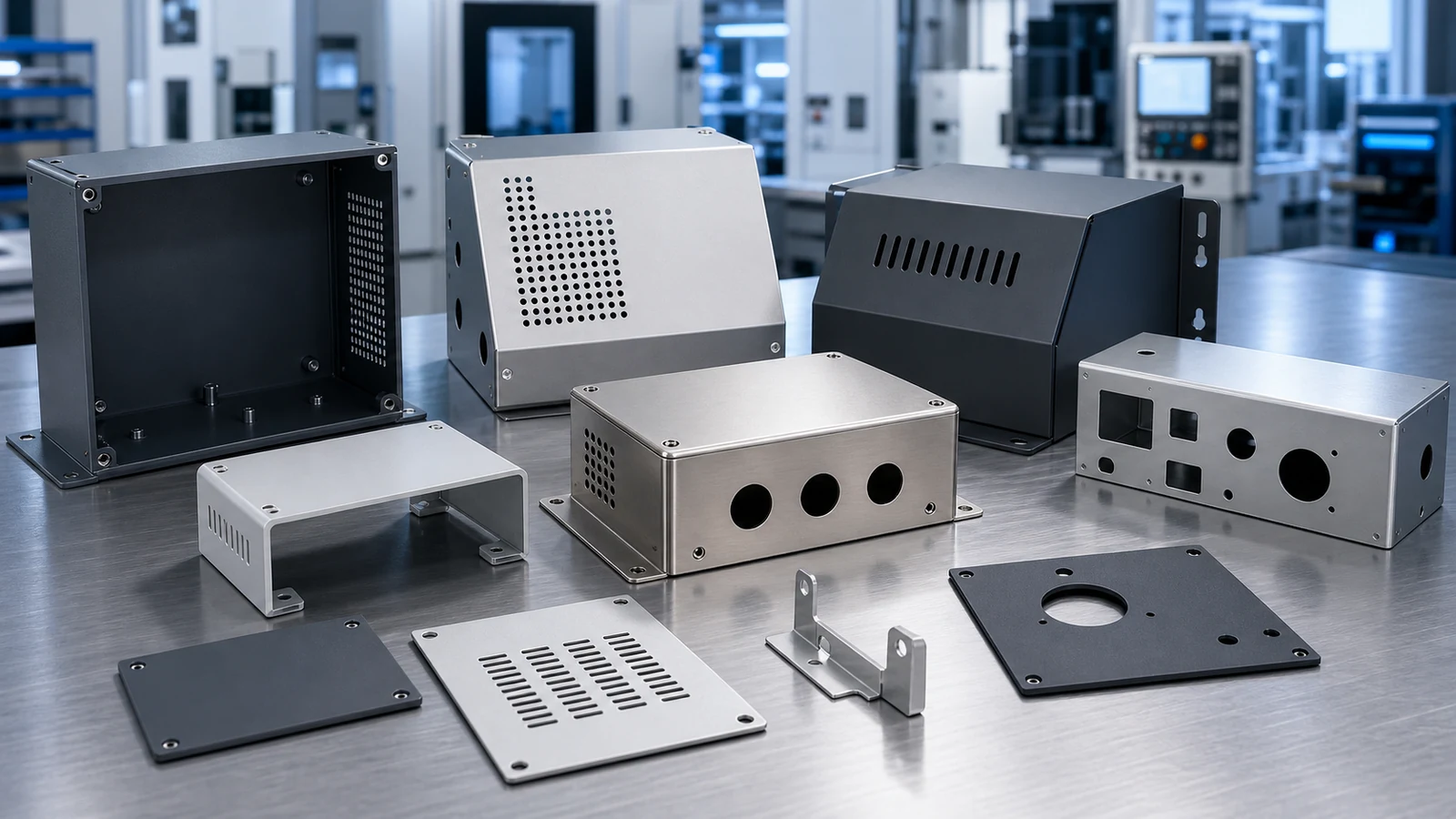
Sheet metal covers and protective housings keep automation equipment organized, serviceable and safe. They protect sensors, drives, belts, wiring, pneumatic components and control modules from impact, dust and accidental contact. A cover should be strong enough for the environment while still allowing maintenance, wiring and inspection access.
Where Sheet Metal Covers Are Used
Automation systems may use guarding covers, sensor boxes, controller housings, access panels, cable covers, motor shields and machine side panels. These parts often combine laser cutting, bending, PEM hardware, welding, coating and inspection.
Guarding, Access and Maintenance Design
A protective cover should not block necessary service access. Designers should plan removable panels, screw access, hinge locations, cable exits and inspection windows early. If a cover must be removed often, hardware choice and tool clearance become important.
Bending, Cutouts and Mounting Tabs
Bend radius, flange length, tab width and hole distance from bends should follow practical sheet metal rules. Large cutouts can reduce stiffness, while small slots near bends may distort. Debaolong supports these parts through sheet metal fabrication and finishing.
Material and Thickness Selection
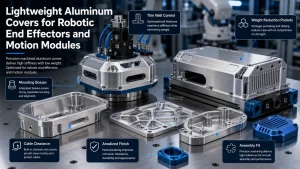
Aluminum is useful for lighter covers. Stainless steel can suit corrosion or washdown environments. Carbon steel is common for strong coated panels. Thickness should match stiffness, forming, fastening and expected handling.
Ventilation and Cable Routing
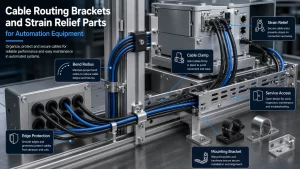
Automation housings often need cable exits, cooling slots and access to connectors. These features should be placed to avoid sharp cable bends, blocked airflow and difficult assembly. Edge protection may be needed near cables.
Surface Finishing
Powder coating, anodizing, passivation or plating may be selected according to material and environment. Functional grounding areas or sliding surfaces may need masking. Appearance requirements should include color, texture and acceptable cosmetic limits.
DFM Checklist
- Confirm bend radius and minimum flange length
- Keep holes away from bend lines
- Plan access for screws and tools
- Identify coating and masking needs
- Check cutout stiffness and vibration
- Mark critical dimensions clearly
Access Panels and Service Design
Automation equipment often changes during installation and maintenance. A cover should allow technicians to reach sensors, connectors, pneumatic lines and adjustment points without removing unrelated panels. When a cover is frequently removed, captive hardware, clear fastener patterns and safe edge finishing can reduce service time.
Stiffness, Noise and Vibration
Large flat covers can vibrate or create noise when mounted near moving machinery. Adding bends, return flanges, ribs or strategic mounting points can improve stiffness without excessive thickness. Designers should also check whether a cover is structural or only protective, because that changes material and tolerance needs.
Production and Finishing Notes
For coated covers, drawings should identify visible surfaces, masked grounding areas and acceptable cosmetic limits. If the housing will be used around sensors or vision hardware, glare and color may matter. Packaging should protect painted or anodized surfaces during export shipment.
Common Design Problems
Common problems include large unsupported flat panels, screw holes too close to bends, sharp cable exits, covers that block adjustment points, and cutouts that weaken the part. A small formed flange or return bend can often add stiffness without much weight. If a cover must be removed frequently, avoid hidden fasteners and make the service direction obvious.
Prototype Review for Covers
Prototype covers are useful for checking fit around motors, conveyors, cables and sensors. They also help confirm whether the selected finish hides scratches or creates glare. After the first build, update the drawing with confirmed hole locations, panel gaps, hardware notes and any assembly feedback before ordering production quantities.
If the cover is installed near moving equipment, confirm safe clearance during the full machine cycle. A cover that fits in the static model may still interfere during maintenance, adjustment or cable movement.
How Debaolong Supports Automation Covers
Debaolong can support sheet metal covers, housings, panels and protective guards for automation equipment. Related design guidance is available in the sheet metal bending design tips.
FAQ
What material is common for automation covers?
Aluminum, stainless steel and coated carbon steel are common choices depending on weight, corrosion and strength requirements.
Can protective covers include PEM hardware?
Yes. Inserts, studs and standoffs can be included if they are specified on drawings.
How can cover vibration be reduced?
Use suitable thickness, bends, ribs, fastener spacing and support points to improve stiffness.
Can Debaolong support prototypes before production?
Yes. Prototype covers and panels can be made to verify fit, access and finish before production.
Need sheet metal automation covers? Send drawings through the Robotics & Automation Components page.
Related Engineering Resources