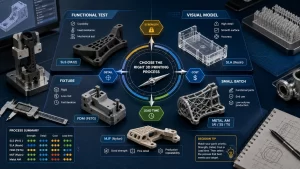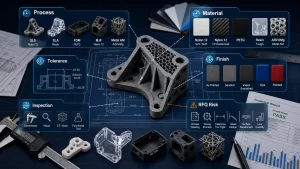


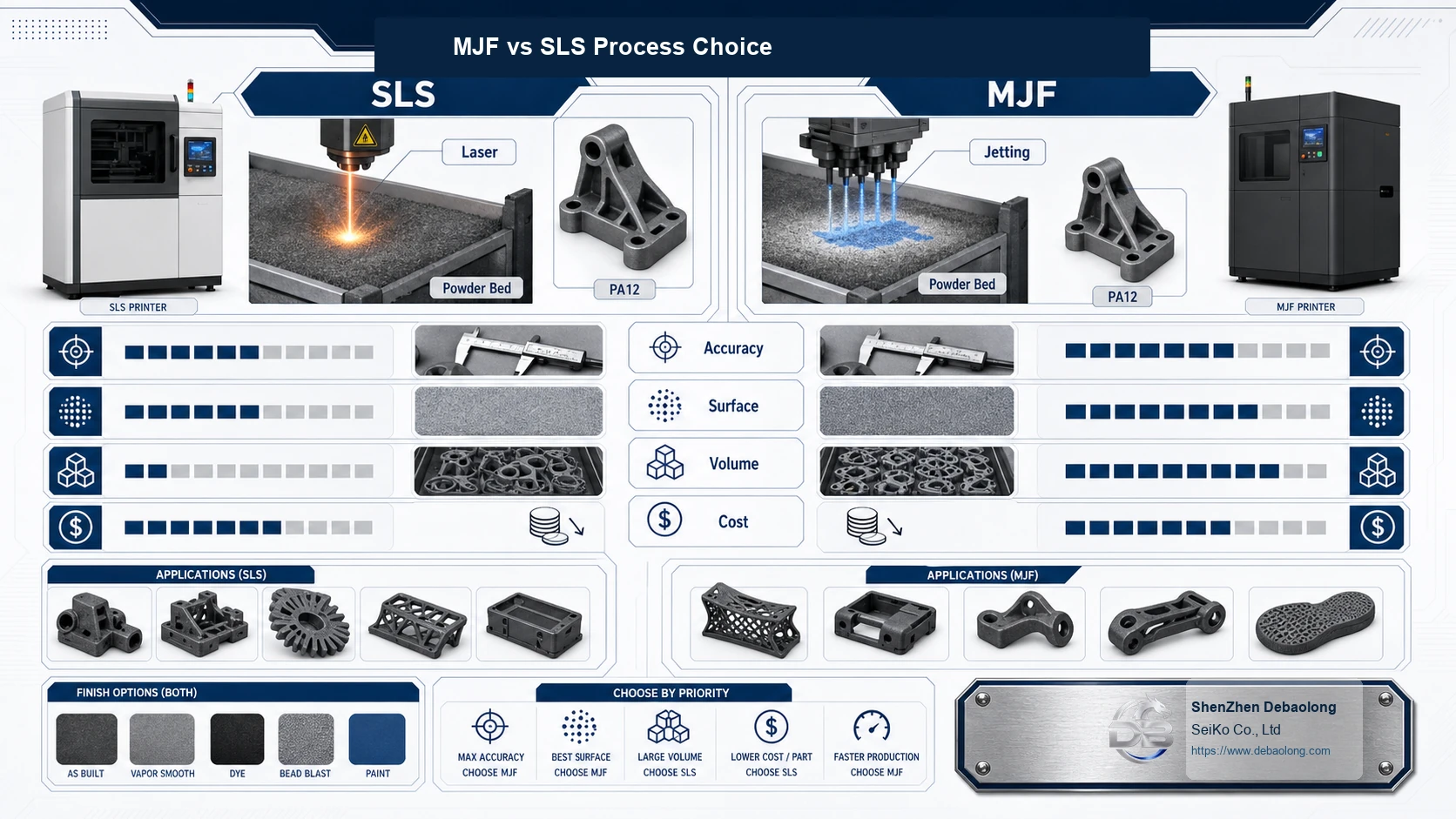
MJF and SLS are powder-bed 3D printing processes often used for functional nylon parts, but their energy delivery and production behavior differ. SLS uses a laser to sinter powder layer by layer. MJF uses printheads to apply fusing agents and then applies heat across the bed. Both can make complex parts without conventional support structures, but they differ in accuracy, feature resolution, processing time, surface finish, mechanical properties and part size. DEBAOLONG compares both routes inside its 3D printing process review. The right answer depends on fit, finish, batch timing, material grade and how the part will be inspected.
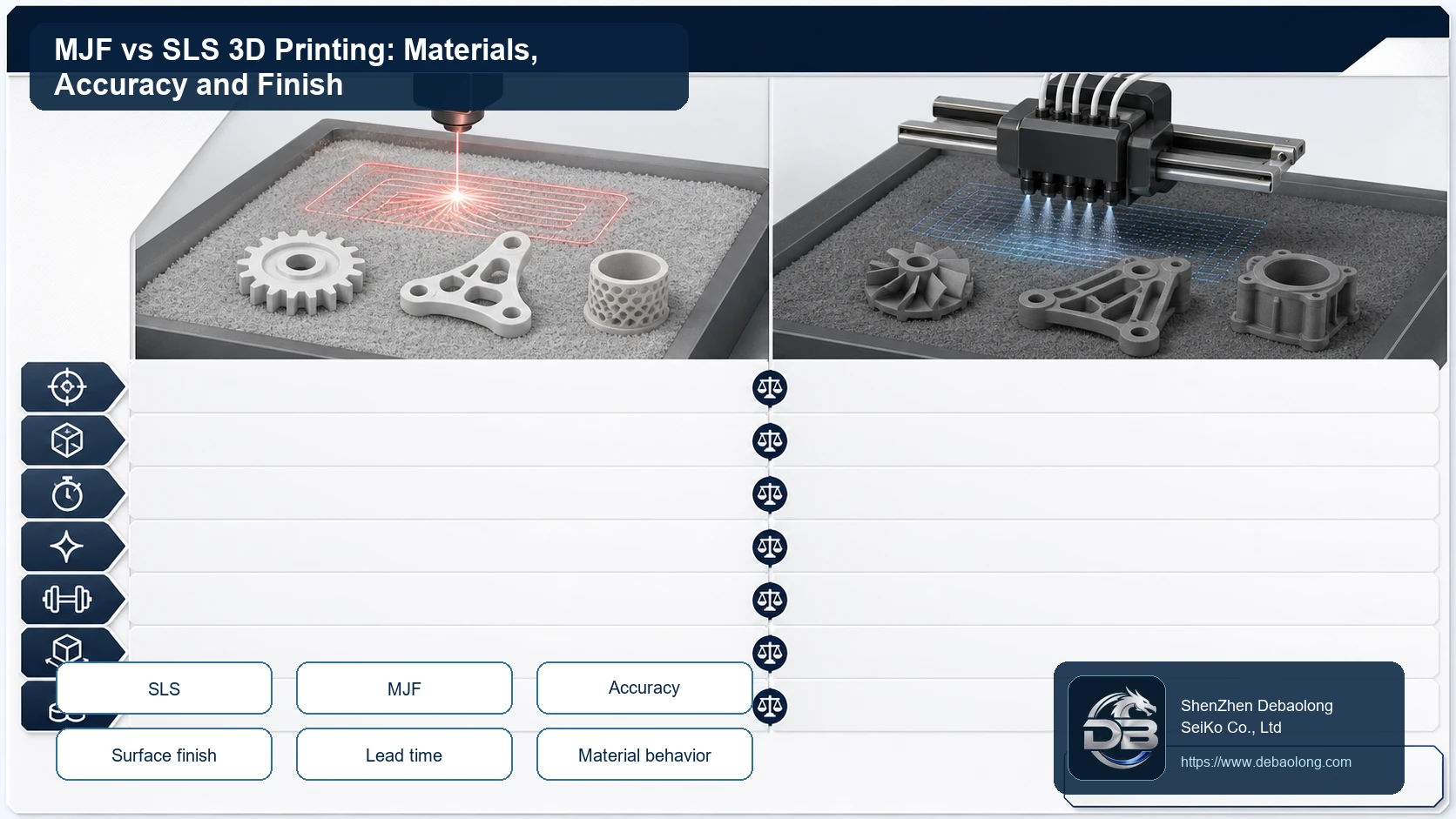
MJF and SLS Are Similar but Not Identical
The right process depends on the part’s function, tolerance, finish, material, quantity and schedule. Treating MJF and SLS as interchangeable can create fit or cosmetic surprises.
Process Logic and Similarities
Both processes build parts in a powder bed, so surrounding powder supports overhangs during printing. This allows complex geometry, nested builds, internal channels and consolidated assemblies that would be difficult with support-heavy processes.
Both are commonly associated with nylon materials such as PA12 and PA11, plus filled or flexible variants depending on the supplier and machine platform.
Accuracy, Resolution and Processing Time
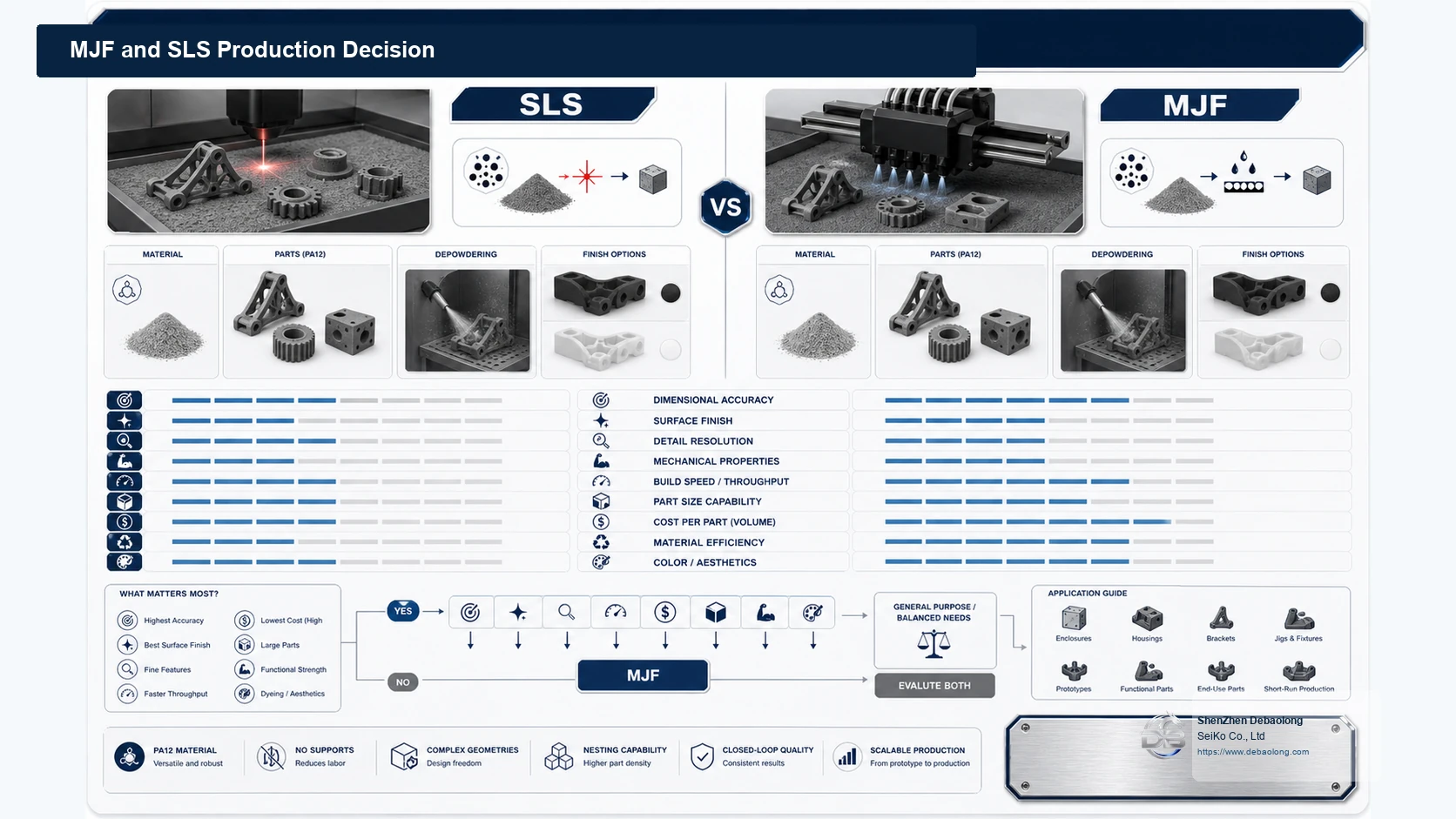
Feature resolution depends on machine, material, geometry and post-processing. SLS may support fine detail in certain geometries, while MJF can offer strong consistency and efficient batch production. Neither process should be specified without checking the actual feature size and tolerance requirement.
Processing time includes printing, cooling, depowdering and finishing. Batch packing, part size and required finish can change the real delivery time more than the headline process name.
Surface Finish and Mechanical Properties
Both processes usually produce a matte or slightly grainy surface. MJF parts are often gray or black after dyeing, while SLS parts may be white or dyed depending on material and finishing.
Mechanical performance depends on material grade, orientation, wall thickness and feature design. Use all materials to compare nylon, filled nylon and flexible options before choosing the process.
How DEBAOLONG Helps Choose
DEBAOLONG reviews MJF and SLS parts for wall thickness, clearance, powder removal, finish, tolerance, quantity and application. The manufacturing engineering knowledge center can help teams compare powder-bed printing with SLA, FDM, CNC machining and injection molding.
Related Services
For related manufacturing support, review CNC machining, sheet metal fabrication, and 3D printing services, with injection molding support available for plastic production programs.