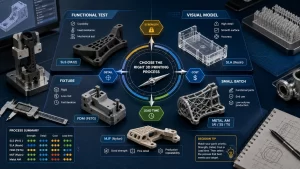


Desktop FDM and industrial FDM both build parts layer by layer from thermoplastic filament, but they serve different engineering needs. Desktop systems are useful for low-cost concept models, quick fit checks and early design communication. Industrial FDM offers larger build volume, stronger material options, better process control and more repeatable results for fixtures, tooling, prototypes and selected production aids. DEBAOLONG treats FDM as one route inside a wider 3D printing process selection, not as a one-size answer. The correct choice depends on whether the part only needs feedback or must perform in real service.
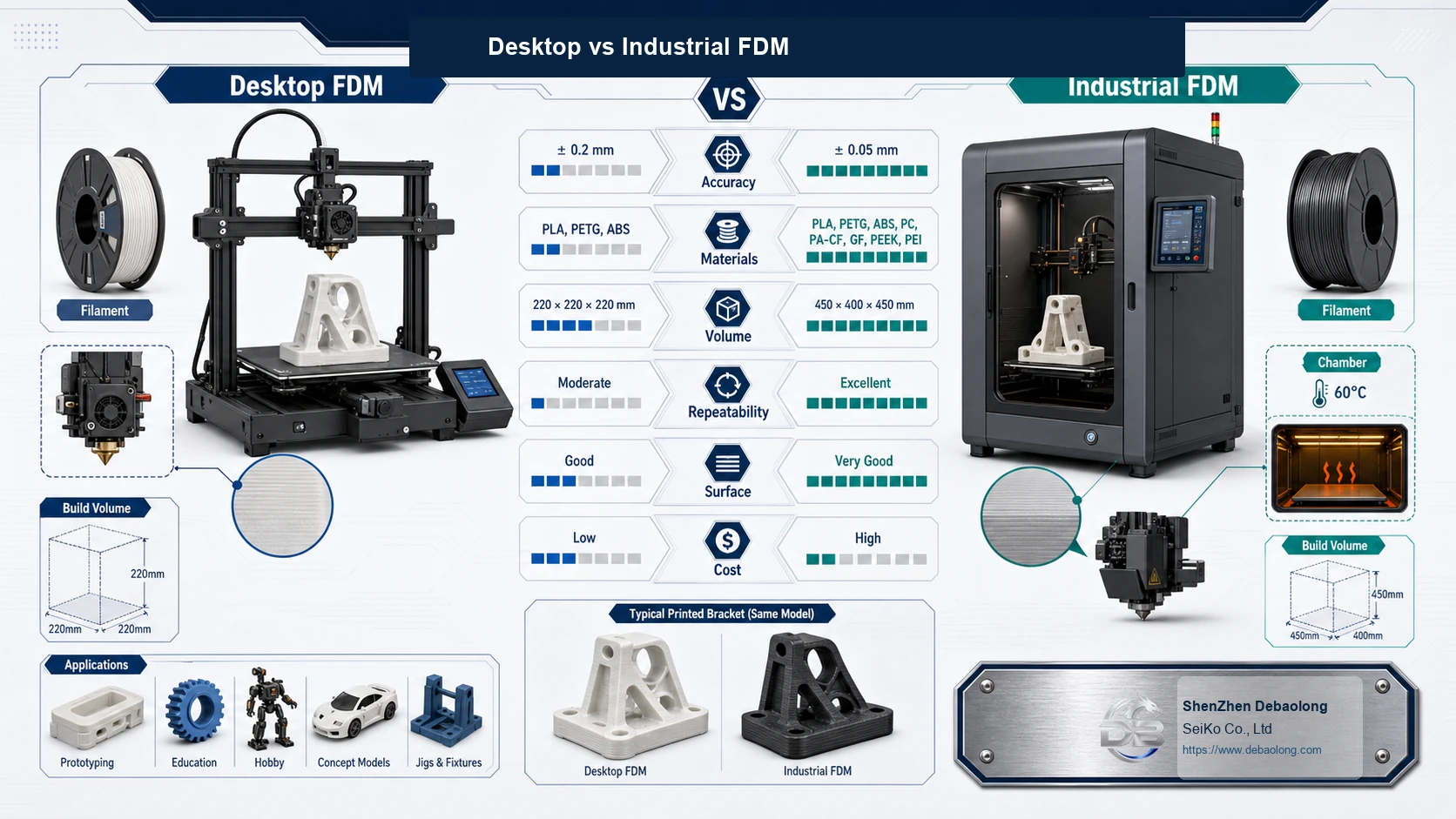
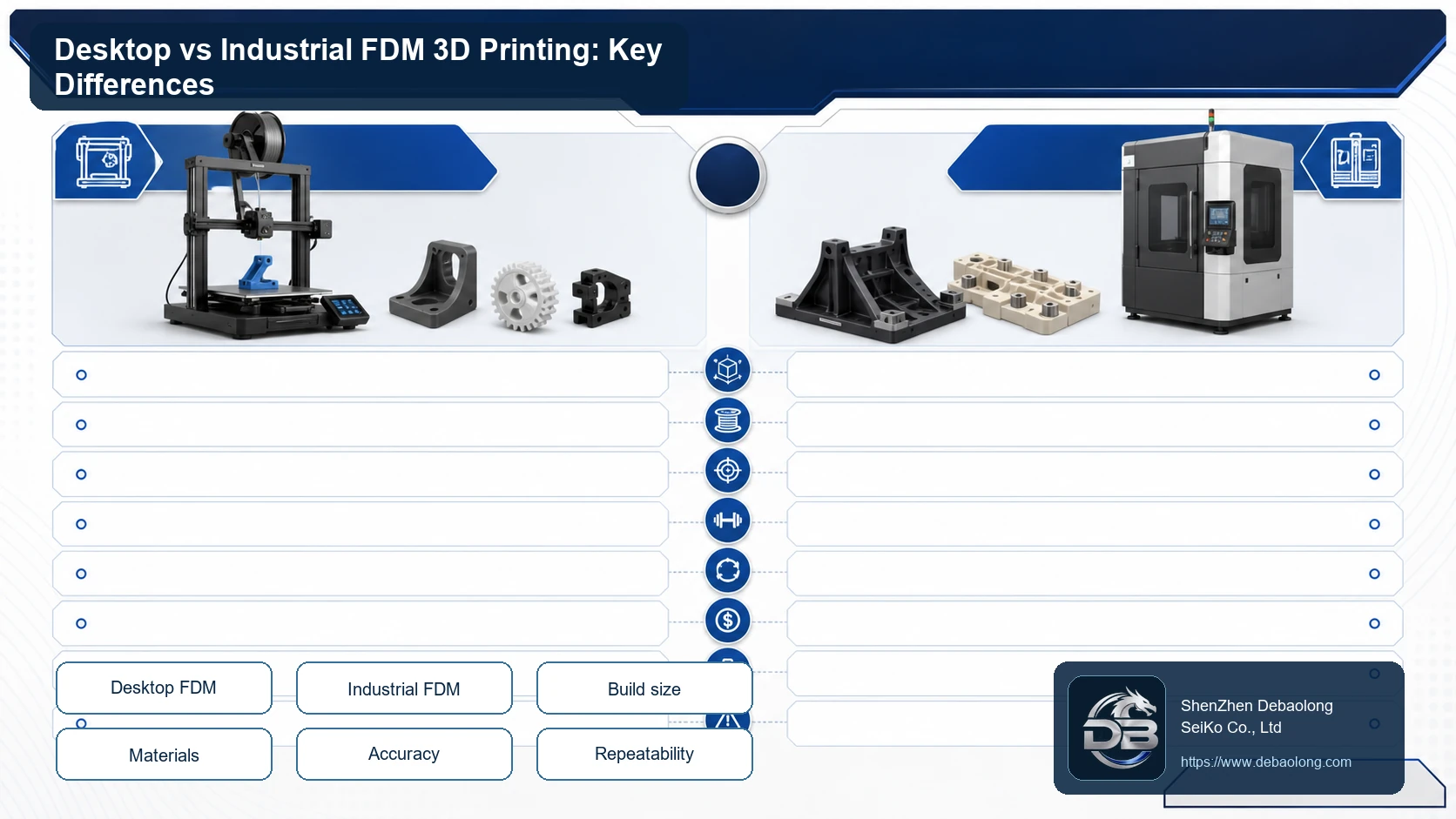
Desktop and Industrial FDM Serve Different Jobs
The source article separates desktop applications, limitations, industrial use cases and cost limits. That distinction matters because a part that is acceptable for a desk review may fail when used as a functional fixture or production tool.
Desktop FDM Applications and Limits
Desktop FDM is good for concept models, simple prototypes, educational parts, fit checks and early visual communication. It is accessible, fast and economical for early iterations.
Its limits include smaller build volumes, narrower material options, lower repeatability, visible layer lines and weaker performance in demanding loads or heat. Desktop results depend heavily on printer setup and operator control.
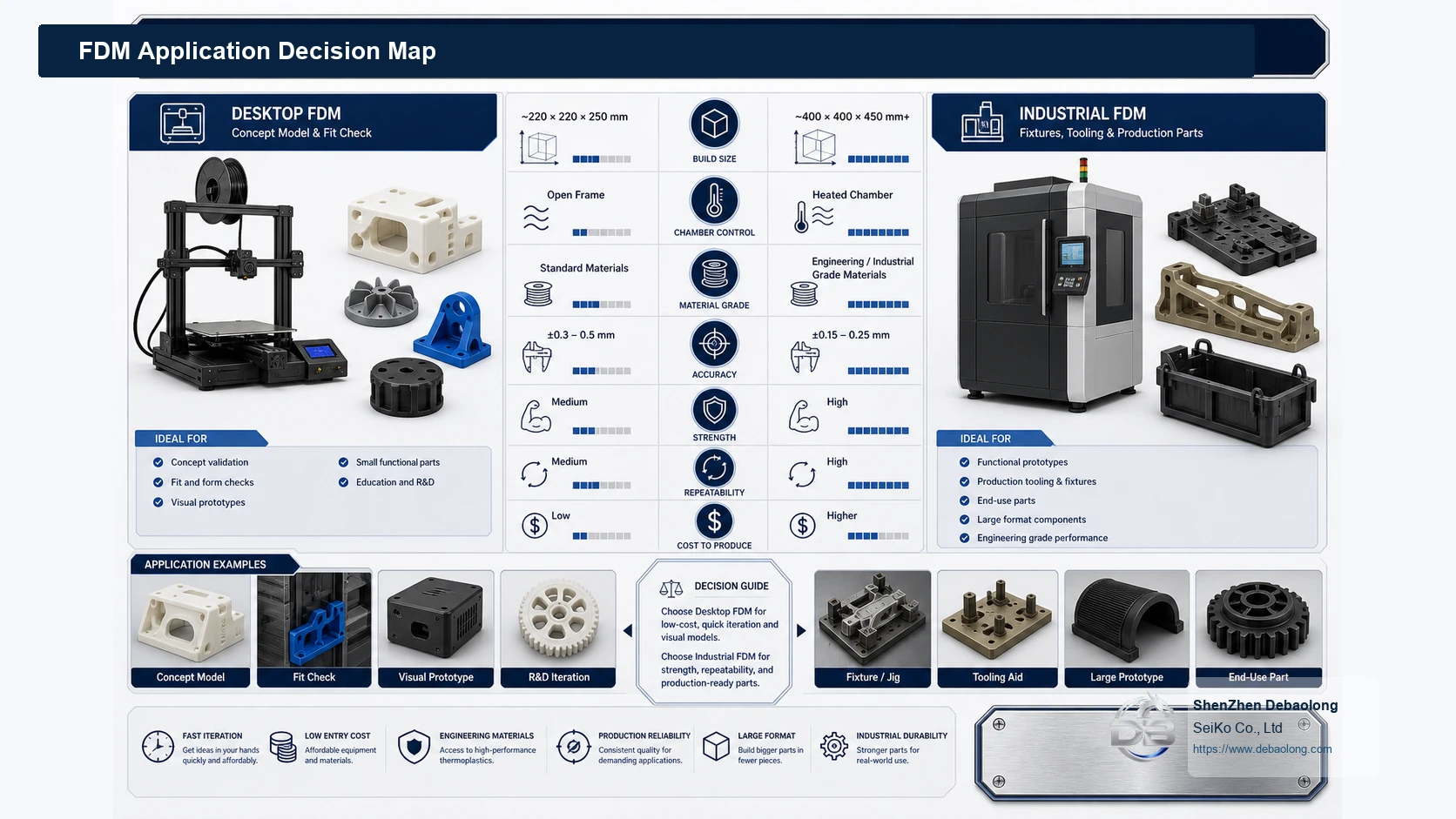
Industrial FDM Applications
Industrial FDM supports concept modeling, manufacturing tools, quick fixtures, jigs, functional prototypes and short-run aids. Larger enclosed machines and higher-grade materials improve consistency and make engineering use more realistic.
Materials and thermal control allow stronger parts, but industrial FDM is not automatically cheap. Machine time, support removal, material cost and post-processing can become significant.
Cost, Strength and Repeatability
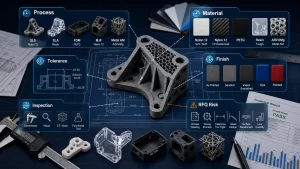
Desktop printing is often cheaper for early iteration. Industrial printing is better when material behavior, accuracy, build size and repeatability matter. Compare materials through all materials before deciding whether FDM, SLA, SLS, MJF or machining is the right route.
For final-use parts, validate load direction, wall thickness, layer orientation, temperature and surface finish. FDM strength is anisotropic, so design and build orientation are part of the material system.
DEBAOLONG FDM Review
DEBAOLONG reviews FDM parts for function, accuracy, finish, material, support strategy and production intent. The knowledge center can help teams compare desktop prototypes with industrial manufacturing options.
Related Services
For related manufacturing support, review CNC machining, sheet metal fabrication, and 3D printing services, with injection molding support available for plastic production programs.