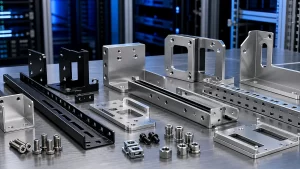


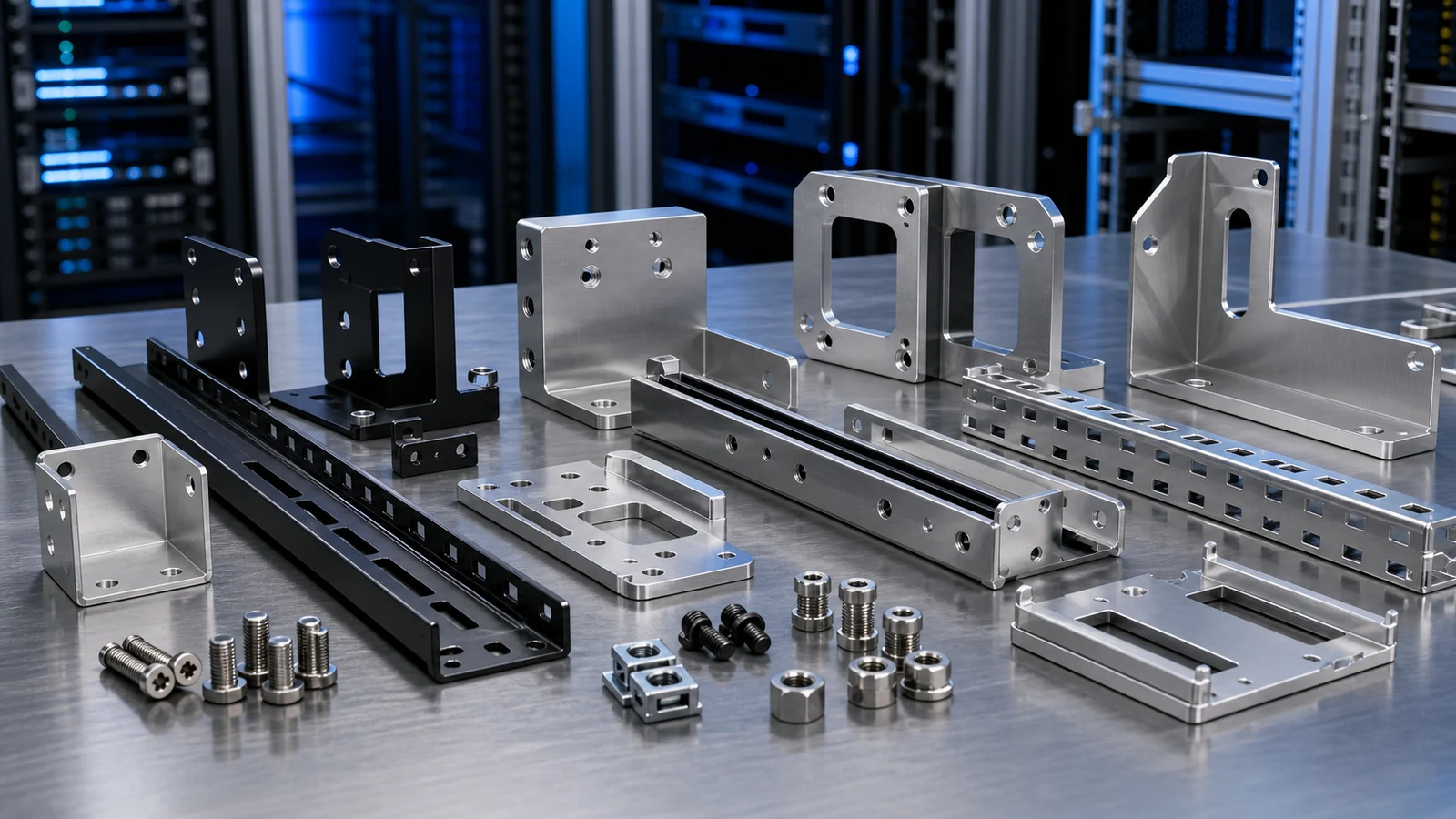
Data center equipment uses many brackets, rails, mounting plates and support blocks to hold electronic modules, trays, fans, power hardware and cable structures. These parts may look simple, but they control alignment, serviceability and assembly fit. A bracket that is too flexible or poorly located can create vibration, installation difficulty or repeated field adjustment.
Mounting Hardware in Racks and Server Assemblies
Common parts include rack brackets, guide rails, support plates, module stops, spacer blocks, card supports, fan brackets and internal frame hardware. Some parts are best made by sheet metal fabrication, while others need CNC machining for precise holes, faces or thick-section strength.
CNC vs Sheet Metal Bracket Manufacturing
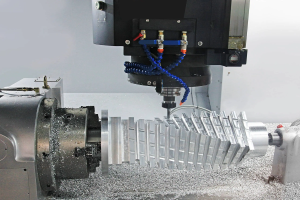
CNC machining is useful for thicker blocks, accurate faces, threaded holes and high-stiffness parts. Sheet metal fabrication is practical for lighter brackets, rails, panels and formed supports. Choosing the right route depends on geometry, load, volume and tolerance requirements.
Hole Positions, Flatness and Assembly Fit
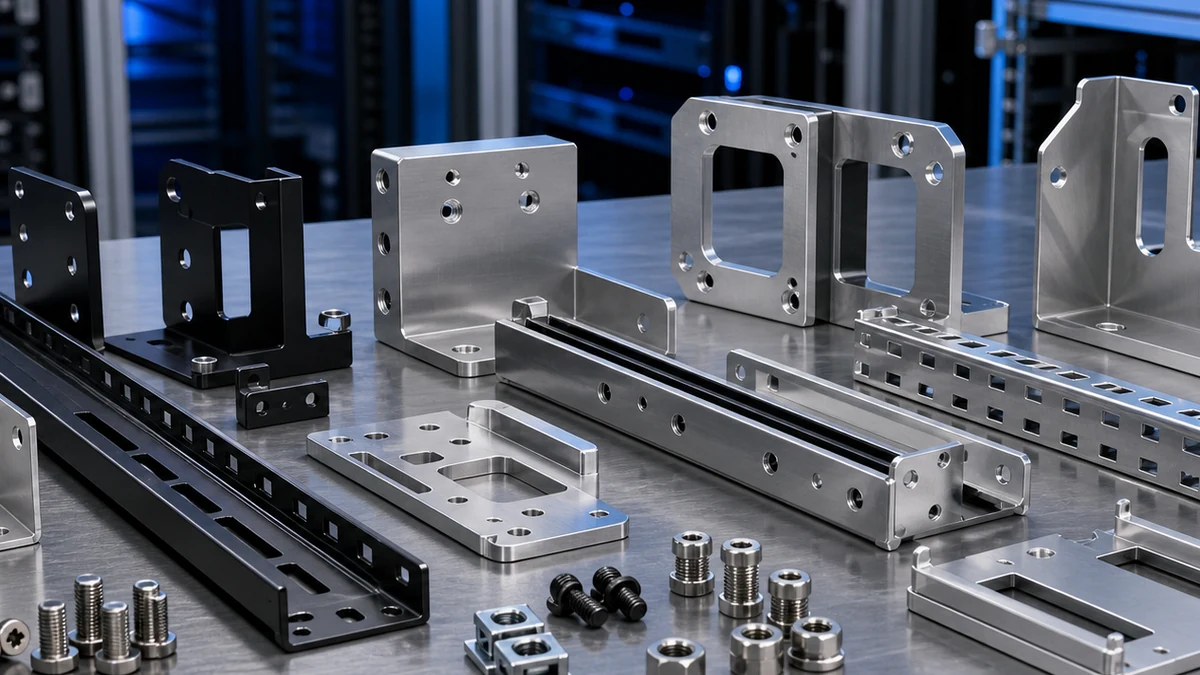
Mounting features should be tied to functional datums. Hole spacing, slot width, flatness and perpendicularity should be controlled where they affect assembly. Non-critical edges should use general tolerances to avoid unnecessary cost.
Strength, Weight and Serviceability
Data center hardware often needs strong but accessible mounting. Brackets should provide stiffness without blocking cable routing, airflow or module replacement. Weight reduction can be useful, but thin parts may bend during shipping or installation.
Surface Finishing
Finishing may include anodizing, passivation, plating, polishing or powder coating. Black finishes may be used for internal server hardware, while corrosion-resistant finishes may be selected for long service environments. Masking may be needed where grounding or electrical contact is important.
Inspection Checklist
Inspection may include hole spacing, thread quality, slot width, critical face dimensions, coating review and assembly fit checks. If parts are repeated across many units, consistent inspection records help maintain future production stability.
DFM Review Before Manufacturing
Before releasing drawings for quotation, the engineering team should review tool access, bend direction, hole locations, wall thickness, fastener clearance, cable access and surface finishing needs. AI server and data center hardware often has dense assemblies, so a small change in one bracket, tray or thermal part can affect nearby cables, boards, cooling hardware or service panels. A practical DFM review separates functional dimensions from general dimensions and helps avoid unnecessary cost.
For machined parts, internal corner radius, pocket depth, thread depth and clamping access should be checked. For sheet metal parts, bend radius, flange length, cutout stiffness and hardware insertion should be reviewed. For plastic or printed support parts, temperature exposure, assembly force and long-term wear should be considered before production.
Prototype, Validation and Production Transition
Many AI hardware projects move through prototype, validation and production stages. Prototype parts may prioritize speed and design learning, while production parts need stable materials, repeatable inspection and packaging protection. When a prototype is approved, the drawing should be cleaned up before production. Temporary holes, trial features and unclear notes should be removed so the final part is easier to manufacture and inspect.
Validation builds should record assembly feedback, cable routing problems, airflow restrictions, fastener access, thermal contact issues and any dimensions that were more difficult than expected. This feedback helps define which tolerances are truly critical and which can follow normal manufacturing standards.
Inspection and Documentation Notes
Inspection planning should focus on the features that affect function: mounting hole location, flatness, thermal contact surfaces, bend angle, thread quality, alignment faces and assembly fit. Inspection reports can be prepared according to customer requirements where applicable. If the part will be repeated across future builds, revision control and clear part naming help avoid confusion.
Packaging should also be considered. Finished surfaces, thermal contact faces, coated panels and threaded holes may need protection during export shipment. Clear labeling and separation between different revisions can reduce receiving and assembly mistakes.
RFQ Checklist
- 2D drawings and 3D CAD files
- Material and quantity requirements
- Critical tolerance and assembly notes
- Surface finish or coating requirements
- Prototype or production quantity
- Inspection report requirements where applicable
How Debaolong Supports This Type of Hardware
Debaolong supports overseas engineering and purchasing teams with CNC machining, sheet metal fabrication, 3D printing, injection molding support where relevant, surface finishing and inspection. For related application capability, visit the AI Server & Data Center Hardware solution page or the Manufacturing Engineering Knowledge Center.
Need custom AI server or data center hardware? Send drawings, STEP files, material requirements, quantity, surface finish needs and inspection notes through the AI Server & Data Center Hardware solution page.
FAQ
Can Debaolong support prototype and production batches?
Yes. Debaolong can support prototypes, small batches and production-ready parts according to customer drawings and project requirements.
Should every dimension use tight tolerance?
No. Tight tolerances should be reserved for functional interfaces, mounting datums, thermal contact faces or alignment-critical features.
Can surface finishing be included?
Yes. Finishing such as anodizing, passivation, plating, polishing or powder coating can be reviewed based on material and application.
What information helps quotation?
Drawings, STEP files, material, finish, quantity, critical surfaces and inspection needs help prepare a faster and more accurate quotation.
Related Engineering Resources