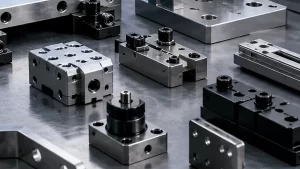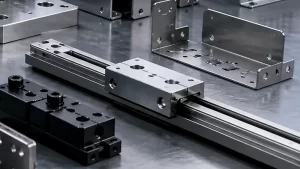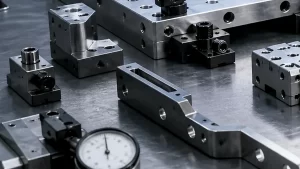
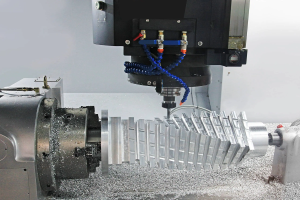


Machine brackets, rails and mounting hardware connect actuators, guards, fixtures and equipment modules in industrial systems.
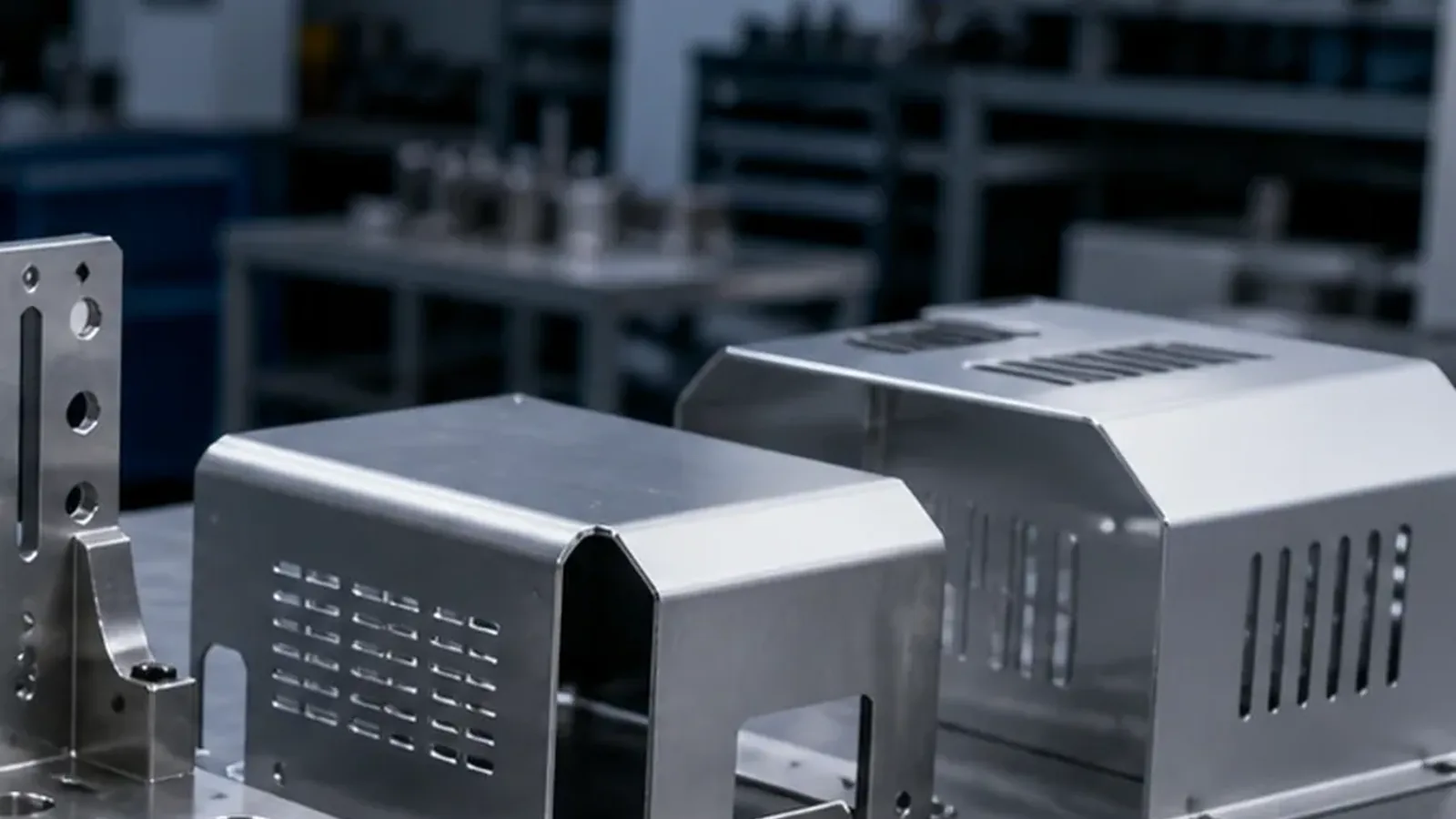
Application Context
These parts need durable geometry, practical fastening access and surfaces that can handle repeated adjustment or service.
In this application, engineering teams usually need parts that are practical to manufacture, stable during assembly, and suitable for prototype validation before production release. Manufacturing guide for brackets, rails and mounting hardware used in industrial equipment.
Common Part Types
Typical custom parts include:
- machine brackets
- mounting rails
- support plates
- adapter blocks
- equipment hardware
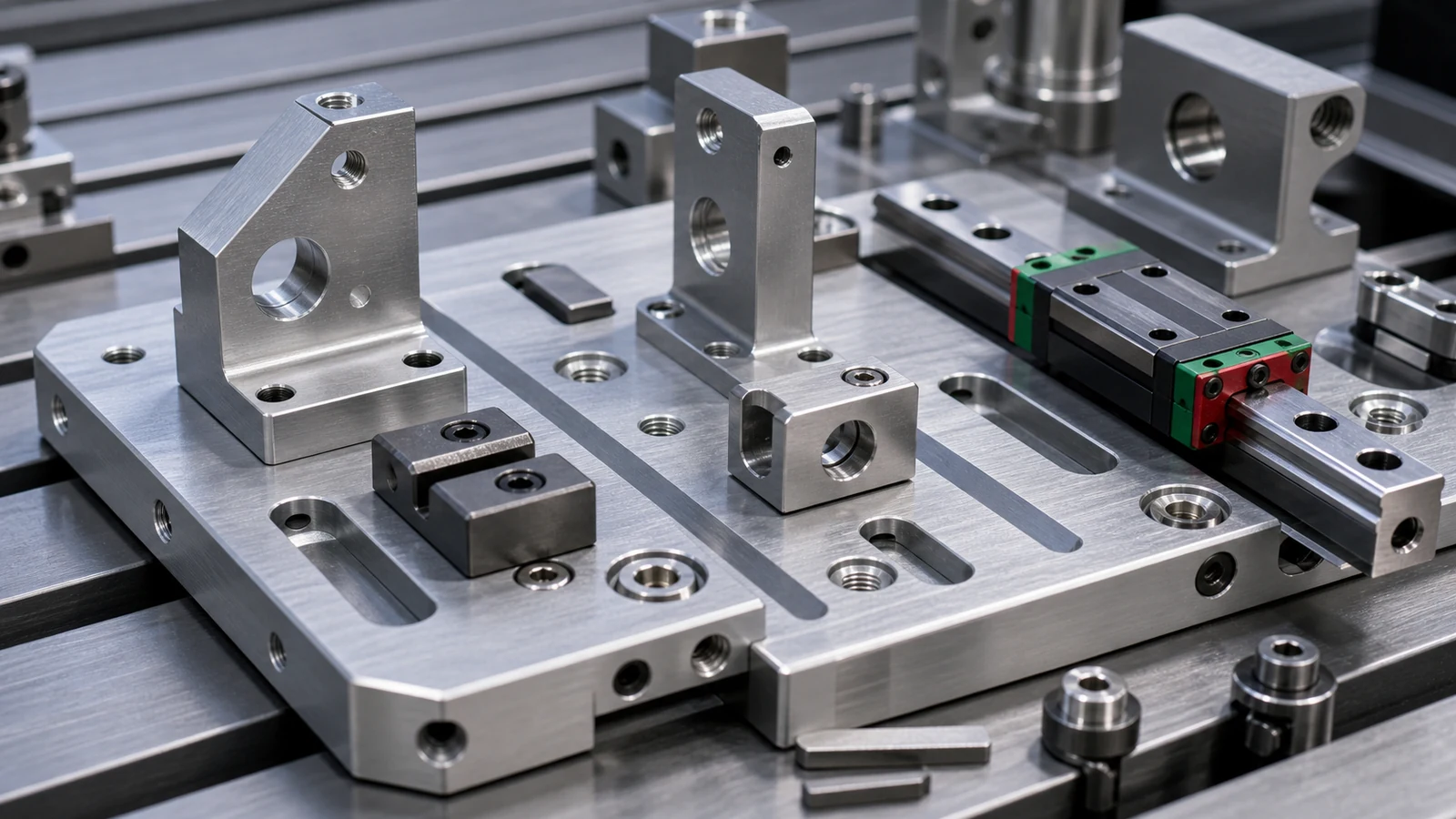
These parts may look simple in a CAD model, but their performance depends on hole position, flatness, edge quality, fastening access, surface finish and how they fit into the larger assembly.
Material and Process Considerations
The manufacturing route should be selected from the geometry rather than from a fixed assumption. CNC machining is useful for precise interfaces, sheet metal fabrication is useful for covers and formed structures, 3D printing supports fast validation, and molding or secondary processes may be considered when the design and quantity support them.
- Carbon steel
- Aluminum
- Stainless steel
- Brass for selected interfaces
Material choice should consider stiffness, corrosion, weight, electrical or thermal behavior, appearance requirements, and expected production quantity. If the part will be revised during development, prototype material may differ from the final production material.
DFM Notes for Reliable Manufacturing
A strong DFM review helps reduce rework and prevents unnecessary cost. The following points should be checked before releasing drawings for quotation:
- Mark critical datums, mounting faces and inspection features clearly.
- Avoid very deep narrow pockets, unsupported thin walls and inaccessible fasteners where possible.
- Define threads, inserts, countersinks, bend radii or molded features with complete notes.
- Separate cosmetic surfaces from functional surfaces so inspection effort matches the real use of the part.
- Review packaging and handling requirements for finished or appearance-sensitive components.
A useful drawing separates critical features from general geometry. This helps the manufacturing team protect the surfaces that matter while avoiding unnecessary cost on non-functional edges.
Surface Finishing and Appearance
Surface finishing can include anodizing, passivation, nickel plating, polishing, powder coating, black oxide or other coatings where applicable. The correct choice depends on material, corrosion risk, appearance needs, contact surfaces and assembly environment.
Visible parts may need a different finish standard than hidden structural supports. If color, texture, masking, conductivity or cosmetic limits matter, these details should be included in the RFQ package.
Inspection and Quality Notes
Inspection can include dimensional checks, thread checks, flatness review, surface finish review, assembly fit checks and inspection reports based on customer requirements.
Inspection planning should match the function of the part. Critical mounting holes, datum faces, threads, flatness, formed edges, surface finish and assembly fit may need more attention than general outside dimensions.
Prototype to Production Planning
Prototype builds are useful for confirming fit, clearance, assembly sequence, tooling access, appearance and performance assumptions. A production version can then simplify temporary prototype features and lock the final tolerance and finish requirements.
When moving from prototype to production, review which features were added only for testing, which tolerances are truly functional, and whether the selected manufacturing route still fits quantity, material and finishing needs.
Related Manufacturing Capabilities
Depending on geometry and quantity, this type of part may combine several Debaolong manufacturing capabilities:
For a broader view of this application area, visit the Industrial Machinery & Fixtures solution page or the Manufacturing Engineering Knowledge Center.
RFQ Checklist
To prepare a clear quotation, please send:
- 2D drawings and 3D CAD files
- Material, quantity and target lead time
- Critical tolerance, datum and fit requirements
- Surface finish, coating or appearance requirements
- Assembly, insert, thread or packaging requirements
- Prototype stage or production usage notes
How Debaolong Supports This Type of Part
Debaolong supports custom manufacturing from drawing review to prototype and production-ready batches, using CNC machining, sheet metal fabrication, 3D printing, plastic part support, surface finishing and inspection where applicable.
Debaolong can review drawings, suggest practical manufacturing routes, prepare prototypes, support small batches, and help transition stable parts toward repeat production according to customer requirements.
FAQ
What files are useful for quotation?
A 3D model plus a 2D drawing is best. The drawing should identify material, finish, tolerances, threads and critical dimensions.
Can prototypes use a different process than production?
Yes. Prototypes may use CNC machining, 3D printing or simplified sheet metal to validate design before the final production route is selected.
Should every dimension have a tight tolerance?
No. Tight tolerances should be reserved for functional surfaces, assembly interfaces, datums and inspection-critical features.
Can Debaolong support finishing and inspection?
Yes. Debaolong can support surface finishing and inspection according to project requirements and customer drawings.
How should I reduce unnecessary cost?
Clarify functional features, avoid over-tolerancing, use practical radii or bend rules, and share expected quantity early.
Need custom machine mounting hardware? Send drawings, STEP files, quantities, material requirements and finishing notes through the Industrial Machinery & Fixtures solution page.
Related Engineering Resources