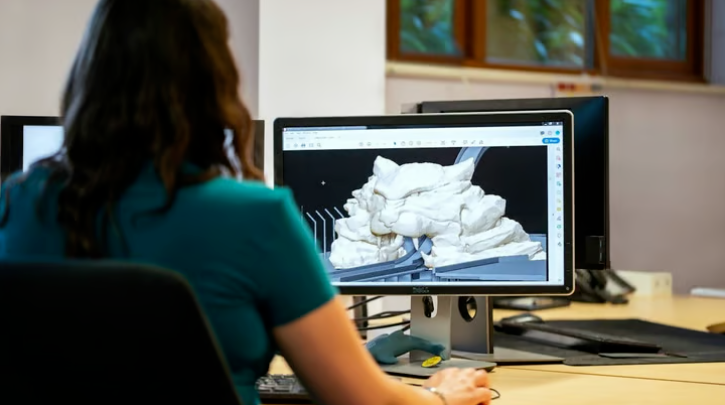


Mold flow analysis is a software-based simulation that predicts how plastic resin will flow into and fill an injection mold. It also considers part cooling and process optimization. There are other methods to analyze the injection molding process, but modeling is faster, cheaper, and more efficient than machining sheet metal, building an injection mold, running sample parts, and then modifying the tooling.
Mold flow analysis can also help designers avoid errors that cause injection molding defects, such as short shots, sink marks, and warpage. By making informed decisions early in the design phase, you can achieve higher-quality injection-molded products with lower costs and faster turnaround times. Mold makers and injection molders can also benefit from reviewing mold flow data.
Mold Flow Analysis Software Options
Autodesk Mold Flow is the most widely used software for simulating plastic injection molding processes. The product has two main versions: Mold Flow Adviser and Mold Flow Insight. Mold Flow Adviser comes in Premium and Ultimate versions, while Mold Flow Insight is available in Standard and Premium versions. Each application has unique features, but all can import CAD files with geometric data.
There are other types of mold flow analysis software. Options include SolidWorks Plastics, Moldex3D and CoreTech Moldex3D, Sigmasoft, and Simcon simFLOW. Creo mold flow analysis and ANSYS mold flow software are also available. This article does not recommend software or provide usage instructions. Instead, it explains how robust mold flow analysis can improve injection-molded parts.
Investing in mold flow analysis software can also be avoided entirely by requesting low-cost mold flow analysis from Debaolong Seiko during the quoting process. Upload your design now.
Mold Flow DFM for High-Quality Plastic Parts
Mold flow analysis software supports Design for Manufacturability (DFM) in six important ways:
- Material selection
- Mold design optimization
- Filling analysis
- Flow analysis
- Warpage analysis
- Process optimization
The following sections will elaborate.
Material Selection
Mold flow software allows users to model the behavior of different plastic resins throughout the injection molding process. As a designer, you can use this information to select the plastic material most likely to produce the best injection-molded part. For example, since resins such as polycarbonate (PC) tend to have poor flowability, you might decide to use acrylic in complex mold and part designs.
Material Database
Mold flow software typically includes databases of rheological properties, thermal properties, and other flow-related characteristics of various plastic materials. With thousands of different resins available, including commodity plastics, specialty plastics, and polymer blends, a comprehensive database is an asset for part designers.
Material Analysis
Mold flow software with material analysis capabilities allows you to specify individual properties (such as rheology) or select materials based on these characteristics. The software then uses this information to simulate the behavior of the plastic resin at each stage of the injection molding process, from clamping and injection to dwelling and cooling.
Comparative Analysis
Depending on the type of mold flow software, users simulating multiple materials may be able to compare results side by side. This supports informed decision-making based on factors such as part quality, production efficiency, and cost per part. If mold flow analysis indicates potential defects, finding a suitable alternative material can save you time and money.

Injection Mold Design Optimization
Injection molds are usually made of steel or aluminum. Steel molds are more expensive but have a longer service life, produce parts with tighter tolerances, and are available in soft, semi-hardened, and hardened grades. Mold design optimization starts with the selection of mold material but also considers runners, gates, and cooling lines. These three components are also critical to injection molding success.
Mold Material Selection
Mold flow analysis simulates heat transfer during injection molding. Since different plastics melt at different temperatures and overheating can cause polymer degradation, it is crucial to understand how the thermal properties of the mold affect your part. If the mold temperature is too high, the plastic may stick to the mold. If the mold temperature is too low, it may cause sink marks.
Runner System Design
Runners are the network of channels that deliver molten plastic to the mold cavity. They are either heated (hot runners), unheated (cold runners), or insulated. Mold flow analysis helps determine the optimal runner type, size, shape, and layout for uniform filling and reduced pressure drop. Hot runners provide better flow control but may not be suitable for certain heat-sensitive polymers.
Gate Location Optimization
Gates are openings in the mold that allow molten plastic to enter the cavity. They also control the direction and volume of flow. By analyzing potential gate locations, mold flow analysis software can recommend where to place gates so that the mold fills uniformly and completely. Mold flow analysis can also consider the time required for gate freezing and preventing backflow.
Part Cooling Analysis
Cooling lines direct cooling media through the mold. Air cooling uses evaporators to remove heat. Water cooling pumps coolant through lines outside the cavity. Mold flow software simulates the cooling phase of the injection molding process and predicts temperature distribution and cycle time. Since 80% of the injection molding cycle involves cooling, faster cooling helps control costs.

Mold Filling Analysis
Filling analysis determines how molten plastic material fills the cavity during injection. This information can indicate potential problems such as air entrapment or incomplete or uneven filling. Mold makers can then modify the tool design to minimize the risk of short shots, where molten plastic fails to fill the entire mold cavity.
Mold flow analysis
The leading edge of mold flow may encounter obstacles that cause flow separation. Examples include core pins used to create holes in molded parts. When two flow fronts meet again, they may not merge because partial cooling has occurred. Flow analysis considers flow patterns and helps avoid injection molding defects called weld lines.
Warpage Analysis
Warpage analysis can identify potential issues caused by uneven cooling and uneven internal shrinkage. Mold makers can use this information to modify the tool, and designers can use it to minimize high-stress areas or change wall thicknesses or part geometry. Debaolong Seiko’s injection molding design guide is full of expert information that can be used for your next plastic project.
Process Optimization
Like part designers and mold makers, injection molders can benefit from mold flow analysis. For example, molders may consider mold flow data when adjusting injection pressure, holding pressure, melt temperature, and packing pressure for production runs.
- Injection pressure is the pressure at which the injection mold is filled.
- Holding pressure is the pressure maintained to fill the mold until the gate freezes.
- Melt temperature is the temperature of the molten plastic as it enters the mold.
- Packing pressure fully compresses the plastic as it cools and shrinks in the mold.
For more information, please contact us at Debaolong Seiko. You are also welcome to upload your design to Debaolong Seiko for a quote.