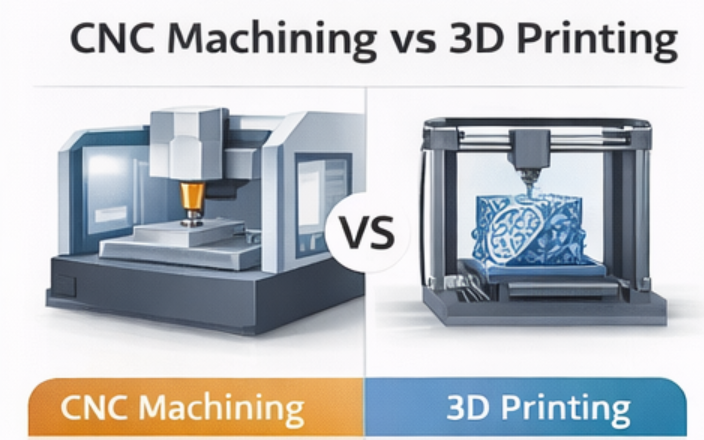
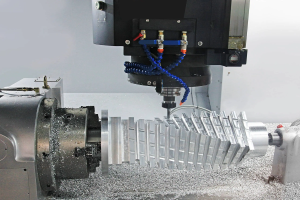


Modern manufacturing offers multiple production technologies, but two of the most widely used methods are CNC machining and 3D printing.
Both processes are powerful tools for engineers and product designers, but they serve different purposes depending on part geometry, materials, accuracy requirements, and production volume.
Understanding the differences between CNC machining and additive manufacturing helps engineers select the most efficient production method.
What Is CNC Machining?
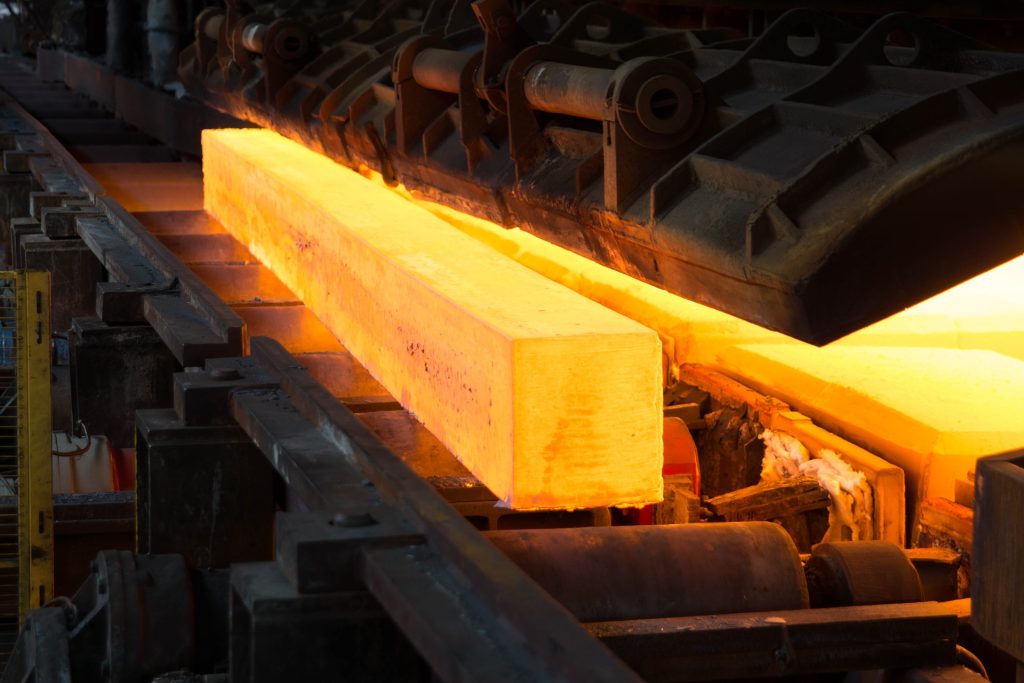
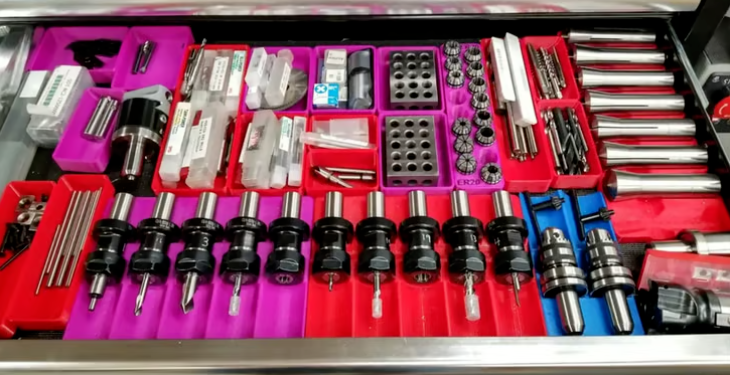
CNC machining is a subtractive manufacturing process where material is removed from a solid block using precision cutting tools controlled by computer programs.
Common CNC machining processes include:
• CNC milling
• CNC turning
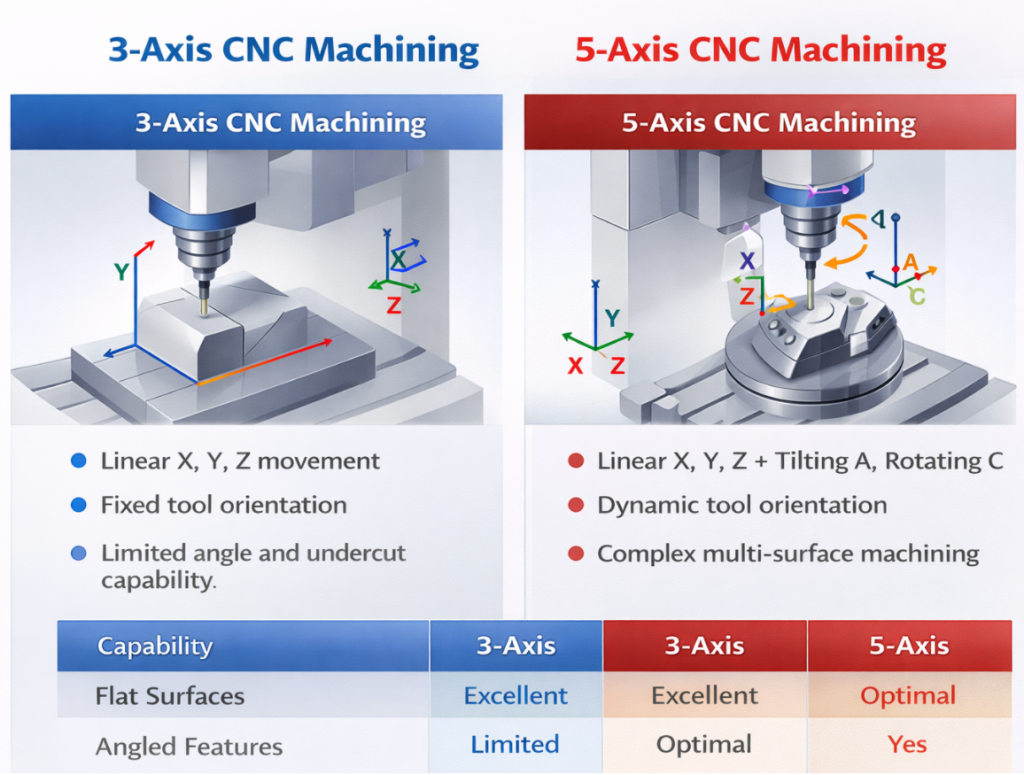
• 5-axis machining
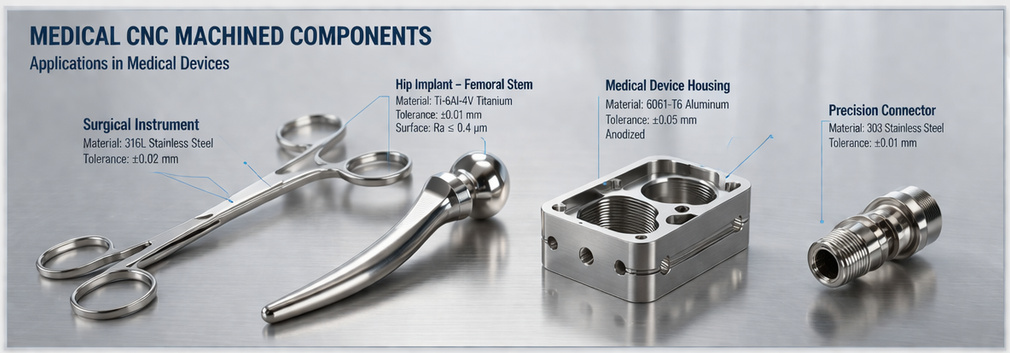
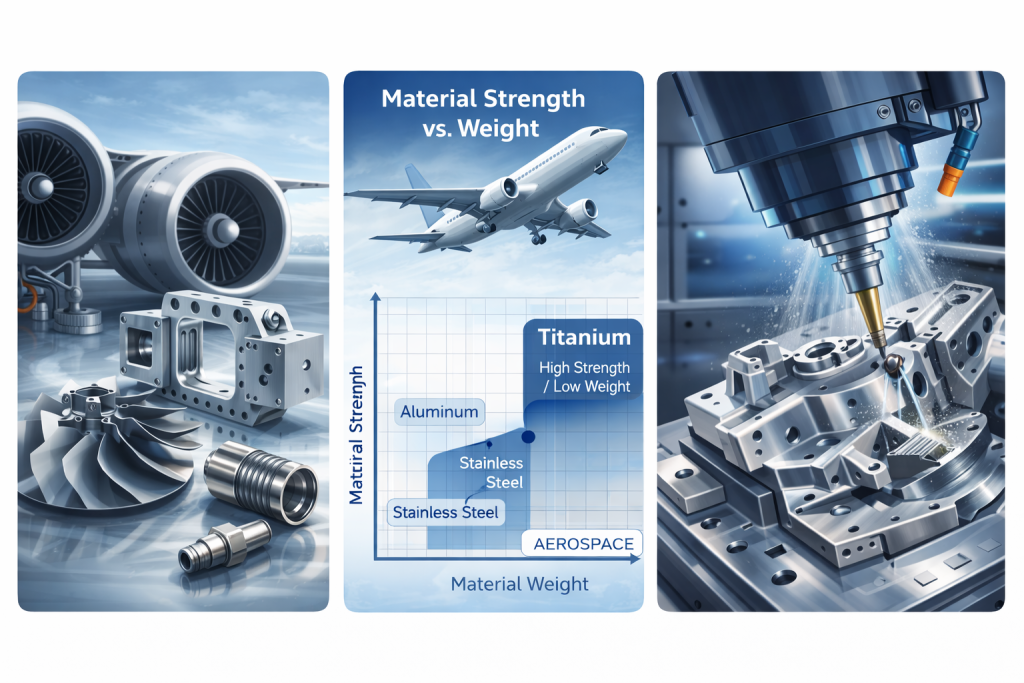
CNC machining is widely used for producing high-precision metal and plastic components in industries such as aerospace, automotive, robotics, and industrial equipment.
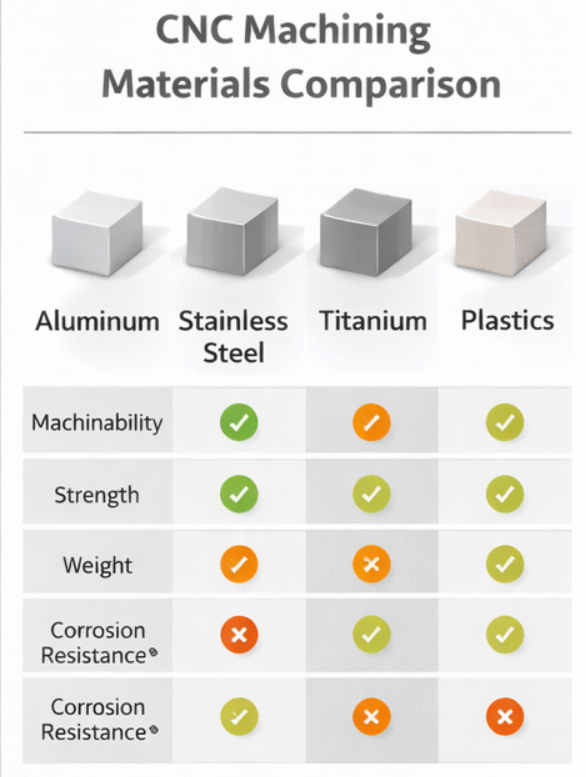
Typical CNC machining materials include:
• Aluminum
• Stainless steel
• Titanium
• Brass and copper
• Engineering plastics
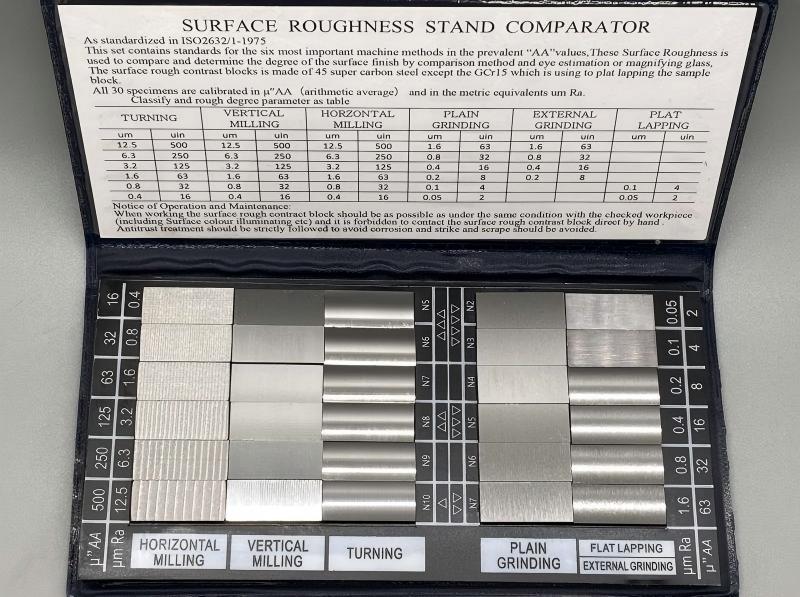
CNC machining is well known for its high precision, excellent surface finish, and strong mechanical properties.
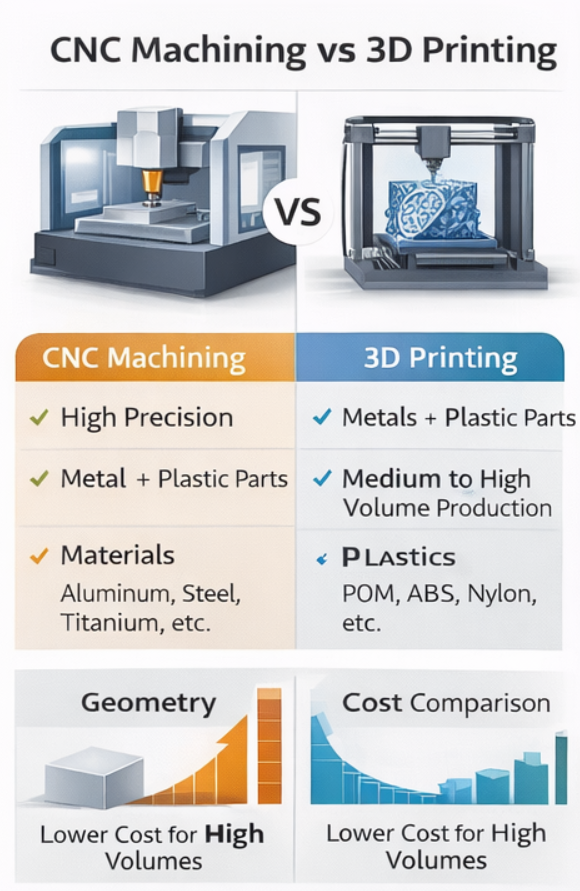
What Is 3D Printing?
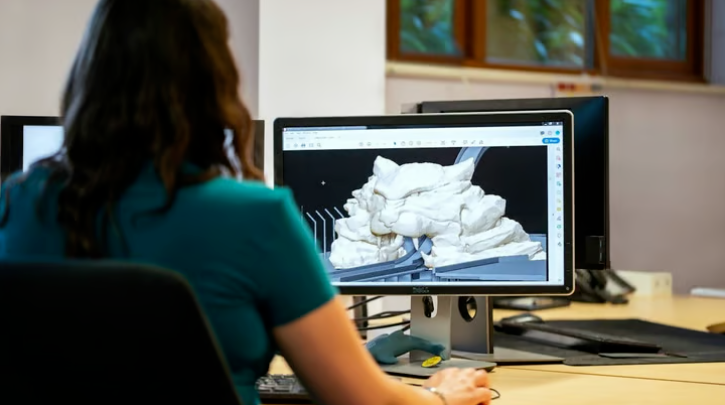
3D printing, also known as additive manufacturing, builds parts layer by layer from digital models.
Unlike CNC machining, which removes material, 3D printing adds material to create the final geometry.
Common 3D printing technologies include:
• FDM (Fused Deposition Modeling)
• SLA (Stereolithography)
• SLS (Selective Laser Sintering)
3D printing is widely used for:
• rapid prototyping
• concept validation
• low-volume production
• complex geometries
One of the major advantages of 3D printing is the ability to produce complex internal structures that are difficult or impossible with traditional machining.
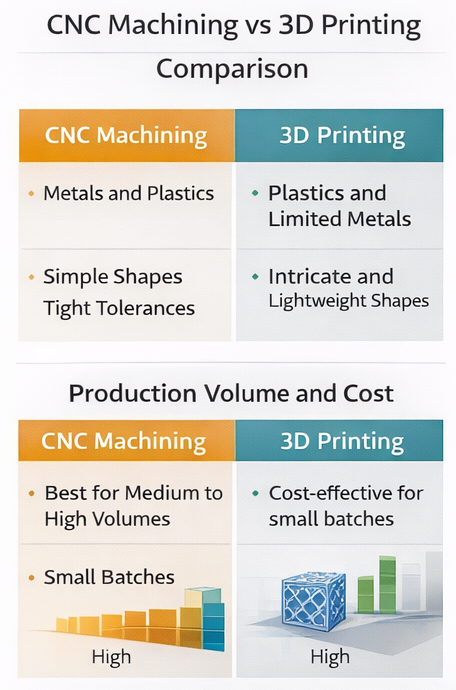
Key Differences Between CNC Machining and 3D Printing
Both manufacturing methods offer unique advantages depending on engineering requirements.
1. Material Options
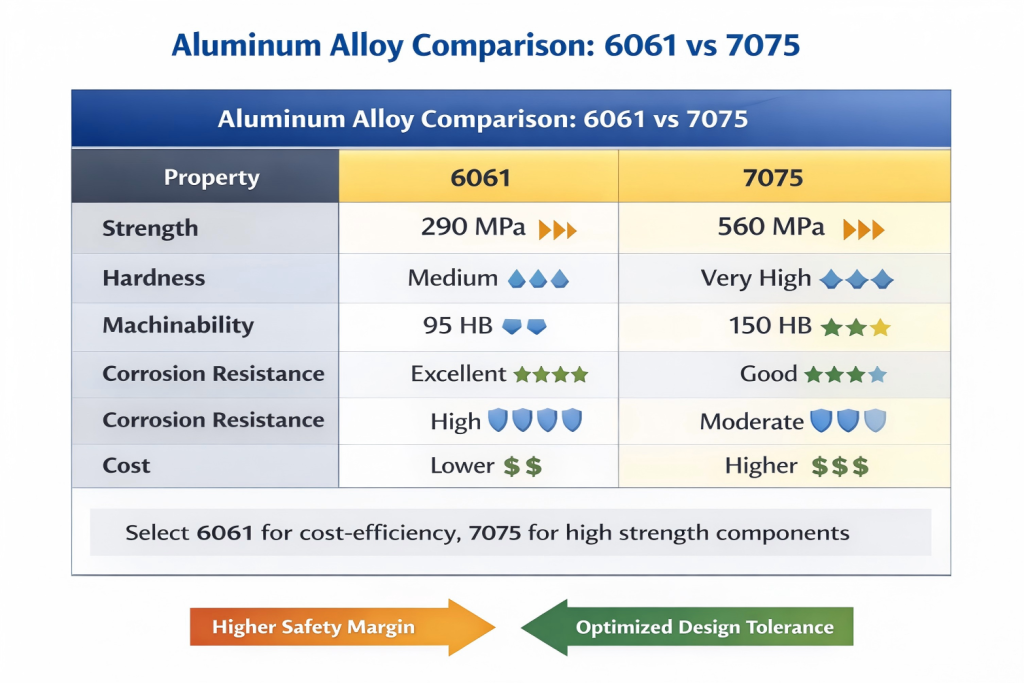
CNC machining supports a wide range of industrial metals and plastics, including high-strength alloys used in structural applications.
3D printing is more commonly used with engineering plastics, although metal additive manufacturing technologies are also developing.
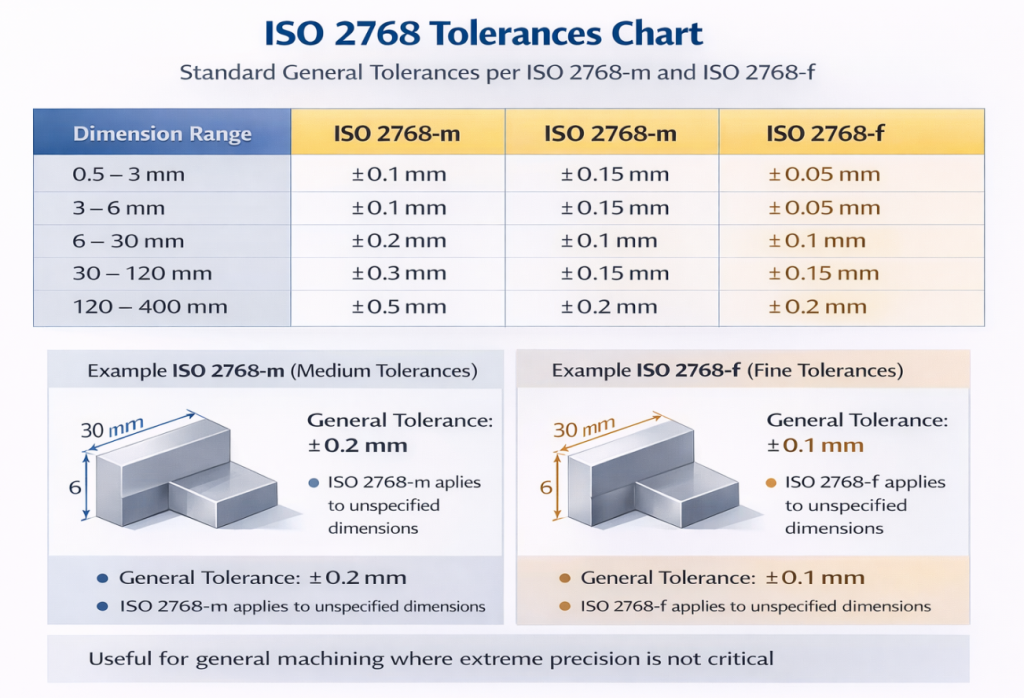
2. Precision and Tolerances
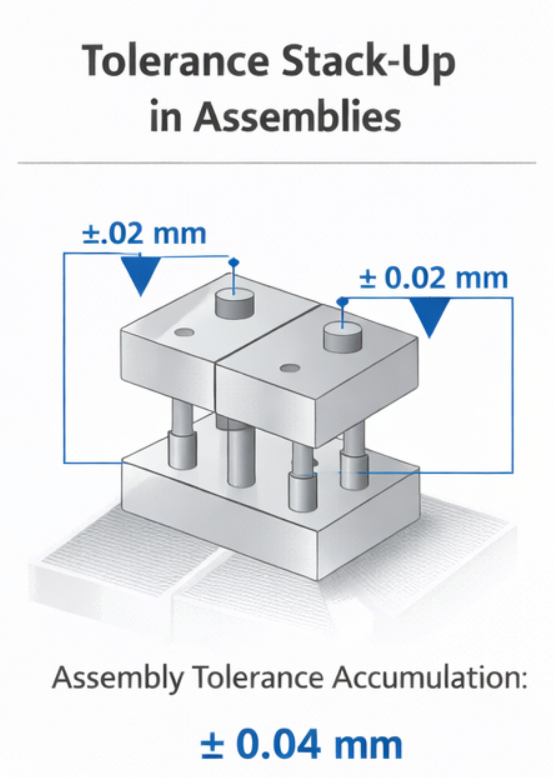
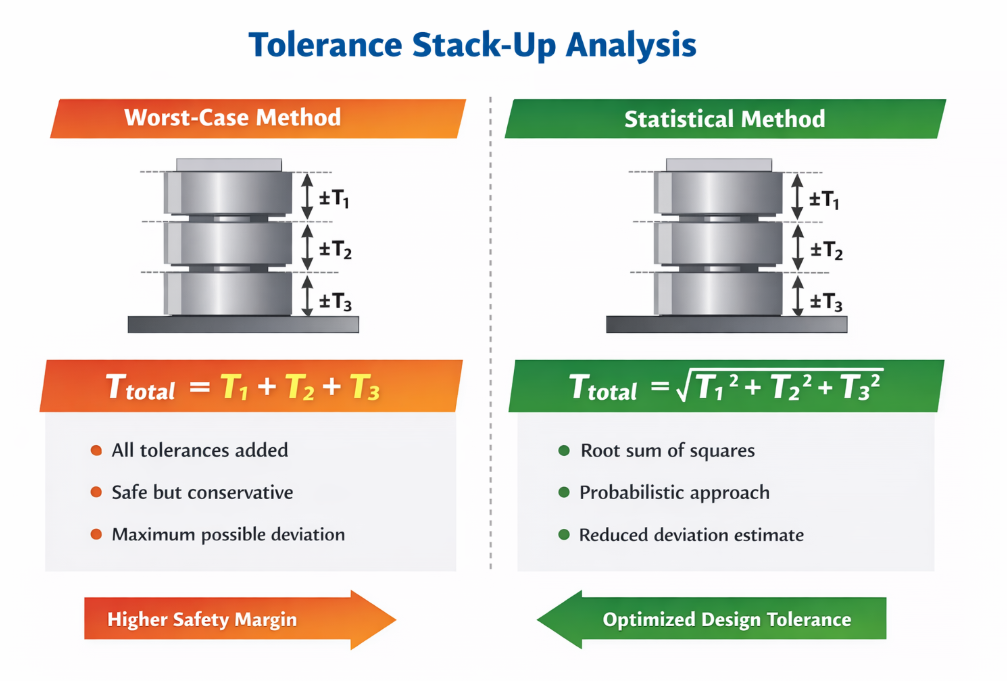
CNC machining generally offers higher dimensional accuracy and tighter tolerances.
Typical CNC tolerances:
±0.1 mm (standard machining)
±0.02 mm (precision machining)
3D printing tolerances depend on the printing technology and usually require post-processing to achieve higher precision.
3. Part Complexity
3D printing excels at producing complex geometries, internal channels, lattice structures, and lightweight designs.
CNC machining is better suited for functional mechanical components requiring structural strength.
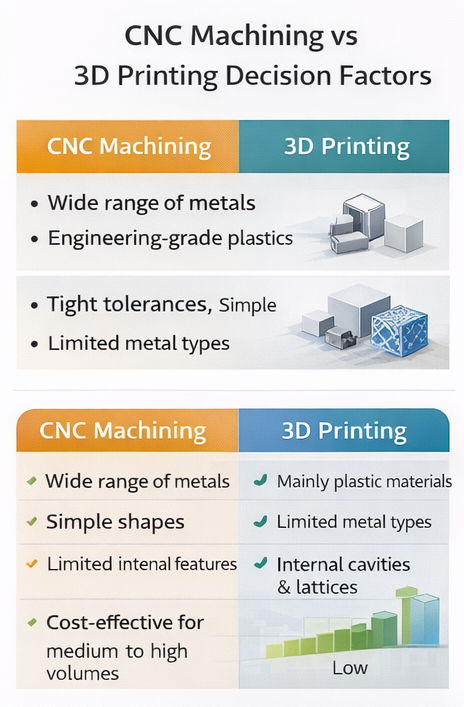
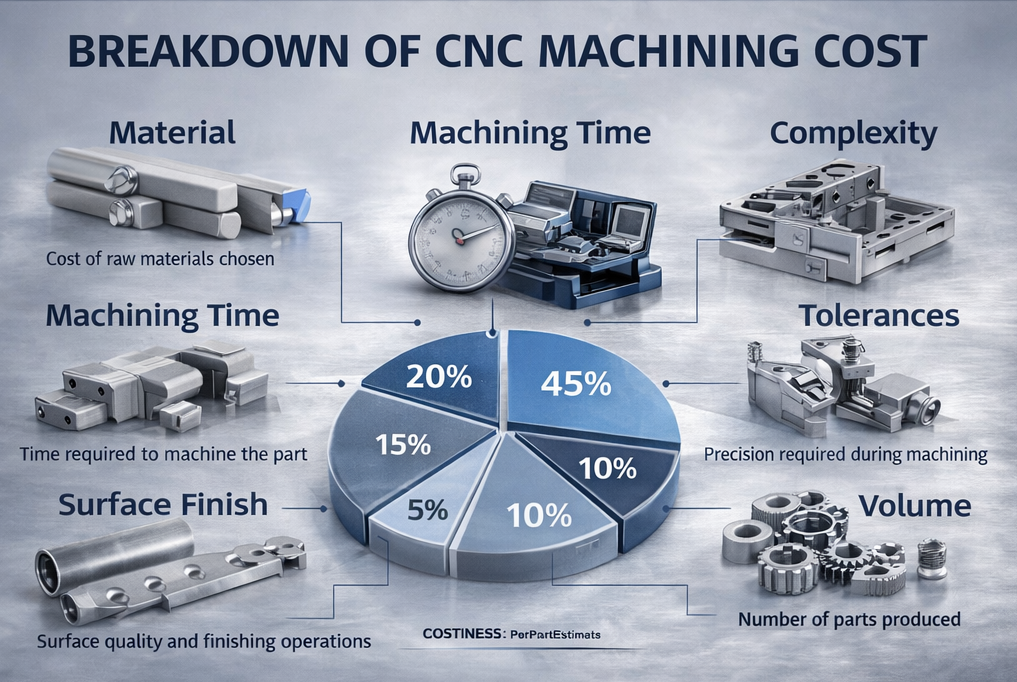
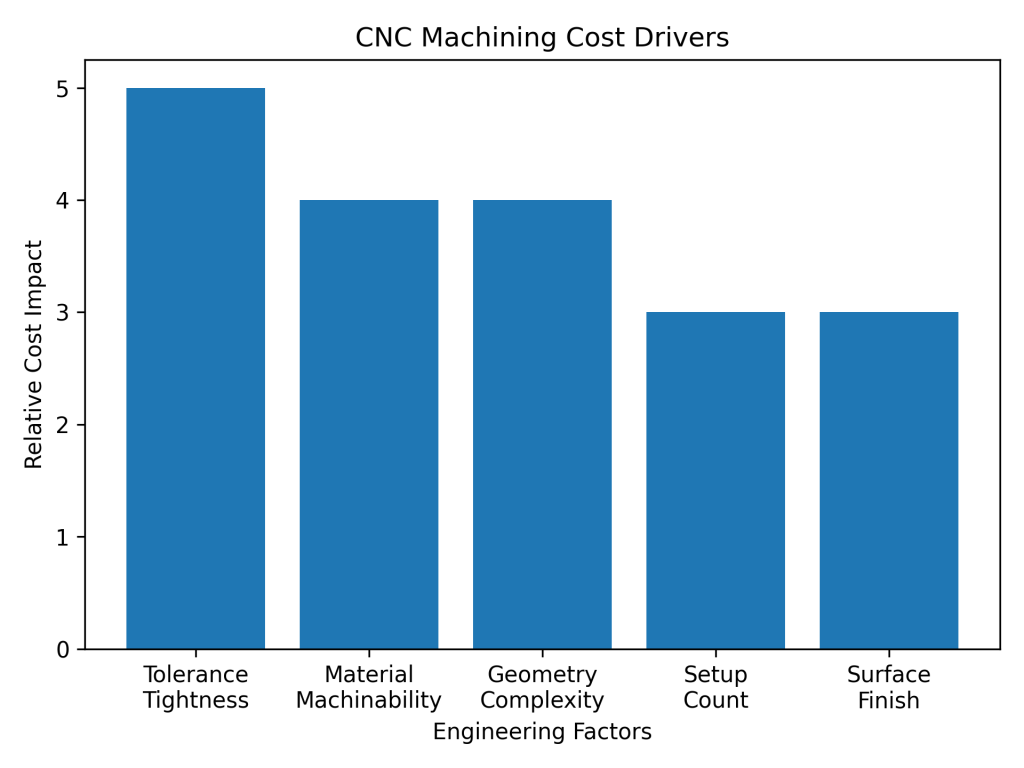
Production Volume and Cost Considerations
Production volume plays an important role when choosing a manufacturing process.
For low-volume prototypes, 3D printing is often faster and more cost-effective because it requires minimal setup.
For medium to high-volume production, CNC machining is usually more economical due to faster cycle times and better material efficiency.
Engineers often combine both processes:
• 3D printing for early prototypes
• CNC machining for final production parts
This hybrid approach reduces development time and improves manufacturing efficiency.
When Should You Choose CNC Machining?
CNC machining is typically the best choice when:
• high dimensional accuracy is required
• metal components are needed
• strong mechanical properties are critical
• production volumes increase
Industries such as aerospace, automotive, robotics, and industrial equipment rely heavily on CNC machining for precision components.
When Should You Choose 3D Printing?
3D printing is ideal for:
• rapid prototyping
• concept testing
• complex geometries
• low-volume production
It allows engineers to quickly iterate product designs before moving to full-scale manufacturing.
Conclusion
Both CNC machining and 3D printing play essential roles in modern manufacturing.
Rather than replacing each other, these technologies complement one another in product development and production workflows.
By understanding the strengths and limitations of each process, engineers can select the most effective manufacturing strategy for their projects.
Explore More CNC Engineering Guides
You may also find these engineering resources useful:
CNC Machining Surface Finish Guide
https://www.debaolong.com/2026/03/06/cnc-machining-surface-finish-ra-roughness/
CNC Machining Materials Guide
https://www.debaolong.com/2026/03/13/cnc-machining-materials-guide-aluminum-steel-titanium-and-plastics/
5-Axis vs 3-Axis CNC Machining
https://www.debaolong.com/2026/03/04/5-axis-vs-3-axis-cnc-machining-comparison/