
Introduction
The CNC machining industry is undergoing a major transformation in 2026. What was once a process-focused manufacturing method is rapidly evolving into a data-driven, intelligent production system.
Technologies such as artificial intelligence (AI), automation, and digital twins are reshaping how parts are designed, manufactured, and delivered.
For buyers, engineers, and product developers, understanding these trends is no longer optional—it directly impacts cost, lead time, and product quality.
AI is Transforming CNC Machining
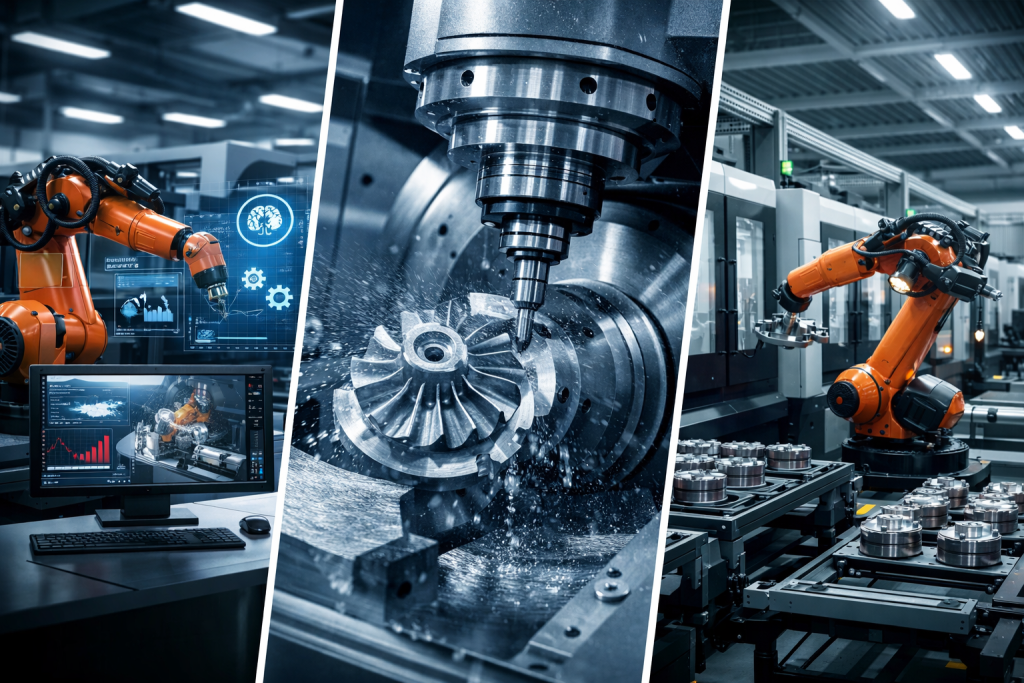
Artificial intelligence is becoming a core part of modern CNC machining.
AI-powered systems can now:
- Automatically optimize cutting parameters
- Predict tool wear before failure
- Adjust machining strategies in real time
This reduces human error and significantly improves consistency.
What this means for customers:
- Lower defect rates
- Stable quality across batches
- Reduced overall production costs
The Rise of Lights-Out Manufacturing
“Lights-out manufacturing” refers to fully automated production that runs without human intervention.
With robotic arms, pallet changers, and automated material handling systems, CNC machines can now operate 24/7.
Key advantages:
- Faster turnaround times
- Increased production capacity
- Reduced labor costs
For high-volume or repeat orders, this is a game changer.
Digital Twin Technology: Toward Zero-Error Production
Digital twin technology allows manufacturers to simulate the entire machining process before production begins.
By creating a virtual model of the part and machining environment, engineers can:
- Detect collisions or tool interference
- Optimize tool paths
- Validate machining strategies
Benefits:
- Fewer errors during production
- Reduced material waste
- Faster setup times
Hybrid Manufacturing: CNC + 3D Printing
Hybrid manufacturing combines CNC machining with additive manufacturing (3D printing).
This approach enables:
- Production of highly complex geometries
- Reduced material waste
- Faster prototyping cycles
Industries such as aerospace, medical, and automotive are rapidly adopting this method.
5-Axis Machining Becomes the Standard
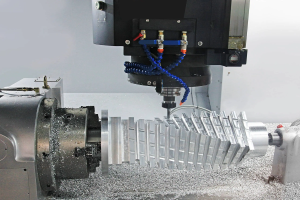
5-axis CNC machining is no longer limited to high-end applications—it is becoming the new standard.
Compared to traditional 3-axis machining, 5-axis offers:
- Fewer setups
- Higher precision
- Ability to machine complex parts in a single operation
Why it matters:
- Better surface finish
- Reduced production time
- Increased design flexibility
Sustainable CNC Machining
Sustainability is becoming a key focus in manufacturing decisions.
Modern CNC machining is adopting:
- Energy-efficient equipment
- Minimum Quantity Lubrication (MQL)
- Recycling of materials and coolants
For global buyers:
- Easier compliance with environmental regulations
- Improved brand image
- Long-term cost savings
What These Trends Mean for Buyers
These technological advancements are not just industry buzzwords—they directly impact your business.
By working with advanced CNC suppliers, you gain:
- Shorter lead times through automation
- Higher consistency with AI-driven processes
- Greater design freedom with 5-axis and hybrid manufacturing
- Lower long-term costs through efficiency and reduced waste
Why Choosing the Right CNC Supplier Matters
Not all CNC machining suppliers are equipped to keep up with these trends.
When selecting a manufacturing partner, consider:
- Do they use advanced automation systems?
- Do they offer 5-axis machining capabilities?
- Can they handle complex materials and geometries?
- Do they have strong engineering support?
A capable supplier doesn’t just manufacture parts—they help optimize your entire product lifecycle.
To explore more insights on CNC machining and manufacturing engineering, visit:
👉 https://www.debaolong.com/manufacturing-engineering-knowledge-center/
Conclusion
The future of CNC machining lies in intelligence, automation, and integration.
As AI, digital twins, and advanced machining technologies continue to evolve, manufacturers that embrace these changes will deliver faster, better, and more cost-effective solutions.
For buyers, choosing the right partner today means gaining a competitive advantage tomorrow.
Related Engineering Resources